Plant Overview
Often called the Purple Prairie Clover, this plant is a crown jewel of the North American grasslands. It looks like a collection of tiny, vibrant thimbles floating atop a sea of feathery green foliage. Beyond its beauty, it is a powerhouse for soil health and acts as a biological magnet for rare native bees and butterflies.
🔍 How to Identify
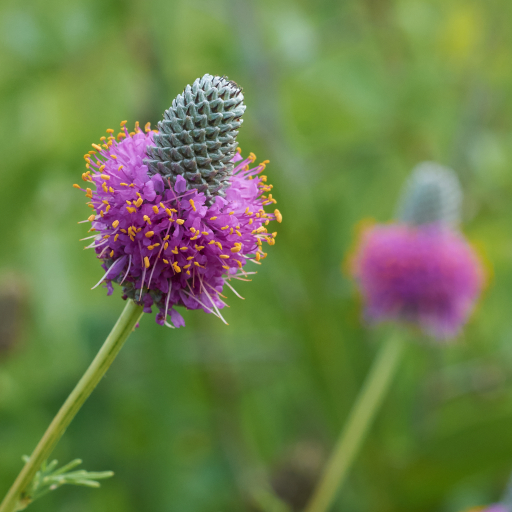
- 🌸 Flower Spikes: Look for dense, cylindrical heads (resembling thimbles) about 1–2 inches long at the tips of the stems.
- ✨ The "Halo" Effect: Tiny purple flowers bloom in a distinct ring, starting at the bottom of the spike and slowly moving upward over several weeks.
- 🌿 Delicate Foliage: The leaves are divided into 3–7 narrow, needle-like leaflets, giving the entire plant an airy, lace-like texture even when it isn't flowering.
- 🟠 Golden Accents: If you look closely, you’ll see bright orange pollen-tipped stamens poking out from the purple petals, creating a stunning "gold-on-velvet" contrast.
🏡 In Your Garden
- 🏗️ Soil Architect: As a member of the legume family, this plant "fixes" nitrogen. It takes nitrogen from the air and stores it in its roots, naturally fertilizing the surrounding soil for its neighbors.
- ⚓ Deep Roots: It develops a massive taproot that can reach up to 6 feet underground. This makes it incredibly drought-resistant, but it also means it hates being moved—pick a "forever home" for it right away!
- 🦋 Pollinator Magnet: It is a high-protein food source. It specifically supports the endangered Rusty Patched Bumble Bee and serves as a host plant for the Dogface Sulphur butterfly.
⚠️ Safety & Toxicity
- ✅ Safe Status: Dalea purpurea is considered non-toxic to humans, dogs, cats, and livestock.
- 🍵 Edibility Note: While it is safe, it is not a common garden vegetable. Historically, various Indigenous tribes used the leaves to brew a pleasant, medicinal tea or chewed the roots for their sweet flavor.
✨ Fun Fact
Unlike many flowers that bloom all at once, the Purple Prairie Clover is a "slow burner." Because the flowers bloom in a traveling ring from the bottom to the top, a single flower head can provide nectar to bees for a much longer period than most other prairie wildflowers.

Detailed Care Instructions
To grow Dalea purpurea, also known as purple prairie clover, follow these steps:
- Climate and Location: Choose a planting location that receives full sun and has well-draining soil. Purple prairie clover is native to the central and western regions of North America, so it prefers areas with hot summers and cold winters.
- Soil Preparation: Prepare the soil by removing any weeds or grasses. Loosen the soil to a depth of 6-8 inches and amend it with organic matter like compost to improve drainage and fertility.
- Planting: Sow the seeds directly into the prepared soil in early spring or late fall. Rake the seeds lightly into the soil, ensuring good seed-to-soil contact. It is best to plant multiple seeds in case of low germination rates.
- Watering: Water the planting area thoroughly after sowing the seeds. Water regularly, providing about 1 inch of water per week during the growing season. Reduce watering after the plants are established, as they are drought-tolerant.
- Maintenance: Remove any competing weeds or grasses near the plants to ensure they have enough space and nutrients to grow. Mulching around the plants can also help suppress weeds and conserve moisture.
- Pruning: Deadhead the flowers once they have faded to encourage a prolonged blooming period. This can also help prevent self-seeding if unwanted.
- Fertilizer: Dalea purpurea generally does not require much fertilizer. If the soil is poor, you can apply a balanced slow-release fertilizer in early spring following the manufacturer's instructions.
- Pests and Diseases: This plant is relatively resistant to pests and diseases. However, keep an eye out for common garden pests like aphids or grasshoppers, and treat them accordingly.
- Division: After a few years, you can divide mature plants in early spring to produce new plants. Dig up the clumps and carefully separate them into smaller sections, replanting them immediately.
Remember, plants may take a few years to establish and reach their full potential, so be patient. With proper care and maintenance, Dalea purpurea will reward you with beautiful purple flowers and provide a valuable source of nectar for pollinators.

Place in a bright room that is sun drenched almost all day. Or directly in a south-facing window.

To properly water this plant, it is important to consider its unique needs. Ensure that the soil is consistently moist but not saturated. Water the plant deeply, allowing the water to soak in and reach the roots. Avoid getting water on the foliage as this can encourage disease. During periods of drought or hot weather, increase watering frequency as needed. Monitor the soil moisture and adjust watering accordingly, being mindful not to over water. Consider using a drip irrigation system or watering at the base of the plant to reduce the risk of fungal problems.
To fertilize this plant, apply a well-balanced fertilizer with an NPK ratio of 10-10-10 in the spring just before new growth emerges. Use a slow-release fertilizer and follow the manufacturer's instructions for dosage. Avoid overfertilizing as it can lead to excess foliage growth and decreased flowering. Water the plant thoroughly after fertilizing.
The best soil for Dalea purpurea plant is well-draining and nutrient-rich. It should be slightly acidic or neutral with a pH level between 6.0 and 7.5. The soil should be a mixture of sand, loam and clay. It should have good water holding capacity without being waterlogged. The plant should not be grown in heavy clay soils. A soil mixture that includes perlite, vermiculite or peat moss can help to improve drainage and add organic matter to improve soil structure. Adequate amount of nutrients, such as nitrogen, potassium and phosphorous, should be provided for proper growth and development of the plant. Fertilizers can be added to the soil before planting the seeds or during the growing season. Proper soil preparation is essential for the thriving of Dalea purpurea plant.
To propagate this plant, you can start by collecting seeds from a mature plant and sowing them in a pot or directly in the ground. Make sure the soil is well-draining and keep it consistently moist. You can also take stem cuttings from a healthy plant in the spring or summer and dip the cut ends in rooting hormone before planting them in moist soil and keeping them in a warm, humid environment until they establish roots. Whichever method you choose, be sure to protect the young plants from harsh sun and wind until they are strong enough to survive on their own.
Common pests of the purple prairie clover include Spider mites, aphids, thrips, larvae. Make a habit of checking your purple prairie clover frequently for pests so that any infestations can be caught and managed early.








