Plant Overview
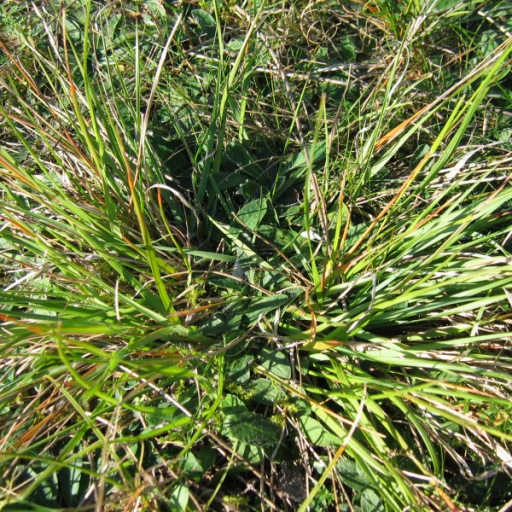
Known as "Heath Grass," this resilient perennial is a specialist of wild, acidic landscapes. Unlike the lush, pampered grasses of a suburban lawn, Danthonia decumbens thrives where others struggle—on poor soils, moorlands, and rugged hillsides. Its humble, low-lying habit tells a story of survival against wind, grazing animals, and nutrient-poor ground.
🔍 How to Identify
- 🌿 Growth Habit: It forms dense, compact tufts that are "decumbent," meaning the stems often sprawl or lie flat against the ground before curving upward.
- ⚪ The Ligule: Instead of a translucent flap where the leaf meets the stem, this grass features a distinct, tiny fringe of white hairs—a key diagnostic feature for identification.
- 🟣 Spikelets: The flowering heads are small and often tinged with a subtle purple or grey-green hue, clustered in a narrow, upright arrangement.
🏡 In Your Garden
- 🧪 Soil Indicator: If you find this grass appearing naturally, it is a living "pH meter." It signals that your soil is likely acidic, peaty, or sandy and relatively low in nutrients.
- 🌱 Low Maintenance: Because it is adapted to harsh conditions, it requires almost no "care." It is an excellent choice for a wild, heath-style rockery or a "no-mow" meadow area where you want to encourage native biodiversity.
- 🤫 Secret Bloomers: This plant is famous for "cleistogamy," meaning many of its flowers never actually open. They self-pollinate while still sealed inside the leaf sheath, ensuring the next generation even in bad weather.
⚠️ Safety & Toxicity
- ✅ Non-Toxic: Heath Grass is generally considered safe and non-toxic for humans, dogs, cats, and livestock.
- 🐑 Low Forage Value: While it isn't poisonous to grazers, it isn't particularly "tasty" or nutritious compared to lush pasture grasses, so livestock will usually only eat it if nothing else is available.
✨ Fun Fact
The species name decumbens is Latin for "lying down." This refers to its "tired" look; the stems often appear as if they are exhausted and resting on the soil rather than standing tall!

Detailed Care Instructions
To grow Danthonia Decumbens, also known as heath grass or spreading wallaby grass, follow these steps:
- Choose a suitable planting location: Danthonia Decumbens prefers well-draining soil and can tolerate a range of soil types. It thrives in areas with full sun or partial shade.
- Prepare the soil: Clear the planting area by removing any weeds, rocks, or debris. Loosen the soil to a depth of around 6-8 inches and mix in organic matter, such as compost, to improve soil fertility and drainage.
- Sow the seeds: Scatter the seeds evenly over the prepared soil. Lightly rake the seeds into the soil, ensuring good seed-to-soil contact. Alternatively, you can plant seedlings if available.
- Water the planting area: After sowing the seeds, water the area thoroughly to ensure the soil is moist. Keep the soil consistently moist but not waterlogged until the seeds germinate (typically in 1-3 weeks).
- Thin out the seedlings (if necessary): Once the seedlings have reached a couple of inches in height, thin them out if they are too crowded. Space the remaining seedlings around 6-12 inches apart to allow them enough room to grow.
- Maintain proper care: Keep the soil slightly moist to promote healthy growth. Water the plants regularly during dry spells or periods of drought. Overwatering should be avoided as it can lead to fungal diseases. Fertilizing is generally unnecessary, but a light application of a balanced fertilizer during the growing season can help enhance growth.
- Weed control: Regularly monitor the area for weeds and remove them promptly to prevent competition for resources.
- Prune and divide (optional): If the grass becomes overly clumpy or expands beyond its desired area, you can prune and divide the clumps by lifting them out of the ground, dividing them into smaller sections, and replanting them as desired.
By following these guidelines, you should be able to successfully grow Danthonia Decumbens in your garden or landscape.

Place in a bright room that is sun drenched almost all day. Or directly in a south-facing window.

Danthonia Decumbens is a type of grass plant that requires regular watering to maintain its health and growth. It is essential to water the plant deeply, allowing the water to penetrate the soil and reach the roots. However, overwatering can lead to root rot and other fungal issues in the plant.
To water Danthonia Decumbens, you should follow these steps:
1. Check the soil moisture level by sticking your finger in the soil up to 2 inches deep. If the soil feels dry, it's time to water the plant.
2. Use a watering can or hose with a spray nozzle to water the plant. Avoid using high-pressure water, which can damage the plant's foliage.
3. Water the plant deeply, allowing the water to penetrate the soil and reach the roots. Try to avoid wetting the foliage, as this can lead to fungal issues.
4. If you have planted Danthonia Decumbens in a container, water it until the water starts to drain from the bottom of the pot.
5. Water the plant early in the morning or late in the evening, when the temperature is cooler and the water is less likely to evaporate.
6. During hot and dry weather conditions, you may need to water your plant more frequently to prevent it from drying out.
Remember that regular watering is essential for Danthonia Decumbens to thrive. However, you should avoid overwatering, which can lead to problems in the plant.
This plant prefers a balanced fertilization schedule, meaning that it should be fertilized with equal amounts of nitrogen, phosphorus, and potassium. Apply fertilizer in the early spring, before new growth appears, and again in mid-summer. Use a slow-release fertilizer and follow the manufacturer's instructions for application rates. Be sure to water the plant well after fertilizing. Avoid over-fertilization, as this can cause excessive leaf growth and weaken the plant.
The ideal soil for growing this plant should be well-draining, with a pH range of 6.0 to 7.5. It should be loamy and rich in organic matter, with good water-holding capacity. The soil texture should be light and open, allowing for good root development and air exchange. Avoid heavy soils, as they can restrict root growth and lead to waterlogging. It is also important to ensure adequate nutrition, so consider adding a slow-release fertilizer or compost to the soil before planting. Overall, this plant prefers a soil that is well-balanced and nutrient-rich, with good structure and drainage.
This plant can be propagated by collecting mature seeds and directly sowing them in the soil or by stratifying the seeds for a period of 4 weeks and then sowing them in the soil. The ideal time for sowing is in the spring or early fall. The soil should be well-draining and moist.
Another way to propagate this plant is by dividing the clumps. This can be done by carefully digging up the clump and dividing it into smaller pieces with a sharp knife or spade. Each division should have some roots attached and can be planted immediately in a suitable soil.
Propagation through stem cuttings is not recommended for this plant as it does not grow well from them.








