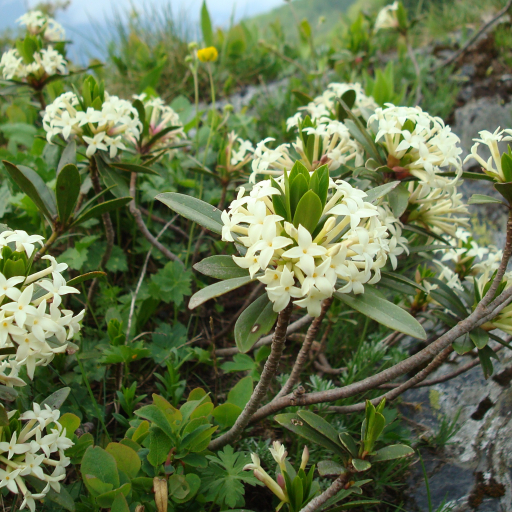
Plant Overview
Commonly known as the Clustered Daphne or Caucasian Daphne, this alpine treasure hails from the rugged mountain slopes of the Caucasus and Turkey. It is a slow-growing, evergreen "sub-shrub" that stays low to the ground, acting as a fragrant carpet for high-altitude landscapes. It is beloved by rock garden enthusiasts for its ability to produce an intoxicating scent that defies its small, humble stature.
🔍 How to Identify
- 🌸 The Bloom Clusters: True to its name (glomerata means "clustered"), it produces tight, head-like bunches of star-shaped flowers at the very tips of its stems. These range from creamy white to a soft, blush pink.
- 🍃 Glossy Foliage: The leaves are dark green, leathery, and narrow (oblanceolate). They are arranged spirally around the stems but often appear crowded toward the tips, forming a lush backdrop for the flowers.
- 📏 Prostrate Habit: Unlike the upright garden Daphnes, this species is a "ground-hugger," rarely growing taller than 10–12 inches, though it can spread slowly into a wide, dense cushion.
🏡 In Your Garden
- 🏔️ Alpine Sensibilities: Because it evolved on rocky mountain slopes, it requires "sharp" drainage. It thrives in gritty, alkaline to neutral soil. If the roots sit in stagnant water for even a short period, the plant may collapse suddenly.
- 🚫 The "No-Touch" Root Policy: Like most members of the Daphne family, this plant is famously temperamental about its roots. It dislikes being moved or even having the soil around its base disturbed. Choose its "forever home" carefully to avoid transplant shock.
⚠️ Safety & Toxicity
- 🚫 Status: Highly Toxic.
- 🧤 Skin & Stomach: All parts of the plant, especially the sap and any berries it may produce, contain daphnetoxin and mezerein. Handling the plant without gloves can cause skin irritation or blistering. If ingested by curious pets or children, it is extremely dangerous and requires immediate medical attention.
✨ Fun Fact
The scent of Daphne glomerata is so powerful that it is often used as a "scent marker" in botanical gardens; even if you can’t see the small plant tucked away in a rock crevice, you will likely smell its sweet, spicy perfume from several yards away!

Detailed Care Instructions
To grow Daphne Glomerata plant, follow the steps below:
- Select a suitable location: Choose a spot in your garden that receives partial shade or filtered sunlight. Daphne Glomerata prefers cooler temperatures and does well in areas with mild summers and cold winters.
- Soil preparation: Prepare the soil by removing any weeds or debris. Daphne Glomerata prefers well-draining soil with a slightly acidic to neutral pH level. If your soil is heavy or retains moisture, consider adding organic matter such as compost or peat moss to improve drainage.
- Planting: Dig a hole that is slightly larger than the plant's root ball. Place the Daphne Glomerata plant in the hole, making sure the top of the root ball is level with the ground. Backfill the hole with soil and gently pat it down to remove any air pockets. Water deeply after planting to settle the soil and ensure the roots make good contact.
- Watering: Daphne Glomerata plants require regular watering, especially during the establishment phase. Keep the soil consistently moist but not waterlogged. Avoid overwatering, as this can lead to root rot.
- Mulching: Apply a layer of organic mulch, such as wood chips or pine needles, around the plant. Mulching helps conserve moisture, suppresses weed growth, and provides insulation during colder months.
- Pruning: Prune Daphne Glomerata plant after it has finished flowering to maintain its shape and promote healthy growth. Remove any dead or damaged branches and shape the shrub as desired. Take care when pruning, as Daphne Glomerata plants have poisonous sap that can cause skin irritation.
- Fertilizing: Fertilize Daphne Glomerata sparingly, as excessive fertilizer can harm the plant. Use a balanced slow-release fertilizer formulated for shrubs or use a fertilizer specifically designed for flowering shrubs. Follow the instructions on the packaging for application rates and timing.
- Protection: Daphne Glomerata is generally hardy but may require protection from harsh winter conditions, especially in colder climates. Consider covering the plant with burlap or providing a windbreak to shield it from strong winds and extreme cold temperatures.
Overall, Daphne Glomerata can be a bit challenging to grow, as it requires specific conditions and care. However, with proper attention to its needs for light, soil, water, and protection, you can successfully cultivate this beautiful plant in your garden.

Place in a window with dappled sun or a spot in the middle of a room. Or directly in a window facing west or east.

To properly water the Daphne Glomerata plant, there are a few key considerations to keep in mind:
1. Moisture Level: Daphne Glomerata prefers consistently moist soil. Before watering, check the moisture level by sticking your finger about an inch into the soil. If it feels dry at this depth, it's time to water.
2. Watering Frequency: Generally, water the plant deeply and thoroughly about once a week. However, this can vary depending on factors such as temperature, humidity, and soil type. During hot summer months, you may need to water more frequently to prevent the soil from drying out completely.
3. Watering Technique: Instead of shallow watering, it is best to apply water slowly and directly to the plant's root zone. This helps the roots absorb water efficiently and prevents runoff. Use a watering can or a hose with a gentle spray nozzle to control the flow of water.
4. Proper Drainage: Daphne Glomerata dislikes soggy or waterlogged soil, so make sure the pot or planting area has adequate drainage holes. After watering, check that excess water can freely escape rather than accumulating around the roots.
5. Avoid Overwatering: Overwatering can be harmful to Daphne Glomerata, leading to root rot and other issues. Always allow the top inch of soil to dry out slightly between waterings, as this prevents excessive moisture that the plant cannot utilize.
6. Mulching: Applying a layer of organic mulch around the base of the plant helps retain soil moisture, regulating soil temperature, and minimizing weed growth. This can further aid in maintaining the moisture levels required by the Daphne Glomerata.
Remember, it is crucial to observe the specific requirements of each individual plant, taking into account factors such as its location, climate, and pot type. Monitoring the plant's response to watering and adjusting as necessary will help in providing optimal care for the Daphne Glomerata.
To fertilize the Daphne Glomerata plant, use a balanced slow-release fertilizer specifically formulated for flowering shrubs. Apply the fertilizer in early spring before new growth emerges. Follow the package instructions for the appropriate dosage based on the size and age of your plant. Apply the fertilizer evenly around the base of the plant, keeping it at least six inches away from the stem to avoid burning the roots. Gently work the fertilizer into the top inch of soil and water thoroughly after application to ensure proper absorption. Avoid over-fertilizing, as this can lead to excessive growth or potential harm to the plant.
Daphne glomerata is a deciduous shrub with a compact growth habit. When it comes to choosing the right soil for this plant, it is important to consider its specific needs and preferences.
Daphne glomerata thrives in well-draining soil that is rich in organic matter. The ideal soil pH for this plant is slightly acidic to neutral, ranging from 5.5 to 7.0.
To provide the best growing conditions for Daphne glomerata, it is recommended to use a soil mix that is loamy and fertile. Loam consists of a balanced combination of sand, silt, and clay. This type of soil allows for good water drainage while retaining enough moisture for the plant's roots to access.
Adding organic matter, such as compost or well-rotted manure, to the soil will improve its fertility, water-retention capacity, and overall structure. These additions also enhance the nutrient content of the soil, promoting healthy growth and vigor in Daphne glomerata.
To further improve soil drainage, it can be beneficial to incorporate perlite or coarse sand into the soil mix. This helps prevent the soil from becoming waterlogged, which can lead to root rot and other issues.
When planting Daphne glomerata, ensure that the soil is loose and well-aerated. Proper soil preparation and a suitable planting hole will promote robust root development and ultimately contribute to the plant's overall health.
Regularly monitoring the moisture level of the soil is crucial for Daphne glomerata. While it prefers well-drained soil, it is important to prevent the soil from drying out completely. Consistent but moderate watering, allowing the top inch or so of soil to dry out between waterings, is typically recommended.
Choosing the right soil and providing proper care for Daphne glomerata will create an optimal environment for the plant to thrive and showcase its beautiful flowers and fragrance.
Daphne glomerata can be propagated using several methods, including seed propagation and stem cuttings. Here is a detailed guide on how to propagate Daphne glomerata:
- Selecting a healthy plant: It is important to choose a mature and healthy Daphne glomerata plant from which you will collect seeds or stem cuttings for propagation.
- Seed propagation:
- Collecting seeds: In late summer or early fall, when the plant has ripe fruits, collect the berries containing seeds. Gently squeeze the berries to extract the seeds.
- Seed preparation: Clean the seeds by removing any pulp or debris. You can rinse them gently with water to ensure they are clean.
- Cold stratification: Daphne glomerata seeds require a period of cold stratification to simulate natural winter conditions and promote germination. Place the clean seeds in a container with damp peat moss or vermiculite, and seal it in a plastic bag. Keep the bag in a refrigerator at around 40°F (4°C) for about 8-12 weeks.
- Sowing the seeds: After the cold stratification period, sow the seeds in a seed tray or small pots filled with well-draining potting mix. Bury the seeds at a shallow depth, about ¼ inch deep. Mist the surface lightly with water to maintain moisture.
- Germination: Place the seed tray or pots in a warm location with indirect sunlight. Cover the tray or pots with a clear plastic bag or place them in a propagator to maintain humidity. Germination can take several weeks to a few months. Once the seedlings have grown a few inches tall and have developed a few true leaves, they can be transplanted into individual pots.
- Collecting seeds: In late summer or early fall, when the plant has ripe fruits, collect the berries containing seeds. Gently squeeze the berries to extract the seeds.
- Stem cuttings:
- Selecting cuttings: Take stem cuttings from a mature and healthy Daphne glomerata plant during the active growing season, typically late spring to early summer.
- Cutting preparation: Cut a 4-6 inch long stem tip, ensuring it has 2-3 pairs of leaves. Remove the lower leaves, leaving only a few leaves at the top.
- Rooting hormone: Optional but recommended, dip the cut end of the stem into a rooting hormone powder to encourage root development.
- Potting mix: Prepare a well-draining potting mix by combining equal parts of perlite and peat moss or a commercial propagation mix.
- Potting the cuttings: Make a hole in the potting mix and insert the cutting, burying it about 1-2 inches deep. Firm the soil gently around the cutting to provide stability.
- Enclosing in a humid environment: Place a clear plastic bag over the potted cutting to create a mini greenhouse. This will help maintain high humidity levels necessary for root formation.
- Providing light and temperature: Place the potted cutting in a bright but indirect light location. Maintain a temperature of around 70-75°F (20-24°C).
- Mist and water: Mist the cutting and the inside of the plastic bag occasionally to keep the soil and air moist. Water the cutting when the top inch of the soil feels dry.
- Transplanting: After a few weeks, when you see new growth and roots emerging, it indicates successful root development. At this point, you can transplant the rooted cutting into an individual pot with regular potting soil.
With these propagation methods, you can successfully propagate Daphne glomerata and expand your collection of these beautiful plants.
- Selecting cuttings: Take stem cuttings from a mature and healthy Daphne glomerata plant during the active growing season, typically late spring to early summer.








