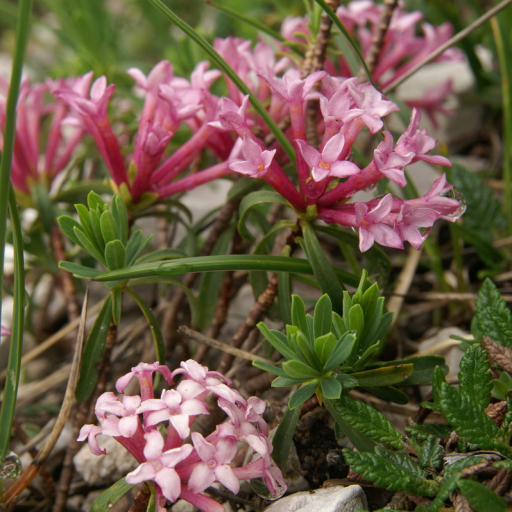
Plant Overview
Known as the Striated Daphne, this fragrant alpine beauty is a gem of the European mountains. It creates low, sprawling mats of pink blossoms that can perfume an entire hillside during the late spring. While it looks delicate and refined, it is a hardy survivor of rocky, high-altitude terrain, often found clinging to limestone cliffs where little else grows.
🔍 How to Identify
- 🌸 Starry Clusters: Produces dense heads of tubular, four-lobed flowers that range from pale pink to deep lilac.
- 🖋️ Fine Striations: If you look closely at the outer tube of the flower, you will see delicate longitudinal lines or "stripes" that give the plant its name.
- 🍃 Leathery Foliage: The leaves are small, narrow, and dark green, arranged in tight spirals at the ends of the branches.
- 📏 Prostrate Habit: Unlike some upright Daphne shrubs, this species stays very low to the ground, forming a dense, woody cushion.
🏡 In Your Garden
- 🪨 Alpine Ambitions: This plant is a "calcicole," meaning it craves lime-rich, alkaline soil. It is the perfect choice for a dedicated rock garden or a crevice garden where drainage is sharp.
- 🚫 Settling Down: It develops a deep, sensitive taproot to find water in rocky cracks. Because of this, it hates being transplanted; choose its "forever home" carefully to avoid "Daphne sudden death."
- 🌬️ Cool Roots: While it enjoys the sun, it prefers its root zone to stay cool and moist. Tucking it behind a large, heat-absorbing stone can help it thrive.
⚠️ Safety & Toxicity
- ☣️ Highly Poisonous: All parts of the Striated Daphne are toxic to humans and animals if eaten.
- 🔴 Dangerous Berries: It produces small, brownish-red fruits that are particularly hazardous to children and curious pets.
- 🧤 Sap Sensitivity: The plant contains mezerein, a compound that can cause skin irritation or blistering. It is wise to wear gloves if you are pruning or handling the stems.
✨ Fun Fact
The scent of Daphne striata is so powerful that hikers in the Alps often smell the plant long before they see it hidden among the rocks. It is frequently described as a mix of cloves, honey, and expensive perfume!

Detailed Care Instructions
Daphne striata, also known as the Chinese Daphne, is a beautiful evergreen shrub known for its fragrant flowers and lush foliage. Here are some tips on how to successfully grow this plant:
1. Location:
- Light: Daphne striata thrives in partial shade to full sun. However, in hotter climates, providing some afternoon shade can help protect it from sunburn.
- Soil: It prefers well-draining, slightly acidic to neutral soil. Amend heavy clay or sandy soils with organic matter, such as compost, to improve drainage and fertility.
2. Planting:
- Timing: The best time to plant is in spring or early fall.
- Spacing: Plant them at least 2-3 feet apart to allow for their mature size.
- Planting Hole: Dig a hole that is slightly larger than the root ball. Place the plant in the hole, ensuring that the top of the root ball is level with the soil surface, and backfill with soil.
3. Watering:
- Moisture: Keep the soil consistently moist but not waterlogged. Water regularly, especially during dry spells, as daphnes do not tolerate drought well.
- Mulching: Apply a layer of organic mulch to help retain soil moisture and suppress weeds.
4. Fertilization:
- Fertilize sparingly. A balanced, slow-release fertilizer can be applied in early spring if needed, but avoid over-fertilizing as it can harm the plant.
5. Pruning:
- Prune after flowering to shape the plant and remove any dead or damaged wood. Avoid heavy pruning, as daphnes bloom on old wood.
6. Pests and Diseases:
- Keep an eye out for pests like aphids and scale, as well as fungal issues. Proper spacing and air circulation around the plants can help prevent problems.
7. Winter Care:
- In colder regions, consider providing winter protection by mulching around the base of the plant to insulate the roots and prevent frost heave.
8. Propagation:
- Daphne striata can be propagated through semi-hardwood cuttings taken in late summer or early fall. Ensure to use a hormone rooting powder for better success.
By following these guidelines, you can grow a healthy and vibrant Daphne striata plant, enjoying its beauty and fragrance year after year.

Place in a window with dappled sun or a spot in the middle of a room. Or directly in a window facing west or east.

To properly water this plant, it is important to do so in small amounts on a regular basis rather than drenching it infrequently. The root system of this plant is sensitive to waterlogging, so it is important to ensure that any excess water drains away easily. When watering, it is recommended to avoid getting water on the leaves and flowers, as this can cause damage and promote disease. The best time to water is in the early morning or evening when the temperatures are cool and there is less sunlight. It is important to monitor the soil moisture regularly and adjust the watering schedule as necessary depending on the climate and humidity levels in your specific location.
To fertilize Daphne striata effectively, follow these guidelines:
- Timing: Fertilize in early spring as new growth begins and again in late summer if necessary. Avoid fertilization in late fall or winter when the plant is dormant.
- Fertilizer Type: Use a balanced, slow-release fertilizer with an N-P-K ratio such as 10-10-10 or 14-14-14. Alternatively, you may use a fertilizer specifically formulated for flowering shrubs.
- Application Rate: Follow the manufacturer’s instructions for the appropriate amount based on the size and age of your plant. Generally, a small amount (approximately 1 tablespoon) around the base of the plant is sufficient for younger plants, while mature plants may require slightly more.
- Method: Apply the fertilizer evenly around the root zone, keeping it a few inches away from the stem to avoid root burn. Gently work it into the top inch or two of soil without disturbing the roots.
- Watering: After application, water the plant thoroughly to help the fertilizer penetrate the soil and reach the roots.
- Monitoring: Observe your plant for signs of nutrient deficiency or excess. Adjust your fertilization practices accordingly based on its growth and health.
- Soil Health: Consider incorporating organic matter, such as compost, into the soil during the spring to improve nutrient availability and soil structure over time.
Remember to avoid over-fertilizing, as this can lead to leggy growth and reduce flowering in the following seasons.
Daphne striata thrives best in a soil mix that provides excellent drainage while retaining some moisture. An ideal soil composition would be a blend of:
- Acidic to Neutral pH: Aim for a pH range of about 5.5 to 7.0 to accommodate the plant's preference.
- Loamy Texture: A loamy mixture is advantageous as it balances moisture retention and drainage.
- Organic Matter: Incorporate organic material, such as well-decomposed compost or leaf mold, which will improve soil structure and provide essential nutrients.
- Sand or Grit: Adding coarse sand or small gravel can enhance drainage, preventing waterlogging, which can be detrimental to the plant.
- Perlite or Pumice: Including these materials can help aerate the soil and further improve drainage.
When preparing the planting area, ensure that the soil is well-prepared and that the mixture promotes healthy root development while being mindful not to create compacted conditions. Regular monitoring of moisture levels will also be beneficial, as the plant prefers evenly moist soil but cannot tolerate soggy conditions.
To propagate Daphne Striata, you can employ several methods. Here are the most effective techniques:
1. Stem Cuttings
- Timing: The best time to take cuttings is during the early summer when the plant is actively growing.
- Selection: Choose healthy, semi-hardwood stems that are around 4-6 inches long. Make sure they have several leaf nodes.
- Preparation: Using a clean, sharp knife or scissors, make a cut just below a node. Remove the lower leaves, leaving a couple of leaves on the cutting.
- Rooting Hormone: Dip the cut end in rooting hormone to enhance the chances of successful rooting.
- Planting: Insert the cuttings into a well-draining potting mix (a mix of perlite and peat works well). Water the cuttings lightly.
- Humidity and Environment: Cover the pot with a plastic bag or a propagation dome to maintain humidity. Place it in a location with indirect light and warmth.
- Maintenance: Mist the cuttings occasionally and check for moisture. After a few weeks, you should see root development, indicated by new growth or resistance when gently tugging on the cutting.
- Transplanting: Once the roots are sufficiently established (usually in about 4-8 weeks), transplant the new plants into larger pots or into the garden.
2. Layering
- Timing: This method is best done in early spring or fall.
- Selection of Branch: Choose a flexible branch from the existing plant.
- Preparation: Bend the branch down to the ground and make a small notch or scrape on the underside where it contacts the soil, which helps the roots to form.
- Planting: Bury the notched portion of the branch under a few inches of soil, leaving the tip exposed. You can secure it with a U-shaped wire or a rock.
- Watering: Water the buried section to keep it moist, and monitor for growth.
- Separation: Once roots have developed (which may take several months), sever the new plant from the parent and transplant it to its desired location.
3. Division (for established plants)
- Timing: The best time for division is during the plant's dormant season, typically in spring or fall.
- Preparation: Carefully dig up the established root ball of the plant.
- Separation: Gently separate the root ball into smaller sections, ensuring each division has a good portion of roots and at least one healthy stem.
- Replanting: Replant each division in a well-prepared section of the garden or in pots. Water thoroughly after planting.
- Care: Maintain moisture without over-watering as the newly divided plants establish.
General Care After Propagation: - Place newly propagated cuttings or divisions in a partially shaded area initially to prevent stress.
- Monitor for pests and diseases, and provide adequate moisture as they establish.
- Fertilize sparingly, as these plants prefer well-drained soil and can be sensitive to excessive nutrients.
By following these methods, you should be able to propagate successfully. Good luck!








