Plant Overview
Often called the Indian Rhubarb or Umbrella Plant, Darmera peltata is a dramatic woodland giant that feels like a relic from a prehistoric era. It is famous for its "flower before foliage" routine, where alien-looking stalks emerge from the mud long before the leaves appear. This West Coast native is a masterpiece of architecture for damp, shady corners where other plants might struggle with wet feet.
🔍 How to Identify
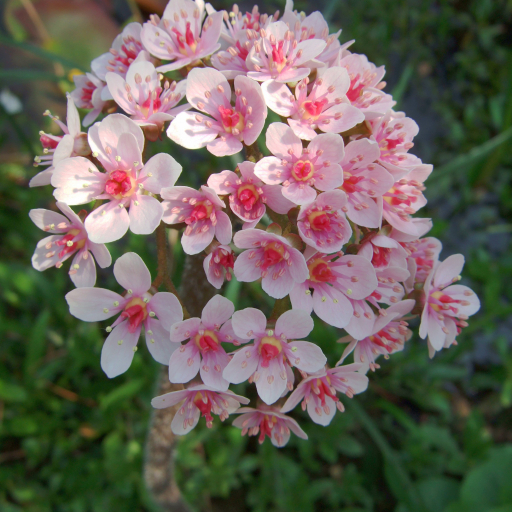
- 🌸 Early Bloomers: In early spring, tall, leafless, and slightly hairy stalks rise from the ground. They are topped with rounded, pom-pom clusters of tiny pink-to-white star-shaped flowers.
- ⛱️ Umbrella Leaves: Once the flowers fade, the leaves emerge. They are truly spectacular—reaching up to 2 feet across, they are "peltate," meaning the stem attaches directly to the center of the leaf, creating a natural bowl shape.
- 🍂 Autumn Transformation: In late summer and fall, the deep green foliage shifts into a dramatic display of coppery-red and bronze, making it one of the best woodland plants for seasonal color.
🏡 In Your Garden
- 💧 The Bog Specialist: This is a "marginal" plant, meaning it loves to live at the edge of a pond or in a boggy marsh. It thrives in heavy clay or mud where oxygen is low, provided it never fully dries out.
- 🐚 Slow and Steady: It grows via a thick, fleshy rhizome that creeps along the surface of the soil. Because it spreads slowly, it is easy to manage and won't suddenly take over your entire garden like some invasive pond plants.
⚠️ Safety & Toxicity
- 🟢 Low Risk: Darmera peltata is generally considered non-toxic to humans and common household pets like dogs and cats.
- 👅 Mild Irritation: While not poisonous, the plant contains tannins and fibrous material that can cause mild stomach upset if a curious pet decides to munch on the thick rhizomes or large leaves.
✨ Fun Fact
The species name peltata comes from the Latin word "pelta," which refers to a small, crescent-shaped shield used in Ancient Greece. When you look at the way the leaf sits balanced atop its central stalk, it looks exactly like a shield being held up for protection!

Detailed Care Instructions
To grow Darmera Peltata, also known as umbrella plant or Indian rhubarb, you can follow these steps:
- Choose a suitable location: Darmera Peltata prefers partial shade to full sun and thrives in moist soil, preferably near a pond or stream. Make sure the location provides enough space for the plant to grow, as it can reach a height of up to 6 feet.
- Prepare the soil: The plant prefers rich, fertile, and loamy soil. Amend your soil with organic matter, such as compost or well-rotted manure, to improve drainage and nutrient content.
- Planting: Dig a hole that is slightly larger than the root ball of the plant. Place the root ball in the hole, making sure the crown of the plant is slightly above the soil level. Fill the hole with soil and gently press it down around the plant.
- Watering: Keep the soil consistently moist, but not waterlogged. Water regularly, especially during dry periods, to ensure the soil remains evenly moist. Avoid overhead watering, as it can lead to fungal diseases.
- Mulching: Apply a layer of organic mulch around the plant, such as wood chips or compost, to help retain moisture and suppress weed growth. Leave a small gap around the stem to prevent rot.
- Fertilizing: Darmera Peltata generally doesn't require much fertilization. However, you can apply a balanced, slow-release fertilizer in early spring to promote healthy growth.
- Pruning: Prune any dead or damaged leaves and stems as needed. In late fall or early winter, after the foliage dies back, you can cut the plant back to the ground to rejuvenate it for the next growing season.
- Propagation: You can propagate Darmera Peltata by division. In early spring, dig up the plant and divide the clumps into smaller sections, making sure each section has some healthy roots and shoots. Replant the divisions immediately in suitable locations.
By following these steps, you should be able to successfully grow Darmera Peltata in your garden or landscape.

Place in a window with dappled sun or a spot in the middle of a room. Or directly in a window facing west or east.

To properly water this plant, you should first check the soil moisture levels by inserting your finger into the soil up to your knuckle. If the soil feels dry, it's time to water. When watering, aim to provide a deep soak rather than a light sprinkle. You can accomplish this by watering slowly and deeply, allowing the water to penetrate the soil and saturate the root zone. It's important not to let the soil become waterlogged, so make sure there is proper drainage. Additionally, be cautious of overwatering during the dormant season. Overall, regular and consistent watering is important for the health and growth of this plant.
- Choose a well-draining soil that is rich in organic matter.
- Add a balanced fertilizer to the soil before planting.
- In the spring, apply a slow-release fertilizer according to the package instructions.
- Water thoroughly after applying fertilizer.
- Take care not to over-fertilize as this can lead to excessive growth and potential harm to the plant.
- Monitor the soil for pH and nutrient levels and adjust fertilizing accordingly.
- In the fall, stop fertilizing to allow the plant to enter dormancy.
The ideal soil for this plant is a moist, fertile soil that is rich in organic matter. It should be well draining, but also retain moisture, as this plant prefers consistently moist conditions. The soil should have a pH level that is slightly acidic to neutral. It should also be aerated, as this plant has a shallow root system and needs adequate oxygen to thrive. Add compost or other organic matter to the soil prior to planting to provide essential nutrients and improve soil structure. Avoid using heavy clay soils or soils that are too sandy.
Darmera peltata is a herbaceous plant that can be propagated through division or seeds. To propagate through division, first, choose a healthy parent plant that has been growing for at least two years. Then, dig up the plant in spring or fall when it is dormant and the soil is moist. Carefully separate the root ball into several sections, making sure each section has at least one healthy shoot and root system. Plant each section in a new location with well-draining soil and adequate moisture.
To propagate through seeds, collect the seeds in fall when the flowers have faded and the seed heads have dried. Sow the seeds in a flat container filled with a moist mix of peat moss and sand. Cover the seeds lightly with soil and water well. Place the flat in a cool and bright location, but protected from direct sunlight. After a few weeks, the seeds should start to germinate. Once the seedlings have grown a few inches tall, they can be transplanted into individual pots.
Common pests of the indian-rhubarb include Spider mites, aphids, whiteflies, snails. Make a habit of checking your indian-rhubarb frequently for pests so that any infestations can be caught and managed early.








