Plant Overview
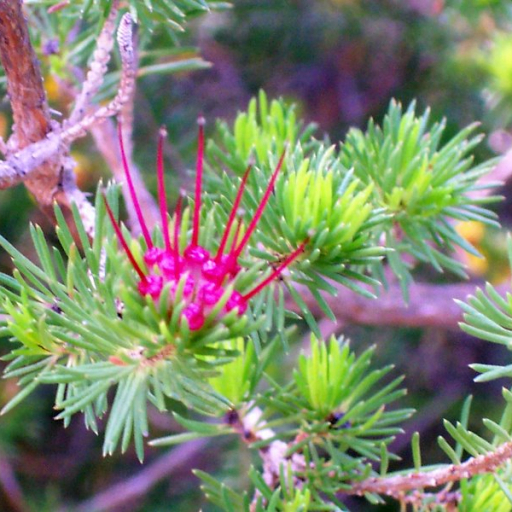
Commonly known as the Clustered Scent-myrtle, this Australian native is a rugged beauty found clinging to the rocky coastlines and sandy heathlands of New South Wales. It is beloved for its "pin-cushion" flowers that look like tiny bursts of white and pink fireworks against a backdrop of feathery green. In a garden setting, it acts as a magnetic hub for honey-eating birds and native bees, bringing constant movement and life to the landscape.
🔍 How to Identify
- 🌿 Fine Foliage: The leaves are short, needle-like, and grow in tight, crowded clusters along the stems, giving the shrub a soft, mossy texture from a distance.
- 🌸 Pincushion Blooms: The flowers are small, tubular, and gathered in dense heads at the ends of the branches. They often start as a creamy white or pale green and blush into a deep pink as they mature.
- 📏 Growth Form: It typically grows as a low, spreading shrub, rarely exceeding 1.5 meters in height, making it an excellent choice for ground cover or rockery filling.
🏡 In Your Garden
- 🏖️ Drainage is Key: Coming from coastal sandstone regions, this plant thrives in sandy, well-draining soil. It is highly susceptible to root rot if left in heavy, waterlogged clay.
- ☀️ Sun Seeker: While it can tolerate light dappled shade, it flowers most prolifically when given plenty of sunshine. More sun also helps the foliage stay dense and prevents the plant from becoming "leggy."
- 🌱 Handle with Care: The Clustered Scent-myrtle has a sensitive root system and generally "hates" being moved. It is best to plant it directly into its permanent home rather than repotting it multiple times.
⚠️ Safety & Toxicity
- ✅ Safe for All: Darwinia fascicularis is generally considered non-toxic to humans, cats, and dogs.
- 🧤 Prickly Texture: While not poisonous, the dense, needle-like foliage can be slightly abrasive. If you have very sensitive skin, you may want to wear gloves when pruning to avoid minor skin irritation or scratches.
✨ Fun Fact
The genus Darwinia was named to honor Erasmus Darwin, the grandfather of Charles Darwin. Erasmus was a famous physician and botanist who wrote a long poem called "The Botanic Garden," which explored the "loves of plants" and early theories of evolution!

Detailed Care Instructions

Some plants require more regular watering than others, which should be done every few days. It's critical to maintain the soil moist all of the time. The water requirements of the same plant placed in pots with varying sizes will differ. Because the water in the smaller pot evaporates faster than the water in the larger pot, it will require more watering. Regardless of pot size, the surface should constantly be maintained moist.








