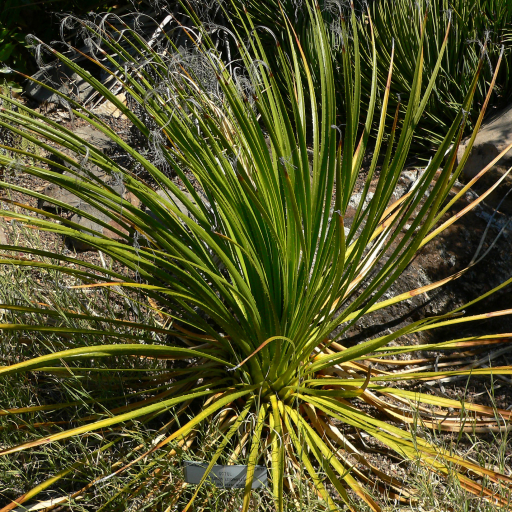
Plant Overview
Known as the Smooth-leaf Sotol or the Green Desert Spoon, this architectural marvel hails from the rugged landscapes of the Chihuahuan Desert. While it looks like a cross between a yucca and a grass, it is actually a distant relative of asparagus. Historically, this plant was a "super-resource" for Indigenous peoples, providing fiber for sandals, sugar-rich hearts for food, and the base for the potent distilled spirit also known as Sotol.
🔍 How to Identify
- 🗡️ The Foliage: Hundreds of long, narrow, ribbon-like leaves radiate from a central base, creating a perfectly symmetrical, rounded explosion of green.
- 🪝 The Margins: Despite its name "smooth-leaf," the edges of the leaves are lined with tiny, recurved prickles that can snag skin or clothing.
- 🗼 The Bloom: When mature, it sends up a towering, narrow flower stalk that can reach up to 15 feet tall, covered in thousands of tiny, creamy-white blossoms.
🏡 In Your Garden
- 🏜️ Drainage is King: This plant thrives on neglect but will rot instantly in "wet feet." In a garden setting, it’s best to plant it on a slight mound or in rocky, porous soil to ensure water moves away from the crown.
- ⏳ Slow and Steady: The Sotol is a slow grower, often taking years to develop its signature woody trunk. Because it is incredibly drought-tolerant, it is the perfect "set it and forget it" centerpiece for xeric landscapes or modern gravel gardens.
⚠️ Safety & Toxicity
- ⚔️ Physical Hazard: The primary danger is mechanical. The hooked teeth along the leaf margins are sharp and can cause painful scratches. It is best planted away from walkways or areas where children and pets play.
- 🐾 Non-Toxic: Unlike many desert succulents (like Agaves or Euphorbias), the Dasylirion genus is generally considered non-toxic to dogs and cats if nibbled, though the tough fibers are difficult to digest.
✨ Fun Fact
The heart of the Sotol plant is so rich in fermentable sugars that it has been used for centuries to produce a smoky, earthy spirit. Unlike Tequila, which is made from farmed Agave, most Sotol liquor is still made from wild-harvested plants in the deserts of Northern Mexico.

Detailed Care Instructions
To grow Dasylirion Leiophyllum plant, also known as Sotol or Desert Spoon, follow these steps:
- Climate and Soil Requirements: Make sure you are living in a suitable climate for the plant. The Desert Spoon plant thrives in dry, desert-like conditions. It can tolerate cold temperatures but not extreme frost. It prefers well-draining soil, so mix sandy or gravelly soil with regular potting soil to ensure proper drainage.
- Location: Choose a sunny spot in your garden or patio where the plant can receive full sun for at least 6-8 hours a day. This plant needs ample sunlight to grow well.
- Planting: Dig a hole in the ground or a large container that is slightly larger than the plant's root ball. Place the plant in the hole and backfill it with the soil mixture, ensuring that the plant is planted at the same depth as it was in its previous container. Leave enough space around the plant to allow for air circulation and future growth.
- Watering: Water the plant thoroughly after planting to help it establish roots. After that, water deeply but infrequently, allowing the soil to dry out between waterings. Desert Spoons are drought-tolerant plants and can survive with little to no water once established.
- Fertilization: Fertilize the plant sparingly with a balanced slow-release fertilizer during the growing season, typically in spring. Avoid over-fertilization, as it can harm the plant.
- Pruning: Remove any dead or damaged leaves as needed to maintain the plant's appearance. However, avoid pruning healthy leaves, as they contribute to the growth and health of the plant.
- Propagation: You can propagate Dasylirion Leiophyllum plants by collecting the seeds or by removing offsets, which are small plantlets that develop around the base of the main plant. Sow the seeds in well-draining soil and keep them consistently moist until germination. Allow the plantlets to grow a bit before transplanting them to a larger pot or their permanent location.
- Protection: If you live in an area with intense winter frost, you may need to protect your Dasylirion Leiophyllum plant by covering it with a frost cloth or moving it to a sheltered location during colder months.
Remember, these plants are slow-growing, so be patient and give them time to establish and develop.

Place in a bright room that is sun drenched almost all day. Or directly in a south-facing window.

To water this type of plant, you should first ensure that the soil is completely dry before watering. This can be tested by sticking your finger about an inch deep into the soil to check for moisture. If the soil is dry, slowly water the plant until the water starts to drain out of the bottom of the container. It is important to avoid overwatering, as this can lead to root rot. In general, this plant prefers infrequent watering, possibly once a month depending on the environment and climate. It is important to make sure the soil has good drainage to prevent water from sitting in the container.
To fertilize this plant, you should use a balanced slow-release fertilizer during the growing season. Apply the fertilizer around the base of the plant, taking care not to let it touch the leaves or stem. Water the plant immediately after fertilizing to help distribute the nutrients evenly. Do not fertilize during the winter months when the plant is dormant.
The recommended soil for this plant is well-draining and sandy, as it originates from arid regions. It should not be planted in rich or heavy soil as this may cause root rot. Additionally, a soil mixture that includes gravel or perlite can increase drainage and prevent waterlogging. The pH level should be neutral to slightly acidic. The plant also benefits from occasional soil amendments with compost or other organic matter to improve overall soil health.
To propagate this plant, you will need to carefully remove offsets, or smaller plants, that have grown at the base of the parent plant. Use a clean, sharp knife or gardening shears to cut the offset away from the parent plant, making sure to include some of the roots. Plant the offset in a well-draining soil mixture and water it regularly to encourage growth. It is important to keep the new plant out of direct sunlight until it has become established, which may take several weeks. With proper care, the plant should take root and continue to grow into a mature specimen over time.








