Plant Overview
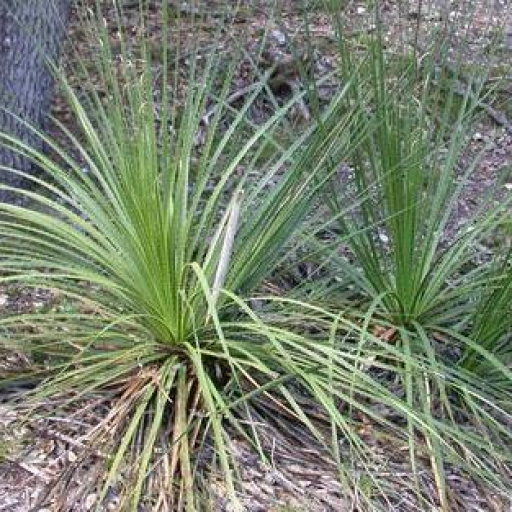
Commonly known as the "Texas Sotol" or "Desert Candle," this rugged desert dweller is the quintessential survivor of the American Southwest. While it may look like a cross between a grass and a yucca, it creates a striking architectural explosion of narrow, green ribbons that can anchor any landscape. Native to the rocky slopes of Texas and Mexico, it has been a vital resource for indigenous cultures for thousands of years, providing everything from fiber to fermented spirits.
🔍 How to Identify
- 🌵 The Rosette: It forms a dense, symmetrical mound of hundreds of long, slender, grass-like leaves that radiate from a central hidden trunk.
- 🪚 Marginal Teeth: Look closely at the leaf edges; they are lined with tiny, sharp, forward-pointing "teeth" that give the plant its fierce reputation.
- 🕯️ The Bloom: When mature, it sends up a magnificent, candle-like flower spike that can reach up to 15 feet tall, crowded with thousands of tiny, creamy-white blossoms.
🏡 In Your Garden
- ☀️ Drainage is King: This plant thrives on "tough love" but will quickly rot if its roots stay wet. It is essential to use gritty, fast-draining soil that mimics its native limestone hillsides.
- 📍 Strategic Placement: Because of those saw-toothed leaf edges, never plant Sotol near a narrow walkway or a child's play area. It is best used as a "focal point" or a natural security barrier.
- 💧 Drought Champion: Once established, it is exceptionally drought-tolerant, making it a perfect choice for xeriscaping or low-maintenance rock gardens.
⚠️ Safety & Toxicity
- 🩹 Physical Hazard: While the Texas Sotol is not chemically toxic to humans or pets, its leaves are literal saws. The sharp teeth can cause deep scratches or "paper cuts" if brushed against.
- 🧤 Handling: Always wear heavy-duty leather gloves and long sleeves when pruning or transplanting to avoid skin irritation and cuts.
✨ Fun Fact
The Texas Sotol isn't just a garden plant—it's the source of a distinct distilled spirit also called "Sotol." Similar to Tequila or Mezcal, the "heart" (pigna) of the plant is roasted and fermented to create a drink with a smoky, earthy flavor that captures the essence of the Chihuahuan Desert.

Detailed Care Instructions
| Color | Creamy-White, Green |
| Soil Ph | Acid, Neutral, Alkaline |
| Lighting | Full Sun |
| Toxicity | Non-Toxic |
| Soil Type | Sandy, Well-Drained |
| Bloom Time | Summer |
| Plant Type | Perennial |
| Mature Size | Up To 15 Ft. Tall Flower Stalks |
| Native Area | North America |
| Sun Exposure | Full Sun, Partial Shade |
| Hardiness Zones | 7-11 |
To successfully grow Dasylirion texanum, also known as Texas sotol or Texas dwarf sotol, follow these steps:
- Planting: Choose a well-draining area that receives at least six hours of direct sunlight each day. Dig a hole slightly larger than the root ball of the plant and place it in the hole. Backfill with a mixture of equal parts soil, sand, and organic matter, such as compost.
- Watering: Initially, water the plant deeply and then water it regularly until it establishes itself. Once established, Texas sotol is drought-tolerant and prefers infrequent but deep watering. Water the plant when the soil is dry to about 2-3 inches (5-7.6 cm) deep.
- Fertilizing: Texas sotol typically does not require regular fertilization. However, if you notice slow growth or pale leaves, apply a slow-release, balanced fertilizer during the spring.
- Pruning: Pruning is generally not necessary for Dasylirion texanum. However, you can remove any dead or damaged leaves as needed.
- Protection from extreme cold: This plant is hardy to USDA zones 8b-10, but it can still benefit from protection during extreme cold temperatures or frost. Cover the plant with a frost cloth or any other protective material during these times.
- Mulching: Apply a layer of organic mulch around the base of the plant to help conserve moisture, prevent weed growth, and regulate soil temperature.
- Pests and diseases: Texas sotol is generally resistant to pests and diseases. However, keep an eye out for common garden pests like aphids or mealybugs and treat accordingly if necessary.
- Propagation: Dasylirion texanum can be propagated using seeds or offsets. Seeds should be planted in well-draining soil and kept moist until germination. Offsets, which are small plants that grow at the base of the parent plant, can be carefully removed and replanted to start new plants.
By following these guidelines, you should be able to successfully grow Dasylirion texanum in your garden or landscape.

Place in a bright room that is sun drenched almost all day. Or directly in a south-facing window.

To water this plant, ensure the soil is completely dry before watering. When watering, water deeply and thoroughly but allow the water to drain completely from the soil. Do not allow the plant to sit in standing water as this can cause root rot. The plant prefers to dry out slightly between waterings and does not require frequent watering.
To fertilize this plant, use a slow-release granular fertilizer with a balanced N-P-K ratio, such as a 10-10-10 or 20-20-20. Apply the fertilizer in the spring before new growth emerges, and again in mid-summer. Be sure to follow the manufacturer's instructions for application rates. Water the plant thoroughly before and after fertilization to prevent damage to the roots. Avoid fertilizing during the winter when the plant is dormant.
The soil that is best suited for the plant in question should be well-draining and sandy in texture. It should also be slightly acidic in pH, with a range between 5.5 and 6.5. The soil should not be too rich in nutrients, as this can cause the plant to become too tall and spindly. It is recommended to mix in some coarse sand or perlite into the soil, as this will help improve drainage and prevent soil compaction. Additionally, it is important to avoid overwatering the plant, as this can lead to root rot.
To propagate this plant, take a stem cutting, making sure it is healthy and has no pest or disease damage. The cutting should be roughly six inches long and should be taken from the base of the plant using a sharp, clean pair of shears. Remove any leaves on the bottom two inches of the stem.
Then, dip the cut end of the stem in rooting hormone and plant it in a pot filled with a well-draining soil mix. Water the cutting and place it in a bright, warm location out of direct sunlight.
Keep the soil consistently moist but not waterlogged and mist the cutting regularly. Within a few weeks, you should see new growth, which is a sign that the cutting has successfully rooted. Once the cutting has established roots, you can transplant it into a larger pot or out into the garden.








