Plant Overview
Often called the Jimsonweed, Devil’s Trumpet, or Thorn Apple, Datura stramonium is a plant of dark beauty and legendary notoriety. Its name "Jimsonweed" is a corruption of "Jamestown Weed," stemming from a 1676 incident where soldiers in colonial Virginia consumed it and were famously incapacitated for days. While it produces stunning, ethereal white flowers, it is widely regarded as one of the most dangerous common weeds in the world.
🔍 How to Identify
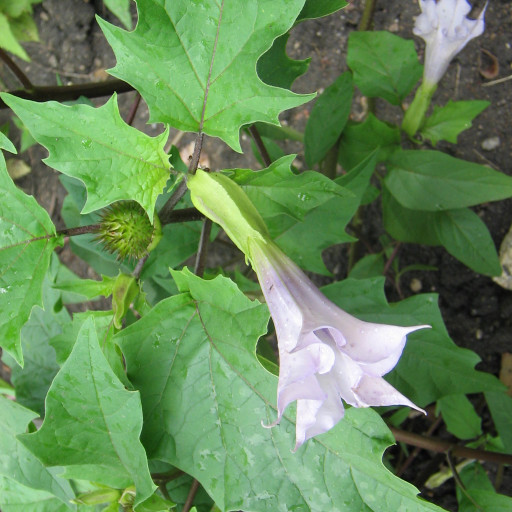
- 🎺 The Flowers: Large, upright, trumpet-shaped blooms that are usually snowy white or tinged with violet. They primarily open at night, emitting a heavy, sweet scent to attract nocturnal moths.
- 🌿 The Foliage: Broad, dark green leaves with irregular, coarsely toothed edges. When the leaves are crushed, they release a distinctive, somewhat foul, "rank" odor.
- 🦔 The Fruit: A signature egg-shaped seed capsule covered in sharp, stiff spines—hence the name "Thorn Apple." When ripe, it splits into four chambers to scatter hundreds of small black seeds.
🏡 In Your Garden
- 🌱 Opportunistic Growth: You’ll rarely find this plant for sale; it usually "invades" garden beds, pastures, and waste areas. It loves nitrogen-rich, disturbed soil and can grow from a tiny seedling to a five-foot bush in a single season.
- 🚫 Managing the Spread: If you find it in your yard, it is often best to remove it before the "thorn apples" dry out. A single plant can drop thousands of seeds that remain viable in the soil for decades, waiting for the right moment to sprout.
⚠️ Safety & Toxicity
- 💀 Lethal Status: EXTREMELY TOXIC. Every single part of the plant—roots, leaves, flowers, and especially seeds—contains high concentrations of tropane alkaloids (atropine, hyoscyamine, and scopolamine).
- 🚨 The Risks: Ingestion causes severe hallucinations, rapid heart rate, high fever, and can be fatal to humans, dogs, cats, and livestock. Even touching the plant can cause skin irritation for some, and getting the sap in your eyes can cause permanent pupil dilation. Always wear gloves if you must handle or pull this plant.
✨ Fun Fact
In the 17th century, the soldiers at Jamestown who ate the plant in a salad were reportedly "transformed" for 11 days. Historical accounts claim they spent the time "grinning like monkeys" and "blowing feathers in the air" before returning to their senses with no memory of the event!

Detailed Care Instructions
| Color | Pale Yellow-Green To Reddish Purple |
| Soil Ph | Neutral, Alkaline |
| Humidity | Normal |
| Invasive | Weed |
| Lighting | Full Sun |
| Toxicity | Poisonous |
| Soil Type | Loamy, Well-Drained |
| Bloom Time | Summer, Fall |
| Difficulty | Medium |
| Plant Type | Herbaceous, Perennial |
| Hibernation | Cold Period |
| Mature Size | 2 To 5 Ft. Tall |
| Native Area | North America, Central America, South America |
| Sun Exposure | Full Sun |
| Hardiness Zones | 6-9 |
To grow Datura Stramonium, also known as Jimsonweed or Devil's snare, follow these steps:
- Seed collection: Look for ripe seed pods on mature plants. The seed pods will be large, spiky, and green when fresh, and turn brown and split open as they ripen. Collect the pods before they split completely to prevent seed dispersal.
- Seed preparation: Once collected, allow the seed pods to dry for a few weeks. To extract the seeds, open the pods and remove the small brown-black seeds.
- Soil preparation: Datura Stramonium prefers well-drained soil with a pH between 6.0 and 7.5. Ensure the soil is fertile and loose. Add compost or organic matter to enhance its quality.
- Planting: Sow the seeds just below the soil surface, maintaining a spacing of about 12-18 inches (30-45 cm) between each seed. Moisten the soil.
- Germination: Datura Stramonium seeds require light to germinate, so avoid covering them with too much soil. Place the planted pot or tray in a warm location with indirect sunlight or a partially shaded area. Germination typically occurs within 10-15 days.
- Transplanting: Once the seedlings have grown to a height of about 2-3 inches (5-8 cm), transfer them to larger containers or outdoor beds with proper spacing. Datura Stramonium plants can reach heights of 3-5 feet (90-150 cm) and should be spaced accordingly.
- Watering: Keep the soil consistently moist but not waterlogged. Datura Stramonium plants are drought tolerant, so avoid overwatering.
- Sunlight: Datura Stramonium thrives in full sun to partial shade. Ensure the plants receive at least 4-6 hours of direct sunlight every day.
- Maintenance: Remove any competing weeds regularly. Apply a layer of organic mulch around the plants to help retain moisture and suppress weed growth.
- Pests and diseases: Monitor for pests such as aphids, caterpillars, or spider mites. Treat with appropriate organic insecticides if necessary. Datura Stramonium is generally resistant to diseases.
- Harvesting: The plant produces beautiful trumpet-shaped flowers that bloom at night, usually during the summer months. The flowers can be harvested for ornamental purposes. However, be cautious as all parts of the Datura Stramonium plant are toxic.
Please note that Datura Stramonium is a potent hallucinogen and can be dangerous if ingested or used improperly. Exercise caution and keep the plant out of reach from children and pets.

Place in a bright room that is sun drenched almost all day. Or directly in a south-facing window.

1. Observe the plant's moisture level: Before watering the plant, observe its soil's moisture level. Take your finger and insert it into the soil up to 1 inch to check if the soil is moist or dry.
2. Watering frequency: Datura Stramonium needs moderate watering, and the watering frequency varies based on the climatic conditions and the size of the plant. In general, it's recommended to water the plant once or twice a week.
3. Water quantity: When watering the plant, it's essential to ensure that the water reaches the plant's root system. Pour adequate water to moisten the soil, but make sure not to leave standing water at the base of the plant.
4. Watering time: The best time to water the plant is early in the morning or late in the evening when the temperature is cooler. Avoid watering the plant during the hot afternoon sun as the water may evaporate quickly, causing the plant to become dehydrated.
5. Watering technique: Pour water directly into the soil at the base of the plant, avoiding the leaves and flowers. This helps prevent water droplets from damaging the plant's foliage and flowers.
6. Use of mulch: Mulching the plant can help retain moisture in the soil, reduce weed growth, and regulate soil temperature. Place a layer of organic mulch, such as wood chips or dry leaves, around the base of the plant, leaving a 2-inch gap around the stem to prevent rot.
7. Monitoring: Regularly monitor the plant's moisture level and adjust the watering frequency according to the plant's growth and the prevailing weather conditions. Overwatering can lead to root rot, while underwatering can cause the plant to wilt and die.
To fertilize this plant, you should apply a high phosphorus fertilizer every two weeks during the growing season. Use a balanced fertilizer with an N-P-K ratio of 5-10-10. Dilute the fertilizer to half the recommended strength before applying it to the plant's soil. Fertilize the plant in the early morning or late afternoon to avoid burning the foliage or flowers.
Datura Stramonium is a plant that requires well-draining soil that is rich in nutrients and has a pH between 6.0 to 7.5. The soil should be loose and not compacted, as the plant requires good air circulation around the roots. The ideal soil mix would include a 50/50 mix of garden soil and compost, along with added perlite or sand to increase drainage. It is important to avoid using heavy clay or sandy soils, as they do not retain water or nutrients effectively. Additionally, the plant prefers full sun and regular watering, but be careful not to overwater as it can lead to root rot.
Datura Stramonium can be propagated by planting its seeds in well-drained soil during the spring or summer months. To ensure successful germination, the seeds should be soaked for several hours prior to planting. It is important to keep the soil moist but not waterlogged, as excessive moisture can cause rotting. Once the seedlings have emerged, they should be thinned out to allow for proper growth and space.
Another method of propagation is through stem cuttings. Cut a healthy stem with a sharp, sterilized tool and remove the lower leaves. Dip the cut end in rooting hormone and plant in moist, well-drained soil. Keep the soil moist and place the cutting in a warm, shaded area. In a couple of weeks, roots should begin to form.
Datura Stramonium can also be propagated through division. This is best done in the spring when the plant is actively growing. Dig up the plant and carefully separate the root ball into sections, ensuring that each section has ample roots and foliage. Replant the divided sections in well-drained soil and keep moist until established.
Propagation of Datura Stramonium can be an easy and rewarding process when done correctly. With a little patience and care, it can be a sustainable way to increase your collection of these unique plants.
Common pests of the moonflower include Aphids. Make a habit of checking your moonflower frequently for pests so that any infestations can be caught and managed early.








