Plant Overview
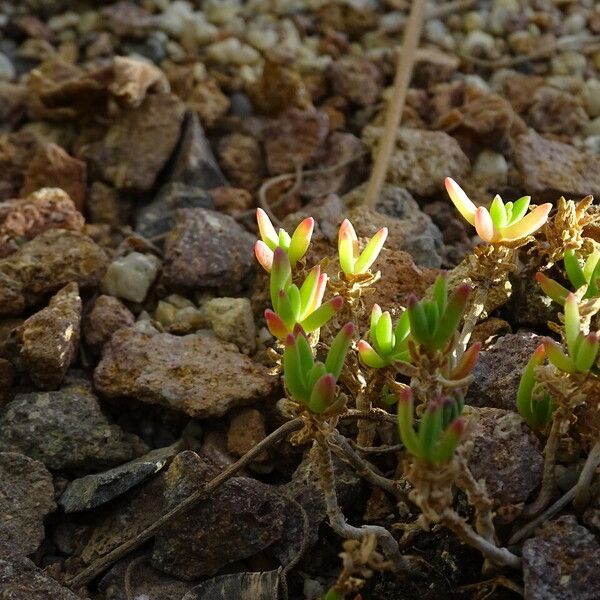
Known as "Bosser's Ice Plant," this Madagascan native is a darling for succulent collectors who love a "fat plant" aesthetic. Unlike its cousins used for sprawling groundcover, this species hides a secret beneath the soil: a thick, swollen tuberous root. It is often treated as a "natural bonsai," as it mimics the look of an ancient, gnarled tree while remaining small enough to fit in the palm of your hand.
🔍 How to Identify
- 💎 The "Ice" Crystals: The slender, light-green succulent leaves are covered in tiny, glistening papillae that sparkle in the sun, making the plant look like it has been dusted with frost.
- 🌼 Daisy-like Blooms: It produces delicate, star-shaped white flowers that typically open in the bright afternoon sun and close by dusk.
- Root The Caudex: As the plant matures, it develops a woody, thickened base (caudex) that can be raised above the soil line to create a striking, sculptural appearance.
🏡 In Your Garden
- 🏺 The "Lift" Technique: To show off its best features, hobbyists "lift" the plant every time they repot it. By exposing an extra inch of the thick root system each year, you turn a simple succulent into a miniature living statue.
- ☀️ Sun & Drainage: This plant thrives on neglect but demands light. It is highly susceptible to root rot, so it requires a very gritty, porous soil mix—think more rocks and sand than peat moss.
⚠️ Safety & Toxicity
- 🐾 Non-Toxic: Delosperma bosseranum is generally considered safe and non-toxic for cats, dogs, and humans.
- 🍃 Oxalate Content: Like many succulents, the leaves contain small amounts of calcium oxalates. While not poisonous, munching on the leaves might cause a slightly scratchy throat or mild stomach upset for curious pets.
✨ Fun Fact
The "crystals" on the leaves aren't just for show; they are specialized bladder cells that store extra water and help reflect intense UV rays, protecting the plant from the scorching Madagascar sun!

Detailed Care Instructions








