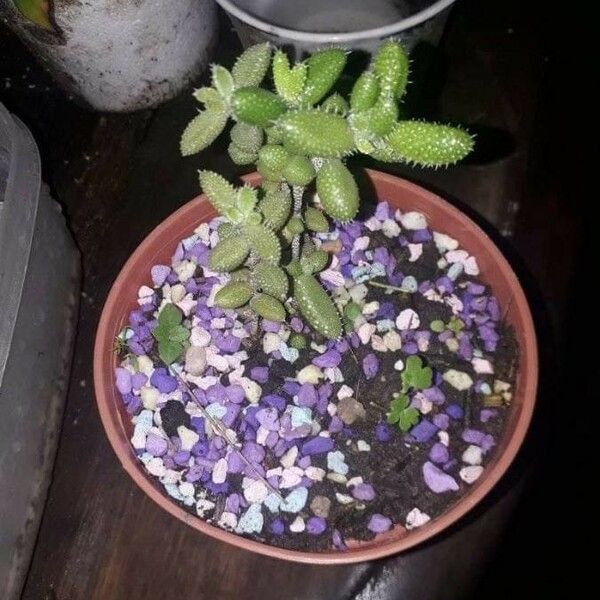
Plant Overview
Meet the "Pickle Plant," a quirky South African succulent that looks like it has been dipped in fine sugar or sea salt. Its tiny, bristly leaves resemble miniature gherkins, making it a favorite for "texture-first" plant collectors who want something unique on their windowsill. Despite its prickly appearance, those "spines" are actually soft, flexible hairs that feel more like a soft brush than a cactus.
🔍 How to Identify
- 🌵 Foliage Shape: Features thick, cylindrical leaves that grow in pairs, perfectly mimicking the shape of a small pickle or a green bean.
- ❄️ Surface Texture: The leaves are densely covered in tiny, white, crystalline bumps called papillae, which give the plant a distinctive "frosted" or shimmering look.
- 🌼 The Bloom: During the growing season, it produces small, multi-petaled flowers that look like tiny yellow or cream-colored daisies emerging from the tips of the stems.
🏡 In Your Garden
- ☀️ Light & Growth: This succulent is a true sun-worshipper. If it doesn't receive bright, direct light, the stems will stretch out and become "leggy," losing the compact "pickle" look that makes it so charming.
- 💧 Water Logic: It stores a vast amount of moisture in its fleshy leaves, making it incredibly drought-tolerant. You should only water when the soil is bone-dry; the leaves will actually begin to shrivel slightly when the plant is genuinely thirsty.
- 🪴 Drainage Needs: Like most Delosperma, it is highly sensitive to root rot. It thrives best in a gritty, sandy cactus mix that allows water to pass through almost instantly.
⚠️ Safety & Toxicity
- ✅ Status: Non-toxic and pet-friendly.
- 🐾 Details: The Pickle Plant is generally considered safe for cats, dogs, and humans. While not meant for consumption, you don't need to worry if a curious pet takes a small nibble.
- 🧤 Skin Sensitivity: Unlike many of its succulent cousins, it does not produce irritating sap, and its "hairs" are soft to the touch, making it safe to handle without gloves.
✨ Fun Fact
The species name pruinosum is derived from the Latin word "pruina," which translates to "hoarfrost." This refers to the plant’s natural ability to look like it is perpetually covered in a light morning frost, even in the middle of a desert summer!

Detailed Care Instructions
| Humidity | Dry |
| Difficulty | Easy |
| Hibernation | Cold Period |
| Temperature | 18°C - 25°C |
| Hardiness Zones | 6 - 11 |
Here are some steps to help you grow Delosperma Pruinosum (also known as the Pink Carpet Stonecrop):
- Choose the right location: Delosperma Pruinosum requires full sun to partial shade. Make sure to select a location with well-draining soil. This plant is hardy in USDA zones 5-9.
- Prepare the soil: Before planting, loosen the soil and remove any weeds or debris. Add organic matter, such as compost or peat moss, to improve drainage and fertility.
- Plant the cuttings or seeds: You have two options to propagate Delosperma Pruinosum. Firstly, you can take stem cuttings from an existing plant. Cut a healthy stem and allow it to dry for a couple of days. Then, plant the cutting in a pot filled with well-draining soil. Secondly, you can sow the seeds directly into the prepared soil.
- Watering: Water the newly planted cuttings or seeds thoroughly, ensuring the soil is moist but not waterlogged. Once established, Delosperma Pruinosum is pretty drought-tolerant, only requiring occasional watering during prolonged dry spells.
- Mulching: Apply a layer of organic mulch around the plants to help retain moisture and suppress weed growth. Make sure to keep the mulch away from direct contact with the stems to avoid rotting.
- Maintenance: Delosperma Pruinosum generally doesn't require much maintenance. However, you can remove any dead or damaged stems or leaves to keep the plant looking tidy.
- Fertilization: In most cases, Delosperma Pruinosum doesn't need fertilization. If you notice a lack of vigor or slow growth, you can apply a balanced, slow-release fertilizer according to the package instructions.
- Winter care: During winter, Delosperma Pruinosum may benefit from some protection in colder climates. You can cover the plants with a layer of mulch or use a frost cloth to shield them from extreme cold.
By following these steps, you can successfully grow Delosperma Pruinosum. Enjoy its beautiful pink flowers and compact, carpet-like growth habit!

Place in a bright room that is sun drenched almost all day. Or directly in a south-facing window.

To water this plant, you should allow the soil to dry out slightly between waterings. When you do water it, make sure to thoroughly soak the soil. Avoid getting water on the leaves or stem as this can lead to rot. It is important to use well-draining soil to prevent overwatering and root rot. In the winter months, decrease watering frequency to allow the plant to enter a state of dormancy.
To fertilize this plant, use a well-balanced fertilizer that contains equal amounts of nitrogen, phosphorus, and potassium. Apply the fertilizer once every two weeks during the growing season, which typically runs from early spring to late summer. Do not fertilize the plant during periods of drought or extreme heat, as this can damage the roots. Always follow the directions on the fertilizer packaging and avoid applying too much fertilizer, as this can also harm the plant. Water the plant well after fertilizing to help the nutrients soak in.
For Delosperma Pruinosum plant, it is recommended to use well-draining soil that has good water retention properties. The soil should be slightly acidic with a pH range of 6.0 to 7.0. It is important to use a soil that is rich in nutrients and organic matter, such as compost or peat moss. In addition, adding sand or perlite to the soil mix can help improve drainage and provide aeration for the roots. Avoid using heavy clay soils or soils that do not drain well, as this can cause waterlogging and root rot.
Delosperma Pruinosum plant can be propagated through a process called vegetative propagation. This method involves taking cuttings from a parent plant and encouraging them to grow roots and establish themselves as new independent plants.
To propagate Delosperma Pruinosum, you will need:
- A healthy parent plant
- Clean, sharp pruning shears or scissors
- A rooting hormone (optional)
- Small pots filled with well-draining soil
- A warm, bright location with indirect light
Here are the steps to follow:
- Choose a healthy, mature parent plant that has sturdy stems and plenty of foliage.
- Take cuttings from the plant by using sharp, clean pruning shears to snip off a stem or branch that is at least 3 inches long and has several sets of leaves.
- If desired, dip the cut end of the stem into rooting hormone to encourage root growth.
- Plant the cutting in a small pot filled with well-draining soil, making sure the soil is firm around the stem.
- Water the soil so that it is moist, but not soaking wet.
- Place the pot in a warm, bright location with indirect light. Avoid direct sunlight, as this can dry out the cutting and hinder its growth. A sunny windowsill or a warm, humid greenhouse can be good options.
- Keep the soil moist but not waterlogged, and be patient. Over the next several weeks, the cutting should start to grow new leaves and eventually, roots. Once it has established itself and can be easily removed from the pot without disturbing the roots, it can be transplanted into a larger pot or into the garden.
Common pests of the hedgehog sheepfig include Mealybugs. Make a habit of checking your hedgehog sheepfig frequently for pests so that any infestations can be caught and managed early.








