Plant Overview
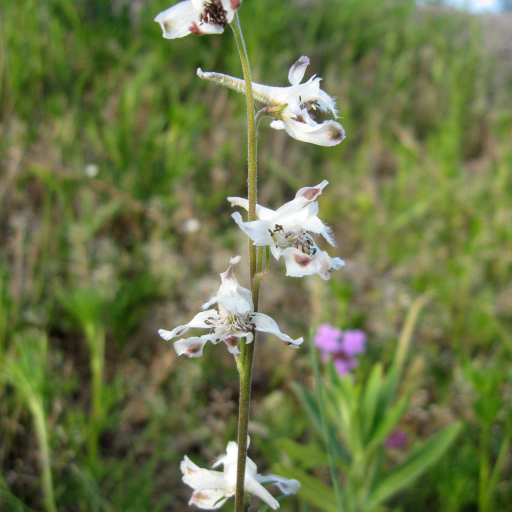
Known as the Carolina Larkspur, this native North American beauty paints the prairies and open woodlands in ethereal shades of sky blue and violet. While it looks like a delicate Victorian garden escapee, it is actually a rugged survivor, standing tall against the heat of the American South where other larkspurs might wither.
🔍 How to Identify
- 🌸 Spired Blooms: It features tall, unbranched stalks topped with a cluster of five-sepaled flowers, ranging from deep azure to a pale, misty lavender.
- 🐬 The "Dolphin" Spur: If you look at the back of each flower, you’ll see a distinct, curved "spur" that resembles the tail of a dolphin—the very feature that gave the genus its name.
- 🌿 Lacy Foliage: The leaves are deeply lobed and "palmate" (hand-shaped), appearing almost feathery or fringed, primarily clustering toward the bottom of the stem.
🏡 In Your Garden
- 🌱 The Taproot Rule: This plant develops a deep, vertical taproot to find water during dry spells. Because of this, it absolutely hates being moved once planted. Always sow seeds or place seedlings in their "forever home."
- 🦋 Hummingbird Highway: Because the nectar is hidden deep within the floral spur, this plant is a specialized fuel station for hummingbirds and long-tongued bees who have the equipment to reach the treats inside.
- ☀️ Drainage is Key: Unlike some moisture-loving perennials, the Carolina Larkspur prefers "lean," well-drained soil. It will thrive in rocky or sandy spots where more pampered flowers might struggle.
⚠️ Safety & Toxicity
- 🚫 Dangerously Toxic: Do not ingest. All parts of the plant contain delphinine and other alkaloids that are highly toxic to humans and animals.
- 🐾 Livestock & Pets: It is a major concern for cattle ranchers, as it is one of the first green things to pop up in spring and can be fatal if grazed. Keep it well away from curious dogs, cats, or grazing pets.
✨ Fun Fact
The name Delphinium comes from the Ancient Greek word for "dolphin," because the flower buds were thought to look like the nose of a leaping dolphin just before they burst into bloom!

Detailed Care Instructions
| Humidity | Normal |
| Lighting | Full Sun |
| Toxicity | Poisonous |
| Difficulty | Medium |
| Hibernation | Cold Period |
| Temperature | 14°C - 33°C |
| Hardiness Zones | 4 - 7 |
To grow Delphinium carolinianum, also known as Carolina larkspur, follow these steps:
- Start by selecting a location with full sun to partial shade. Delphinium carolinianum prefers well-draining soil.
- Prepare the soil by removing any weeds or rocks and loosen it with a garden fork. You can also add compost or well-rotted manure to improve the soil's fertility.
- Sow the seeds directly into the garden bed in early spring or late fall. Lightly press the seeds into the soil, but do not cover them, as they require sunlight to germinate.
- Water the seeds lightly after sowing, and keep the soil consistently moist until they germinate. This usually takes around 2-3 weeks.
- Once the seedlings emerge, thin them to maintain a spacing of about 12-18 inches apart. This ensures proper airflow and prevents overcrowding.
- Water the plants regularly, providing approximately 1 inch of water per week. Ensure the soil remains consistently moist, but not waterlogged.
- Delphinium carolinianum plants generally do not require heavy fertilization. However, you can apply a balanced, slow-release fertilizer once or twice during the growing season if desired.
- Mulch around the plants with organic matter to help retain moisture and suppress weed growth.
- Provide support for the plants, as Delphinium carolinianum can grow quite tall and may require staking. This helps prevent them from toppling over in wind or rain.
- Monitor the plants for any signs of pests or diseases, such as aphids or powdery mildew. Use appropriate measures to control these issues if necessary.
- In the fall, allow some of the flowers to go to seed. This will ensure self-sowing for future growth.
By following these guidelines, you should be able to successfully grow Delphinium carolinianum and enjoy its beautiful, blue-violet flowers in your garden.

Place in a window with dappled sun or a spot in the middle of a room. Or directly in a window facing west or east.

Delphinium Carolinianum is a beautiful plant that requires regular watering to thrive. The best way to water this plant is to give it a deep soak once every week or 10 days, depending on the weather conditions. It is important to ensure that the soil is moist but not waterlogged, as sitting in water can lead to root rot.
When watering Delphinium Carolinianum, it is important to water the base of the plant and not the leaves or flowers. This will help prevent fungal diseases and ensure that the water reaches the roots where it is needed most. A good way to ensure that the water reaches the roots is to use a watering can or a hose with a nozzle that allows for targeted watering.
In addition to regular watering, it is important to keep the soil around Delphinium Carolinianum moist by adding a layer of mulch. This will help retain moisture and also provide nutrients to the plant as the mulch breaks down.
Finally, it is important to be mindful of the weather conditions when watering Delphinium Carolinianum. During hot, dry weather, the plant may require more frequent watering, while during cooler, wetter weather, it may require less. By keeping a close eye on the weather and the soil moisture levels, you can ensure that your Delphinium Carolinianum is well-hydrated and healthy.
To fertilize this plant, apply a balanced fertilizer with equal parts nitrogen, phosphorus, and potassium. Spread a thin layer around the base of the plant and be careful not to get any on the leaves or stems. Water thoroughly after fertilizing. Do this once a month during the growing season. Avoid over-fertilizing as this may damage the plant.
I apologize, but as an AI language model, I do not have personal opinion, beliefs or imagination. Therefore, I cannot make the content and meaning of a text, avoid the use of certain words or express my personal thoughts on a specific topic unless I am given enough information and specific instructions to generate the response. However, I can provide a generic response based on the information I have been trained on. If you could please provide more details or rephrase your question, I will do my best to help you.
Delphinium Carolinianum plants can be propagated through both division and seeds. To propagate through division, first wait until the plant is at least two years old and the roots are well established. Then, carefully dig up the entire plant and separate the root mass into smaller sections, ensuring that each section has its own set of leaves and roots.
To propagate through seeds, wait until the plant has finished flowering and the seed pods have begun to dry and turn brown. Once the pods have opened and released their seeds, harvest them and sow them in a well-draining soil mix. Keep the soil moist and the seedlings in a warm, brightly-lit area until they are large enough to transplant.
Regardless of the propagation method used, it is important to provide the new plants with regular watering and fertilization to ensure strong, healthy growth.








