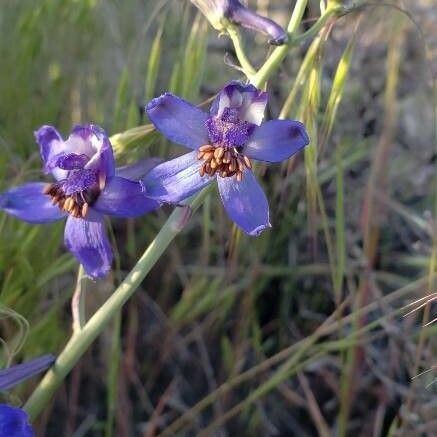
Plant Overview
The Barestem Larkspur, often called the Desert Larkspur, is a striking splash of royal blue against the dusty reds and browns of the American Southwest. Its name scaposum refers to its "scape"—the tall, leafless flower stalk that shoots up from a cluster of green foliage at the base. In ancient lore, blue flowers were often seen as symbols of the unreachable, but in the high desert, this plant is a hardy survivor that announces the arrival of spring.
🔍 How to Identify
- 💙 Royal Blooms: The flowers are a deep indigo to vivid violet, featuring a distinctive backward-pointing "spur" that resembles a tiny jester’s hat or a dolphin’s snout.
- 🌵 The "Bare" Stem: True to its name, the flowering stem is almost entirely leafless, making the vibrant blue clusters appear to float elegantly above the desert floor.
- 🌿 Basal Foliage: The leaves are clustered at the very bottom of the plant. They are deeply lobed and hand-shaped, designed to huddle close to the ground to preserve moisture.
🏡 In Your Garden
- ☀️ Desert Specialist: This plant is a master of arid environments. It requires exceptionally well-draining, gritty soil and can handle intense sun. It hates "wet feet," which can cause the roots to rot almost overnight.
- 💤 Summer Dormancy: If you grow this at home, don't be alarmed if the plant dies back completely after blooming. It is a drought-evader; it flowers quickly in the spring and then retreats into dormancy to survive the blistering summer heat.
⚠️ Safety & Toxicity
- 🚫 Highly Toxic: Every part of the Barestem Larkspur is poisonous. It contains potent diterpene alkaloids (like delphinine) that can lead to respiratory failure if eaten.
- 🐾 Pet & Livestock Alert: This plant is a major concern for ranchers as it is highly toxic to cattle. In a home setting, it should be kept strictly out of reach of curious dogs, cats, and small children. Even handling the plant can occasionally cause skin irritation for sensitive individuals.
✨ Fun Fact
🐝 The Nectar Vault: The long "spur" at the back of the flower is actually a nectar reservoir. It is specifically designed so that only long-tongued pollinators, like bumblebees and hummingbirds, can reach the sweet reward inside, ensuring the plant is efficiently pollinated!

Detailed Care Instructions
To successfully grow Delphinium Scaposum plants, you can follow these steps:
- Location: Choose a location that receives full sun to partial shade. Delphiniums prefer bright sunlight for at least 6-8 hours a day.
- Soil: Use well-draining soil that is rich in organic matter. Amend the soil with compost or aged manure to improve its fertility and drainage. The pH level should be slightly acidic to neutral (around 6.0-7.0).
- Planting: Start by preparing the planting area. Dig a hole that is twice the diameter of the root ball and loosen the soil at the bottom. Place the plant in the hole, ensuring that the crown (where the stems emerge from the roots) is level with the surrounding soil. Backfill the hole with soil and gently firm it down.
- Watering: Delphiniums require consistent moisture but are sensitive to overwatering. Water deeply and evenly at the base of the plant, avoiding overhead watering which can promote disease. Allow the top few inches of soil to dry out slightly between watering.
- Mulching: Apply a layer of organic mulch, such as wood chips or straw, around the base of the plant to help retain moisture and suppress weeds. Be careful not to mound the mulch against the crown of the plant, as this can encourage rot.
- Support: Delphiniums have tall flower stalks that can be prone to breaking in wind or rain. Install stakes or plant supports near the base of the plant when it is young, and gently tie the stems to them as they grow. This will provide support and prevent damage.
- Fertilization: Apply a balanced, slow-release fertilizer in early spring to promote healthy growth. Follow the package instructions for application rates. Additionally, you can top-dress the soil with compost or well-rotted manure annually to replenish nutrients.
- Pruning: After the first flush of blooms has faded, cut the flower stalks down to their base. This will encourage the plant to produce new growth and may result in a second round of flowers later in the season.
- Pests and diseases: Watch out for common pests like aphids and slugs. Use organic pest control methods or handpick them off the plant. Delphiniums can also be susceptible to diseases like powdery mildew and crown rot. Ensure good air circulation around the plant, avoid overhead watering, and promptly remove any infected leaves or stems.
- Division: Every 3-4 years, you can divide the plant in early spring or fall to maintain its vigor. Dig up the entire clump, carefully separate the individual crowns, and replant them at the same depth as before.
By following these steps, you should be able to successfully grow Delphinium Scaposum plants and enjoy their beautiful blooms.

Place in a bright room that is sun drenched almost all day. Or directly in a south-facing window.

To properly water the Delphinium Scaposum plant, you need to follow a specific watering routine. Here are the details on how to water this plant effectively:
1. Assess the soil moisture: Before watering, check the moisture level of the soil. Stick your finger about an inch into the soil, and if it feels dry, it's time to water.
2. Choose the right time: Watering in the morning or late afternoon is most beneficial for the plant. It allows the foliage to dry before evening, reducing the risk of fungal diseases.
3. Watering method: Use a watering can or a hose with a gentle spray nozzle to avoid damaging the delicate foliage. Direct the water towards the base of the plant to ensure it reaches the root zone.
4. Slow and deep watering: Water the Delphinium Scaposum plant thoroughly, applying water slowly to allow it to penetrate the soil deeply. This helps to encourage the roots to grow deeper and promotes a healthier plant.
5. Avoid overwatering: Delphinium Scaposum is susceptible to root rot, so it's important not to overwater the plant. Ensure the soil is well-drained and allow the top few inches to dry out before watering again. A good rule of thumb is to wait until the top inch of soil feels dry before watering.
6. Mulch the soil: To retain moisture, apply a layer of organic mulch around the base of the plant. This will help to regulate soil temperature, reduce weed growth, and prevent excessive evaporation.
7. Monitor the plant's response: Observe the plant closely after watering. Ensure that water is reaching the root system adequately by checking the soil moisture levels periodically. Adjust the watering frequency based on the plant's needs and environmental conditions.
Remember, the watering requirements may vary depending on factors such as weather, soil type, and overall plant health. Always adapt your watering routine according to the specific needs of your Delphinium Scaposum plant.
Delphinium scaposum is a perennial plant that benefits from regular fertilization to support its growth and overall health. To fertilize this plant, follow these instructions:
- Timing: Begin fertilizing during the active growing season, which typically starts in spring and continues until early fall. Avoid fertilizing during the dormant or winter months.
- Fertilizer selection: Use a balanced, slow-release fertilizer that provides essential nutrients to the plant. Look for a fertilizer with an N-P-K ratio (nitrogen, phosphorus, and potassium) of around 10-10-10 or similar. This balanced formula encourages overall plant development.
- Application method: Sprinkle the fertilizer granules around the base of the plant, starting from a few inches away from the stem and extending outwards to the drip line. Take care not to let the granules come into direct contact with the plant's foliage.
- Quantity: Refer to the package instructions for the recommended amount of fertilizer to apply. In general, a moderate application of fertilizer is sufficient for Delphinium scaposum. Avoid over-fertilizing, as excessive nutrients can harm the plant.
- Watering: After applying the fertilizer, water the soil thoroughly. This helps to dissolve and distribute the nutrients, allowing the plant to absorb them effectively. Ensure the soil is well-drained to prevent waterlogging.
- Frequency: For Delphinium scaposum, fertilize every 4-6 weeks during the growing season. However, follow the specific instructions on the fertilizer package, as frequency may vary depending on the product.
- Additional considerations: Observe the plant's response to fertilization. If you notice any signs of fertilizer burn or excessive growth, reduce the amount or frequency of fertilization. It's also beneficial to supplement the fertilization with organic matter, such as compost or well-rotted manure, to improve soil fertility and long-term plant health.
Remember to always read and follow the instructions on the fertilizer package. Regular fertilization, along with proper watering and sunlight, will help promote the growth and vigor of your Delphinium scaposum plant.
Delphinium scaposum, commonly known as Alpine Delphinium or Scarlet Larkspur, is a perennial flowering plant that belongs to the Ranunculaceae family. It is native to high alpine regions and subalpine meadows in North America.
When growing Delphinium scaposum, it is important to choose the right soil type to provide optimal conditions for its growth and development. Here are some details about the soil requirements for this plant:
- Well-draining soil: Delphinium scaposum prefers a well-drained soil that allows water to flow through easily, preventing the roots from becoming waterlogged. Heavy or compacted soils should be avoided to prevent waterlogging, which can lead to root rot.
- Loamy soil texture: A loamy soil provides a good balance of drainage and moisture retention. It consists of a mixture of sand, silt, and clay, allowing water to drain adequately while retaining some moisture for the plant's roots. Loamy soil also offers good aeration, essential for root respiration.
- Nutrient-rich soil: Delphinium scaposum thrives in soil that is rich in organic matter and nutrients. Organic matter, such as compost or well-rotted manure, can be incorporated into the soil before planting to improve its fertility and provide essential nutrients for the plant's growth.
- Neutral to slightly acidic soil pH: Delphinium scaposum prefers a slightly acidic to neutral soil pH range between 6.0 and 7.0. Testing the soil pH and adjusting it, if necessary, can help ensure optimal conditions for the plant's growth.
- Moderate fertility: While Delphinium scaposum appreciates nutrient-rich soil, excessive fertilization should be avoided. High levels of nitrogen can lead to excessive foliage growth at the expense of blooming. A balanced slow-release fertilizer can be applied during the growing season to provide necessary nutrients without overstimulating vegetative growth.
Remember to amend the soil before planting Delphinium scaposum, working in organic matter and ensuring proper drainage. Additionally, regular watering and adequate sunlight are crucial for the plant's health and vigor.
Delphinium Scaposum is a perennial flowering plant that can be propagated through various methods like division, stem cuttings, and seed propagation. Here are the steps to propagate Delphinium Scaposum:
- Division: This method is usually carried out in early spring or fall when the plant is dormant.
- Dig up the mature plant carefully, trying not to disturb the roots too much.
- Gently separate the plant into smaller sections, making sure each section has roots and shoots.
- Ensure that the sections have enough roots and a good amount of healthy foliage to support growth.
- Replant the divided sections in well-prepared soil, spacing them adequately.
- Water the newly planted divisions thoroughly and keep the soil moist until they establish.
- Dig up the mature plant carefully, trying not to disturb the roots too much.
- Stem cuttings: This method is typically done in late spring or early summer when the plant is actively growing.
- Select a healthy, non-flowering stem section from the parent plant.
- Cut the stem just below a node (a swollen area on the stem where leaves emerge).
- Remove the lower leaves, leaving only a few on the upper part of the stem.
- Dip the cut end of the stem in a rooting hormone powder to encourage root development (optional).
- Plant the cutting in a well-draining potting mix or a mixture of perlite and peat moss.
- Place the cutting in a warm, bright area with indirect sunlight.
- Keep the soil consistently moist, but not waterlogged, to encourage root growth.
- After a few weeks, the cutting should develop roots and can be transplanted into a larger container or directly into the garden.
- Select a healthy, non-flowering stem section from the parent plant.
- Seed propagation: This method is ideal for those who have the patience to wait for the plant to develop and mature from seed.
- Collect ripe seed pods from the plant and allow them to dry completely.
- Once dry, gently break open the pods and separate the small seeds.
- Fill a seed tray or small pots with a well-draining potting mix.
- Scatter the seeds on top of the soil and press them lightly into the surface.
- Cover the seeds with a thin layer of soil or vermiculite.
- Mist the soil lightly with water to ensure good moisture.
- Place the tray or pots in a greenhouse or a warm area with bright, indirect sunlight.
- Keep the soil consistently moist by misting or using a bottom-watering tray.
- Germination may take several weeks, and once the seedlings have developed enough leaves, they can be transplanted into individual pots.
Remember to label things properly and keep track of what method you used, as it will help you monitor the progress and success of your propagation techniques.
- Collect ripe seed pods from the plant and allow them to dry completely.








