Plant Overview
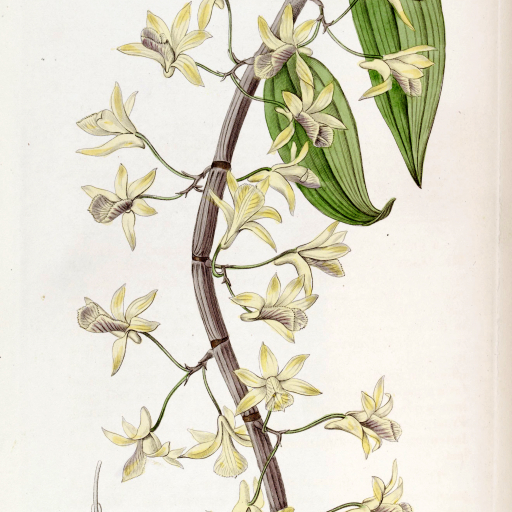
Known affectionately as the "Hooded Orchid" or "Fairy Orchid," Dendrobium aphyllum is a dramatic epiphyte that seems to defy botanical logic. This orchid is famous for its deciduous nature, dropping every single leaf before erupting into a spectacular, fragrant "curtain" of blossoms. In its native Southeast Asian habitats, it can be seen clinging to tall trees, with flowering canes that can reach several feet in length.
🔍 How to Identify
- 🌸 The "Hooded" Bloom: The flowers are pale lavender or soft pink with a creamy-white, trumpet-shaped lip that is covered in tiny, soft hairs, giving it a fuzzy appearance.
- 🎋 Pendulous Canes: Unlike upright orchids, these stems (canes) are slender, flexible, and naturally grow downward in a weeping fashion.
- 🍂 Seasonal Bareness: During the winter, the plant enters a dormant phase where the leaves turn yellow and fall off, leaving behind what look like dry, grey sticks—until the flower buds emerge.
🏡 In Your Garden
- 🧺 The Hanging Habit: Because the canes are so long and pendulous, this orchid is almost never grown in a standard pot. It thrives best when mounted on a piece of cork bark or tucked into a hanging wooden slat basket where its stems can flow freely.
- ❄️ The Winter "Tough Love": To see those famous flowers, this plant requires a strict dry rest in the winter. Stopping fertilizer and drastically reducing water when the leaves start to fall "shocks" the plant into its reproductive cycle; too much pampering results in only new green leaves and no flowers.
⚠️ Safety & Toxicity
- ✅ Status: Generally Non-Toxic.
- 🐾 Details: This orchid is considered safe for cats, dogs, and humans. However, because many orchids are treated with systemic pesticides or fertilizers at nurseries, it is best to keep them out of reach of curious nibbling pets to avoid stomach upset.
✨ Fun Fact
The name aphyllum literally translates to "leafless." While the plant does have leaves during the summer, it was named by early botanists who often found it in the wild during its flowering season, when the plant appears to be a shimmering mass of flowers growing directly out of dead wood!

Detailed Care Instructions
To grow Dendrobium Aphyllum plant, also known as the Dendrobium orchid, follow these steps:
- Choosing the right pot and soil: Select a pot with good drainage holes and use a well-draining orchid potting mix composed of bark, sphagnum moss, and perlite.
- Light: Dendrobium orchids prefer bright, indirect light. Place them near a north or east-facing window where they can receive filtered sunlight. Avoid direct sunlight, as it may burn their leaves.
- Temperature: Dendrobium orchids thrive in temperatures between 65-80°F (18-27°C) during the day and around 60-65°F (15-18°C) at night. Avoid sudden temperature fluctuations.
- Watering: Allow the potting mix to dry out slightly between waterings. Water thoroughly, making sure excess water drains out, and avoid leaving the plant sitting in water. Adjust the frequency based on the humidity and the moisture retention of the potting mix.
- Humidity: Orchids prefer higher humidity levels. Use a humidifier, place the pot on a tray of water with pebbles, or mist the plant regularly to increase humidity.
- Fertilization: Use a balanced orchid fertilizer with a ratio such as 20-20-20 or 10-10-10. Apply it at half strength every 2-3 weeks during the growing season (spring and summer), and reduce frequency during dormant periods (fall and winter).
- Repotting: Dendrobium orchids may need repotting every 1-2 years or when the potting mix breaks down or becomes excessively wet. Repot during the spring or summer months when new growth is starting.
- Pruning: After the flowers have faded, you can trim the flower spike above a node to encourage more blooms. Prune yellowing or dead leaves and pseudobulbs as needed.
- Dormancy: Dendrobium orchids require a cooler, drier rest period during the fall and winter. Reduce watering and fertilization during this time and provide cooler temperatures.
- Propagation: You can propagate Dendrobium orchids through division. Carefully separate any offshoots or pseudobulbs from the parent plant and repot them into their own pots.
By following these general guidelines, you can cultivate a healthy and thriving Dendrobium Aphyllum plant. Remember to observe your plant carefully and adjust care based on its specific needs as some varieties may have different requirements.

Place in a window with dappled sun or a spot in the middle of a room. Or directly in a window facing west or east.

To water this plant, ensure that you use room temperature water. To determine when to water, check the moisture level of the soil by sticking your finger one inch into the soil. If the soil feels dry, it is time to water the plant. Use a watering can or a small cup to pour water around the base of the plant, taking care not to pour water on the leaves or flowers. Allow the excess water to drain out of the pot and ensure that there is no water left standing in the saucer. Water this plant thoroughly but avoid overwatering as it may lead to root rot. It is recommended to water this plant once in 10-14 days, or when the soil feels dry to the touch.
To provide proper fertilization for this plant, it is recommended to use a balanced orchid fertilizer with an equal proportion of nitrogen, phosphorus, and potassium. It is best to fertilize during the plant's active growth period, which usually begins in the spring and lasts until early fall. Dilute the fertilizer with water to half-strength and apply it every two weeks. Ensure that the roots have been moistened before applying the fertilizer solution and avoid fertilizing a dry plant. During the winter months, reduce fertilization to once a month. Finally, it is essential to flush the potting media frequently to prevent salt buildup from the fertilizer.
Dendrobium Aphyllum plant prefers a well-draining soil mix with good air circulation. It is important to use a soil mix that is light and airy to provide proper root aeration and drainage. The ideal soil mix should be free-draining and contain ingredients such as bark, perlite, and sphagnum moss. It is important to avoid using heavy and compacted soils that can lead to waterlogging and root rot. Adding some charcoal to the soil mix can also help with root health and drainage. Overall, a light and well-draining soil mix is essential to ensure healthy growth and successful cultivation of the Dendrobium Aphyllum plant.
Propagation of this plant can be done through division of its mature pseudobulbs. These pseudobulbs should be separated from the main plant using a sterile knife or pruning shears, making sure to include healthy roots and leaves. The pseudobulbs can then be potted in well-draining orchid mix and placed in an area that receives bright, indirect light. The plant should be kept moist but not waterlogged, and new growth should begin to emerge within a few weeks. Alternatively, the plant can be propagated through the use of keikis, or miniature clones of the parent plant that grow from the stem. These can be removed when they have developed roots and potted separately.








