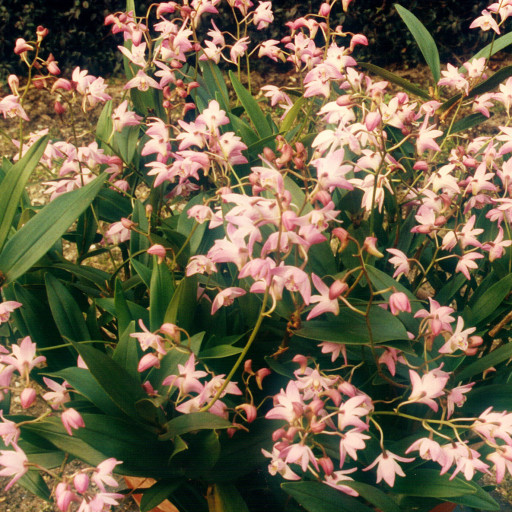
Plant Overview
Affectionately known as the Pink Rock Lily, Dendrobium kingianum is one of the most resilient and rewarding orchids for beginner collectors. Native to the rugged coastlines of Eastern Australia, this orchid doesn't just grow in the wild—it thrives on sheer cliff faces and rocky outcrops. It is celebrated for its intoxicating honey-like fragrance and its "tough-as-nails" personality, making it a favorite for those who find traditional orchids a bit too finicky.
🔍 How to Identify
- 🌸 The Blooms: Small but numerous, these flowers range from pale white to deep magenta. They grow in clusters on thin stalks (racemes) emerging from the top of the plant.
- 🎋 The Canes: Unlike many leafy plants, this orchid grows from tough, carrot-shaped stems called "pseudobulbs" or canes, which store water for survival during dry spells.
- 🍃 The Foliage: At the tip of each cane, you’ll find 2 to 4 leathery, dark green leaves that feel stiff to the touch, designed to withstand intense sun.
🏡 In Your Garden
- 🪨 The "Stone-Lover": This plant is a lithophyte, meaning its roots are designed to cling to rocks rather than sit in heavy soil. In a home setting, it thrives in very loose bark or even mounted on a piece of cork or stone.
- ❄️ The Winter Chill: To trigger those beautiful pink flowers, this orchid needs a "tough love" period. It requires cool night temperatures and very little water during the winter months to "shock" it into blooming for the spring.
- 🌱 Plant Babies: This species is famous for producing "keikis"—tiny baby plants that grow directly off the sides of the canes. Once they grow their own roots, you can simply pop them off and start a whole new plant!
⚠️ Safety & Toxicity
- ✅ Safe for All: Dendrobium kingianum is considered non-toxic to humans, cats, and dogs.
- 🐾 Pet Friendly: While it is safe, the stiff canes can be a choking hazard for curious chewers, so it’s still best kept on a high shelf or hanging basket.
✨ Fun Fact
In its native Australian habitat, these orchids are often found growing in massive colonies that cover entire boulders, turning gray stone into a sea of pink during the blooming season. Some of these wild colonies are estimated to be over 100 years old!

Detailed Care Instructions
To grow Dendrobium Kingianum (also known as Pink Rock Orchid), follow these steps:
- Lighting: Place the orchid in a location where it can receive bright, indirect light. Avoid direct sunlight as it can scorch the leaves.
- Temperature: Dendrobium Kingianum prefers moderate temperatures, ideally between 60-85°F (15-29°C) during the day and slightly cooler at night.
- Humidity: The orchid prefers moderate to high humidity levels. If your environment is dry, mist the leaves with water regularly or use a humidifier to maintain humidity.
- Watering: Water the orchid thoroughly when the potting mix feels dry to the touch. Avoid overwatering, as it can lead to root rot. Always ensure proper drainage by using a well-draining potting mix.
- Fertilizing: Apply a balanced orchid fertilizer, diluted to half-strength, every two weeks during the growing season (spring and summer). Reduce to monthly feeding during fall and winter.
- Potting: Repot the orchid every 1-2 years using an orchid-specific potting mix. Dendrobium Kingianum prefers a loose, well-draining medium like sphagnum moss, bark, or a mix of both.
- Air circulation: Provide good ventilation for the plant to prevent fungal or bacterial issues. However, avoid exposing the orchid to drafts or strong winds.
- Pruning: Remove any dead or yellowing leaves or spent flower spikes to maintain the plant's health and appearance.
- Dormancy: Dendrobium Kingianum goes through a natural winter dormancy period. During this time, reduce watering and avoid fertilizing until new growth starts in spring.
- Propagation: The plant can be propagated through division. When repotting, separate a healthy section of the plant with its own pseudobulb and roots, and pot it separately.
Remember that growing orchids can be challenging, so it's essential to be patient and observe your plant's specific needs.

Place in a window with dappled sun or a spot in the middle of a room. Or directly in a window facing west or east.

To properly water this plant, you should ensure that the soil is moist but not waterlogged. It is recommended to allow the top inch of soil to dry out before watering again. When watering, make sure to thoroughly saturate the soil until water starts to drain from the bottom of the container. It is important to avoid getting water on the leaves or flowers, as this can result in damage or rot. Additionally, you should consider the temperature and humidity levels in the environment, as this can impact how frequently the plant needs to be watered.
This plant should be fertilized bi-weekly during its active growing season with a balanced orchid fertilizer at half strength. It is important to water the plant thoroughly before each fertilization to prevent fertilizer burn. Additionally, the plant should be given a break from fertilization during the winter months when it is dormant.
The ideal soil for Dendrobium Kingianum plant is a well-draining mix that is free from organic matter or manure. The soil should be able to retain enough moisture for the roots to absorb, but not so much that it becomes waterlogged. The pH level of the soil should be slightly acidic or neutral. One possible soil mix could include coarse bark chips, perlite, and peat moss in equal parts. Additionally, the plant should be repotted every 1-2 years to prevent the soil from becoming too compacted and to provide fresh nutrients for the plant.
To propagate this plant, first obtain a healthy mature plant. Cut off a healthy stem that is at least 10cm long and has at least 3 nodes. Make sure to use a sterile tool to avoid introducing pathogens. In a separate container, prepare a well-draining potting mix. Dip the cut end of the stem in rooting hormone powder (optional) and insert it into the potting mix. Water thoroughly and cover the container with a plastic bag to create a mini-greenhouse. Place in a brightly lit area but avoid direct sunlight. Keep the soil moist but not waterlogged and remove the plastic bag once new growth is visible. It may take several weeks for new roots to appear. Once the new plant has established itself in the potting mix, it can be transplanted into a larger container or into the ground, depending on your preference.
Common pests of the pink rock orchid include Scale insect, mealybugs, spider mites, thrips. Make a habit of checking your pink rock orchid frequently for pests so that any infestations can be caught and managed early.








