Plant Overview
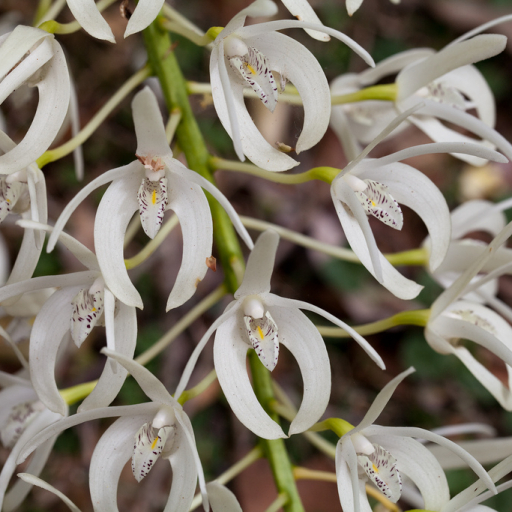
Known famously as the King Orchid or Rock Lily, Dendrobium speciosum is a true titan of the Australian wilderness. Unlike delicate indoor orchids, this rugged beauty thrives on sun-drenched cliffs and forest canopies, producing massive, spectacular sprays of fragrant flowers that can stop a hiker in their tracks. It is celebrated by enthusiasts for its sheer resilience and its "clump-forming" habit that can grow into a massive specimen over several decades.
🔍 How to Identify
- 🌿 The Pseudobulbs: Look for thick, tough, cane-like stems that taper toward the top. These act as water reservoirs, allowing the plant to survive long dry spells.
- 🍃 Leathery Leaves: The leaves are dark green, very stiff, and almost plastic-like to the touch, usually appearing in groups of two to five at the top of the canes.
- 🌸 Explosive Blooms: In late winter and spring, it sends out long, arching spikes (racemes) crowded with dozens of star-shaped flowers ranging from snowy white to buttery gold.
🏡 In Your Garden
- ☀️ Light is King: This orchid is a sun-lover. If it doesn’t get enough bright, indirect light (or even some direct morning sun), it will stubbornly refuse to bloom, growing only lush green leaves instead.
- 🪨 Drainage and Stability: Because it is naturally a "lithophyte" (rock-dweller), it hates "wet feet." Use a very coarse orchid mix or mount it directly onto a rock or hardwood log. Once it settles, avoid moving it; it develops a complex root system that resents being disturbed.
- 💨 Air Circulation: It thrives on breezes. In stagnant air, it becomes susceptible to scale or rot, so ensure it has plenty of "elbow room" in your collection.
⚠️ Safety & Toxicity
- ✅ Status: Generally non-toxic.
- 🐾 Details: This orchid is considered safe for households with curious cats, dogs, or children. However, the sap from a broken cane can occasionally cause mild skin irritation in sensitive individuals, so it’s best to wear gloves when pruning or dividing large clumps.
✨ Fun Fact
A single, well-established colony of Dendrobium speciosum in the wild can produce over 100 flower spikes simultaneously, containing tens of thousands of individual blossoms, creating a scent so powerful it can be detected from hundreds of feet away!

Detailed Care Instructions
To grow a Dendrobium Speciosum plant, follow these steps:
- Light: Provide bright, indirect light to the plant. It can tolerate some direct sunlight, especially in the morning or late afternoon, but avoid intense midday sun.
- Temperature: Dendrobium Speciosum plants prefer warm temperatures between 60-85°F (15-29°C) during the day and slightly cooler temperatures at night. They can tolerate some fluctuations in temperature, but avoid extreme cold or hot conditions.
- Humidity: Maintain a high humidity level for the plant, around 50-70%. You can achieve this by placing a tray of water near the plant or using a humidifier.
- Watering: Water the plant thoroughly when the top inch (2.5 cm) of the soil feels dry. Ensure good drainage by using a suitable potting mix specifically made for orchids. Avoid overwatering, as it can lead to root rot.
- Fertilizer: Use a balanced orchid fertilizer, following the instructions on the packaging. During the growing season (spring and summer), fertilize the plant every two weeks. Reduce frequency during the dormant period (fall and winter).
- Potting: Repot the Dendrobium Speciosum plant every 2-3 years or when it outgrows its current pot. Use a well-draining orchid potting mix and carefully transfer the plant to the new pot, ensuring not to damage the roots.
- Pruning: Prune dead or yellowing leaves and spent flowers to maintain the plant's health and appearance. Only prune stems that are completely dead or dry.
- Dormancy: During the dormant period (fall and winter), reduce watering and stop fertilizing. Provide cooler temperatures (50-60°F or 10-15°C) to encourage blooming in the following season.
- Support: Dendrobium Speciosum plants have cane-like stems that can become tall and require support. Use stakes or trellises to provide stability and prevent the stems from bending or breaking.
- Pests and diseases: Keep an eye out for common orchid pests like mealybugs, scale insects, or aphids. Treat infestations promptly with appropriate insecticides or by using natural remedies like neem oil.
Remember that growing orchids can be challenging for beginners, so patience and perseverance are key. With proper care and attention, your Dendrobium Speciosum plant should thrive and produce beautiful flowers.

Place in a window with dappled sun or a spot in the middle of a room. Or directly in a window facing west or east.

Dendrobium Speciosum is an epiphytic orchid plant that requires careful watering. These plants generally prefer their growing medium to be slightly moist but not waterlogged. Overwatering can lead to root rot and other issues, while under-watering can cause the orchid to dry out and die.
To water Dendrobium Speciosum, it is recommended to use room-temperature or tepid water and avoid using chlorinated water. Rainwater or distilled water is ideal for these plants as they are sensitive to mineral buildup. It is important to avoid getting water on the leaves or flowers, as this can lead to rot or fungal issues.
One way to water Dendrobium Speciosum is by dunking the entire pot in water for 15-20 minutes, allowing the roots to soak before draining all excess water. Another method is to run water through the pot and allow it to drain thoroughly. It is important to ensure that the growing medium has adequate drainage to prevent water buildup and facilitate air circulation for the roots.
It is recommended to water Dendrobium Speciosum once a week, adjusting the frequency based on environmental factors such as temperature, humidity, and light. During periods of hot weather or dry conditions, the plant may require more frequent watering, while during cooler periods, less water may be needed.
Monitoring the plant's soil moisture and observing its overall health can help determine its watering needs. It is always better to underwater than overwater, as dry soil can be quickly remedied with a good soak while overwatering can lead to irreversible damage.
The Dendrobium Speciosum plant should be fertilized every two weeks during the growing season with a balanced orchid fertilizer. Before fertilizing, make sure the plant is well-watered to avoid burning the roots. Only fertilize the plant when it is actively growing, and reduce fertilization during the dormant season. Avoid over-fertilizing, as this can lead to salt accumulation and other issues.
Dendrobium Speciosum prefers a well-draining soil mix that is not compact. The recommended soil mix consists of peat moss, bark chips, and perlite. The pH range of the soil should be slightly acidic to neutral, between 5.5 and 7.0. It is important that the soil is able to hold moisture, but not become waterlogged, as this can cause root rot. It is recommended to repot the plant every 2-3 years to provide fresh soil and ensure good drainage and aeration.
To propagate this plant, you will need to carefully cut off a section of the stem that has at least one node. Make sure the cutting is around 8-10cm in length. You will then need to sterilize a sharp knife or secateurs with rubbing alcohol to prevent infection. Cut the stem at a 45-degree angle, and make sure there are no damaged or crushed edges.
Once you have your cutting, allow it to dry for a few hours before planting it. Fill a pot with coarse orchid bark or sphagnum moss, and lightly press the cutting into the growing medium. You should water the cutting sparingly to prevent root rot, and keep it in a warm, humid location with filtered light.
After a few weeks, you should see new growth emerge from the node on the stem where you made the cut. At this point, you can begin to water the plant more often and fertilize it with an orchid-specific fertilizer. It may take several months for the cutting to establish itself and begin producing blooms, but with proper care, you should be able to successfully propagate this orchid.
Common pests of the rock-lily include Scale insect, mealybugs, spider mites, thrips. Make a habit of checking your rock-lily frequently for pests so that any infestations can be caught and managed early.








