Plant Overview
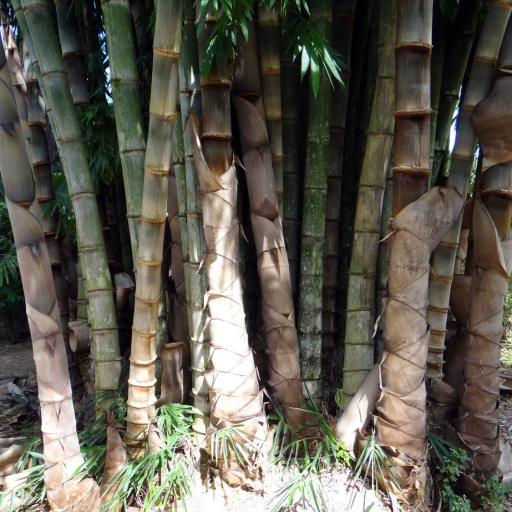
Known as the "Dragon Bamboo" or the "Titan of the Grasses," Dendrocalamus giganteus is a true botanical marvel. Native to the humid rainforests of Southeast Asia, this massive bamboo can reach heights that rival city skyscrapers, often towering over 100 feet. It has been a cornerstone of tropical architecture and culture for centuries, earning its reputation as one of the most useful and awe-inspiring plants on Earth.
🔍 How to Identify
- 🪵 Colossal Culms: The "trunks" are spectacular, reaching up to 12 inches in diameter with a dusty, grayish-green matte finish that turns brownish-yellow as they age.
- 🍃 Oversized Foliage: Unlike the delicate, feathery leaves of smaller bamboos, these leaves are surprisingly large and broad—sometimes reaching 20 inches in length—hanging gracefully from the upper branches.
- 🛡️ Papery Sheaths: New shoots emerge from the ground looking like giant armor-plated cones, covered in large, purplish-brown leathery sheaths that eventually fall away.
🏡 In Your Garden
- 🌊 A Thirst for the Tropics: This giant requires deep, consistent moisture and high humidity. It isn't just about surface watering; its massive, clump-forming root system needs a "tropical soak" to support its rapid vertical climb and prevent the culms from becoming brittle.
- 🧱 Demanding Foundations: This is not a plant for a standard backyard or a small container. Because of its sheer weight and height, it requires a massive footprint and wind protection. It thrives in rich, loamy soil packed with organic mulch, which mimics the nutrient-dense floor of its native jungle.
⚠️ Safety & Toxicity
- ✅ General Safety: Dendrocalamus giganteus is non-toxic to humans and pets upon contact. It is a "clumping" bamboo, meaning it isn't as invasive or "aggressive" as running varieties, making it safer for your garden's boundaries.
- 🍳 Culinary Caution: While the young shoots are edible and a staple in many Asian cuisines, they must never be eaten raw. They contain natural cyanogenic glycosides (similar to those in cassava) and must be sliced and boiled thoroughly to be rendered safe for consumption.
✨ Fun Fact
⚡ Living Lightning: In the peak of its growing season under perfect conditions, this bamboo can grow up to 12 inches (30 cm) in a single day. In a quiet forest, you can occasionally hear the "creaking" and "popping" of the culms as they rapidly expand toward the canopy!

Detailed Care Instructions
To grow Dendrocalamus giganteus, also known as Giant Bamboo, follow these steps:
- Climate: Ensure that you live in a suitable climate for growing bamboo. Dendrocalamus giganteus thrives in tropical and subtropical regions, typically in USDA hardiness zones 9 through 11.
- Soil: Bamboo prefers well-draining soil with plenty of organic matter. Prepare the soil by adding compost or well-rotted manure to improve its fertility and drainage.
- Sunlight: Select a location that receives full sun to partial shade throughout the day. Adequate sunlight is crucial for the growth and development of bamboo plants.
- Planting: Bamboo can be propagated from seeds or rhizome cuttings. If using seeds, soak them in water for 24 hours prior to planting. If using rhizome cuttings, ensure they are taken from healthy, mature plants.
- Dig a hole that is twice as wide and deep as the root ball or rhizome.
- Place the root ball or rhizome cutting in the hole, ensuring it is positioned horizontally.
- Cover the roots with soil, gently firming it around the plant.
- Dig a hole that is twice as wide and deep as the root ball or rhizome.
- Watering: Keep the soil moist but not waterlogged. Bamboo requires regular watering, especially during the establishment phase. Water deeply once or twice a week, depending on the climate and rainfall. During periods of drought, increase the frequency of watering.
- Fertilizing: Apply a balanced, slow-release fertilizer during the growing season to provide essential nutrients. Follow the manufacturer's instructions for the proper dosage and timing.
- Mulching: Apply a layer of organic mulch around the base of the bamboo plant to conserve moisture, suppress weed growth, and regulate soil temperature. Leave a small space around the base to prevent rot.
- Maintenance: Prune any dead or damaged canes to maintain the health and aesthetics of the plant. Thin out clumps if they become too dense, allowing better air circulation.
- Control spreading: Dendrocalamus giganteus has a tendency to spread rapidly through its underground rhizomes. To control its spread, consider planting bamboo in containers or rhizome barriers made of heavy-duty plastic or metal.
- Harvesting: Depending on your purpose, you can harvest mature culms (stems) for construction, crafts, or other uses. Harvesting can take several years because the culms need time to mature and harden.
Remember that bamboo can be invasive, so it's essential to monitor its growth and take necessary steps to prevent it from spreading beyond the desired area.

Place in a window with dappled sun or a spot in the middle of a room. Or directly in a window facing west or east.

Dendrocalamus Giganteus is a plant that requires adequate watering to grow and thrive. To water this plant, one should first ensure that it is planted in well-draining soil that allows excess water to drain away. This is important to prevent the roots from getting waterlogged and rotting.
One should then wait for the top layer of soil to dry out before watering the plant. This can be determined by inserting a finger into the soil up to the first knuckle. If the soil feels dry, it's time to water the plant.
When watering, avoid getting water on the leaves as this can cause damage and promote disease. Instead, water the soil around the base of the plant until the water begins to drain out of the bottom of the pot.
It's important to not overwater the plant, as this can also cause damage and lead to root rot. One should also avoid letting the plant sit in standing water as this can suffocate the roots.
In summary, Dendrocalamus Giganteus needs to be planted in well-draining soil and watered when the top layer of soil is dry. One should avoid getting water on the leaves, overwatering, and letting the plant sit in standing water.
To properly fertilize the plant, you should begin by choosing a fertilizer that is specifically designed for bamboo plants. It is recommended that the fertilizer have a higher nitrogen content, as this will help to support healthy growth and development.
You can either use a slow-release granular fertilizer or a liquid fertilizer that can be applied directly to the plant. In either case, you should follow the instructions provided by the manufacturer carefully to ensure that you are applying the correct amount of fertilizer.
When applying fertilizer, it is important to make sure that the soil is moist before adding the fertilizer. This will help to ensure that the nutrients are absorbed properly.
To promote healthy growth, you should fertilize the plant during the growing season. This is usually from spring to fall, depending on your location and climate.
It is important to monitor the growth of the plant and adjust the amount and frequency of fertilizer accordingly. Over-fertilizing can be harmful to the plant, so it is important to pay attention to signs of over-fertilization such as burnt leaves or stunted growth.
Dendrocalamus Giganteus plant prefers well-draining, nutrient-rich soil. The soil should have a slightly acidic to neutral pH range of 6.0 to 7.5. The addition of organic matter, such as compost or aged manure, can improve soil fertility and drainage. Heavy clay soils should be amended with sand or perlite to improve drainage. The soil should be kept consistently moist but not waterlogged. Avoid using soils that contain high levels of salts, as this can be detrimental to plant growth.
To propagate this plant, you can collect and sow seeds during the plant's flowering stage. Another method is to divide established clumps in the spring or early summer by separating sections of the rhizome, making sure each section has some culms and roots attached. Plant each section into a well-draining soil mixture with partial shade and keep it consistently moist until new growth appears.
Common pests of the giant bamboo include Mealybugs, spider mites, aphids, thrips. Make a habit of checking your giant bamboo frequently for pests so that any infestations can be caught and managed early.








