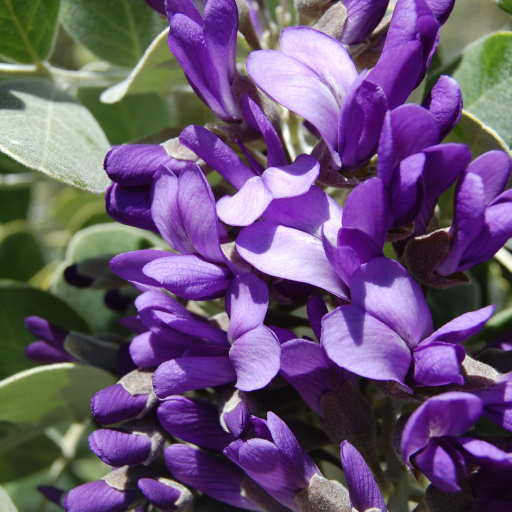
Plant Overview
Known widely as the Texas Mountain Laurel or the "Grape Soda Tree," this stunning evergreen is a jewel of the American Southwest and Northern Mexico. It is famous for its breathtaking clusters of purple flowers that bloom in early spring, filling the neighborhood with a scent so sweet it is often compared to artificial grape candy. Despite its beauty, it is a rugged survivor, thriving in harsh, rocky landscapes where other plants might wither.
🔍 How to Identify
- 🍃 Leathery Foliage: The leaves are pinnately compound, featuring thick, waxy, oval-shaped leaflets that remain a deep, lustrous green throughout the winter.
- 🍇 Wisteria-like Blooms: It produces heavy, drooping clusters (racemes) of violet-blue flowers that look remarkably like Wisteria but smell much sweeter.
- 🫛 Woody Seed Pods: After blooming, the plant develops thick, velvety, silver-grey pods that eventually split to reveal hard, bright red "Mescal Beans."
🏡 In Your Garden
- 🏜️ The Ultimate Xeriscape Plant: This is a slow-growing tree that is incredibly drought-tolerant once established. It actually prefers "tough love" and thrives in the heat and sun.
- 🧱 Alkaline Specialist: Unlike many garden plants that crave acidic soil, the Texas Mountain Laurel loves limestone and rocky, alkaline earth. It requires excellent drainage to prevent root rot.
- 🚫 Sensitive Roots: It grows a deep taproot early in life. Because of this, it is notoriously difficult to transplant; it is best to buy a container-grown specimen and plant it in its permanent "forever home" immediately.
⚠️ Safety & Toxicity
- 💀 Highly Toxic: Every part of this plant is toxic, but the bright red seeds (Mescal Beans) are the primary concern.
- 🐕 Danger to Pets and Kids: The seeds contain cytisine, an alkaloid that can cause nausea, hallucinations, and even respiratory failure if chewed and swallowed.
- 🛡️ Natural Protection: Fortunately, the seed coat is extremely hard. Most animals (and children) cannot easily break the shell, which often allows the seed to pass through the digestive system without releasing its toxins. However, always keep an eye on curious pets.
✨ Fun Fact
🥤 The Bubblegum Bloom: The fragrance of Dermatophyllum secundiflorum is so distinct that it is almost never described as "floral." Instead, it is nearly universally compared to the scent of Grape Big League Chew or grape soda. One blooming tree can scent an entire suburban block!

Detailed Care Instructions
| Color | Purple |
| Soil Ph | 5.4-6.7 |
| Toxicity | Toxic |
| Soil Type | Well Drained |
| Bloom Time | March And April |
| Plant Type | Evergreen Flowering Shrub |
| Mature Size | Up To 20 Feet Tall |
| Native Area | Mexico, Southwest Us |
| Sun Exposure | Full Sun To Part Shade |
| Hardiness Zones | 7-11 |
To grow Dermatophyllum Secundiflorum plant, also known as Peperomia obtusifolia or Baby Rubber Plant, you can follow these steps:
- Choose a suitable location: Place the plant in a bright area with indirect sunlight. It can tolerate some shade, but avoid placing it in direct sunlight as it may scorch the leaves.
- Provide the right temperature: Keep the plant in a warm area with temperatures between 65-75°F (18-24°C). Avoid placing it in areas with cold drafts or extreme temperature fluctuations.
- Watering: Water the plant thoroughly when the top inch of the soil feels dry. Ensure the pot has good drainage to prevent waterlogging, as overwatering can lead to root rot.
- Humidity: The Baby Rubber Plant prefers higher humidity levels. You can provide humidity by placing a tray of water near the plant or using a humidifier. Misting the leaves occasionally can also help.
- Fertilization: Use a balanced liquid fertilizer diluted to half the recommended strength once a month during the growing season (spring to early fall). Avoid fertilizing in winter when the plant is dormant.
- Soil: Use a well-draining potting mix that retains some moisture but does not become waterlogged. A mix of peat moss, perlite, and potting soil or a commercial indoor plant mix works well.
- Pruning: If the plant becomes leggy or overgrown, you can prune it to maintain a compact shape. Pinch off the stems just above a leaf node, and new growth will emerge from there.
- Repotting: As the Baby Rubber Plant grows, you may need to repot it into a slightly larger container. Repot during spring when the new growth starts to appear.
- Propagation: You can propagate the Baby Rubber Plant by stem cuttings. Take a cutting with at least two leaf nodes and place it in a pot with moist soil. Keep it warm and humid until it roots.
- Pest control: Monitor the plant for common houseplant pests like spider mites or mealybugs. If infested, treat with insecticidal soap following the manufacturer's instructions.
By following these guidelines, you should be able to successfully grow and care for Dermatophyllum Secundiflorum or Baby Rubber Plant.

Place in a bright room that is sun drenched almost all day. Or directly in a south-facing window.

To properly water this plant, you should start by assessing the soil moisture level around it. Insert your finger about 1-2 inches into the soil and feel if it is still moist or dry. If the soil is moist, you can wait a few more days before watering. However, if the soil is dry, it's time to water the plant.
The best method for watering-based on soil moisture is to do it thoroughly and slowly. This will ensure that the water penetrates the soil and reaches the plant's roots. You can either use a watering can or a hose with a nozzle that has a gentle stream to water the plant.
One thing to note is that Dermatophyllum Secundiflorum plant likes to be watered regularly but not overwatered. Too much water can cause the roots to become waterlogged, leading to root rot.
Additionally, this plant prefers well-draining soil with good airflow around its roots. Therefore, it is crucial to avoid waterlogging around the plant's roots, which can cause damage to the plant.
In summary, water Dermatophyllum Secundiflorum plant when the soil is dry enough, but avoid overwatering. Provide good airflow around the roots and use well-draining soil to avoid root rot.
To fertilize this plant, use a balanced fertilizer with equal amounts of nitrogen, phosphorus, and potassium. Apply the fertilizer every two weeks during the growing season, and reduce the frequency to once a month during the winter. Be careful not to over-fertilize, as this can lead to root damage. Always follow the instructions on the fertilizer label for the correct amount to use.
Dermatophyllum Secundiflorum, also known as the plant with sword-like leaves and captivating greenery, requires a well-draining soil mix to thrive. The soil should be sandy, loamy and mixed with peat moss or perlite to enhance aeration. A pH level of 5.0 to 7.0 is ideal for this plant. It is recommended to add slow-release fertilizers during potting to supply the necessary nutrients for growth. It is imperative not to over-water this plant as it may promote root rot. Therefore, it is necessary to allow the soil to dry out between watering. In summary, the soil mixture should be well-draining, sandy, loamy, and enriched with slow-release fertilizers. This plant will bloom beautifully and healthily in this type of environment.
To propagate this plant, first begin by carefully selecting and preparing a healthy parent plant. Cut off a healthy stem that is approximately 4-6 inches long using a pair of sharp and clean pruning shears or scissors. Make sure that the cut is clean and straight, and avoid damaging the plant.
Next, remove the lower leaves from the stem, leaving only a few at the top. This will help to prevent moisture loss and rot. Dip the cut end of the stem into rooting hormone powder and then gently plant it into moist soil mix that is specifically formulated for propagating plants.
Cover the pot with a clear plastic bag or plastic wrap to create a humid and warm environment. Place the pot in a bright area but out of direct sunlight. Mist the plant regularly to keep the soil moist, but avoid overwatering.
Once the roots have grown and the plant has started to grow above soil level, remove the plastic covering and transplant the new plant into a larger pot or into the garden. Keep the soil moist and protect the new plant from direct sunlight until it has become established.
Common pests of the texas-mountain-laurel include Larvae. Make a habit of checking your texas-mountain-laurel frequently for pests so that any infestations can be caught and managed early.








