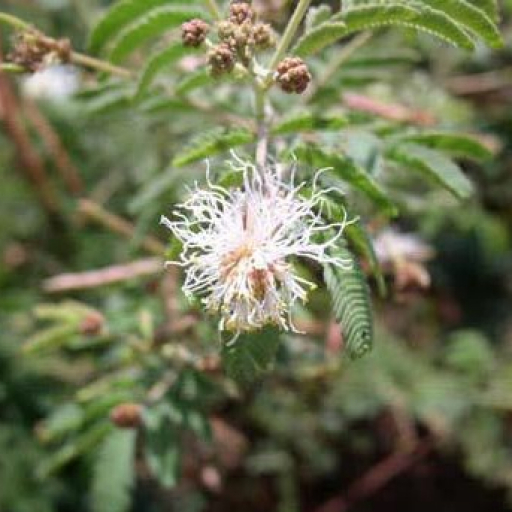
Plant Overview
Known affectionately as the Velvet Bundleflower, this resilient native of the American Southwest and Northern Mexico is a master of the dry, rocky prairie. It gets its name from the soft, silvery hairs that cover its stems and leaves, giving the entire plant a fuzzy, "velvety" look and feel. Often found dotting limestone slopes, it is a favorite for restoration projects and wild-scaped gardens looking for a touch of soft texture.
🔍 How to Identify
- 🍃 The Foliage: Delicate, fern-like leaves (bipinnately compound) that are densely covered in fine, white hairs, giving them a dusty green or silvery appearance.
- ☁️ The "Puffball" Blooms: Small, white or cream-colored globe-shaped flower heads that look like miniature exploding fireworks or tiny pom-poms.
- 🥨 The Bundled Pods: After blooming, it produces clusters of flat, slightly curved seed pods that turn a dark reddish-brown, hanging together in the "bundles" that give the plant its name.
🏡 In Your Garden
- 🏜️ Drought Specialist: This plant thrives in "poor" soil where other species struggle. Because it possesses a deep taproot to find water, it is incredibly drought-tolerant; however, this also means it hates being transplanted. Choose its location wisely!
- 🦋 Wildlife Support: It is a high-protein source for local wildlife and a magnet for native bees. If you are building a pollinator corridor or a "wild" corner in your yard, this is an ideal low-maintenance candidate.
⚠️ Safety & Toxicity
- ✅ Safe Status: The Velvet Bundleflower is considered non-toxic to humans, dogs, and cats.
- 🦌 Forage Value: In its natural habitat, it is a preferred snack for deer and livestock because of its high nutritional content. If you have neighborhood deer, you may need to protect young plants until they are established.
✨ Fun Fact
The "velvet" coating on the leaves isn't just for decoration; those tiny hairs trap a thin layer of moisture against the plant’s surface, acting as a natural form of biological air conditioning to survive the scorching desert sun!

Detailed Care Instructions
To grow Desmanthus velutinus plant, also known as velvet mesquite, you can follow these steps:
- Find suitable seeds or seedlings: Locate a reputable nursery or seed supplier that offers Desmanthus velutinus seeds or seedlings. Alternatively, you can try collecting seeds from mature plants if they are locally available.
- Choose an appropriate planting location: Desmanthus velutinus prefers a well-drained soil in a sunny or partially shaded area. Ensure the soil is not waterlogged and has good fertility.
- Prepare the soil: Before planting, loosen the soil and remove any weeds or debris. Add organic matter, such as compost or well-rotted manure, to improve the soil's fertility and drainage.
- Plant the seeds or seedlings: If using seeds, sow them directly into the prepared soil at a depth of 1/4 to 1/2 inch. Keep the soil consistently moist until germination, which may take a few weeks. If using seedlings, dig a hole slightly larger than their root ball, place them in the hole, and fill it with soil, firming it gently around the plant.
- Watering and care: Provide regular watering to keep the soil moist but not waterlogged, especially during the plant's establishment period. Once established, Desmanthus velutinus is quite drought-tolerant. Water deeply but infrequently to encourage deep root growth. Mulching around the plant can help retain moisture and suppress weeds.
- Pruning: Prune the plant to maintain its desired shape and size. Remove any dead or damaged branches as needed. Additionally, you may want to prune to encourage bushiness or remove suckers.
- Fertilization: Desmanthus velutinus generally does not require heavy fertilization. However, applying a balanced slow-release fertilizer during the growing season can help promote plant health and growth.
- Protect from pests and diseases: Inspect the plant regularly for any signs of pests or diseases, such as aphids or leaf spots. If necessary, treat the affected areas with appropriate organic or chemical measures.
- Harvesting: Depending on your specific purpose for growing Desmanthus velutinus, you can choose to harvest the leaves or pods. Leaves are typically harvested in early spring before flowering, while pods are collected when they turn brown and dry.
Remember to check your local gardening regulations and climate suitability before growing Desmanthus velutinus, as it may be restricted or not thrive in certain regions.

Place in a bright room that is sun drenched almost all day. Or directly in a south-facing window.

The plant in question prefers to be watered regularly, but not excessively, as it is sensitive to over-watering. It is important to allow the soil to dry out slightly between waterings to prevent root rot. When watering, it is recommended to water deeply, saturating the soil around the roots rather than just the surface. Additionally, it is important to avoid getting water on the foliage of the plant, as this can lead to fungal diseases.
To fertilize the plant, use a balanced fertilizer with equal parts of nitrogen, phosphorus, and potassium. Apply the fertilizer during the growing season, typically in early spring and late summer. Use a granular fertilizer and mix it into the soil around the plant, being careful not to apply too much. Water the plant thoroughly after fertilizing. Avoid fertilizing during hot, dry weather as it can cause damage to the plant.
When growing Desmanthus Velutinus, it is important to use a well-draining soil that is rich in organic matter. The soil should be slightly acidic with a pH range of 6.0-7.5. Avoid using heavy clay soils as they can retain too much moisture and hinder root development. Use a mix of garden soil, peat moss, and sand to create a suitable growing medium. You can also add some perlite or vermiculite to increase aeration and drainage. Fertilize regularly with a balanced nutrient solution to ensure healthy growth and development of the plant.
Desmanthus velutinus can be propagated through the following steps:
- Collect seeds from mature plants in the fall season. You can harvest the seeds by shaking the seed pods gently, and they should fall into a container.
- Soak the seeds in warm water for 24-48 hours to soften the hard seed coat.
- Prepare a seed raising mix by mixing equal parts of perlite and peat moss. Fill the seed trays with the mix.
- Sow the seeds on the surface of the seed mix, pressing the seeds gently into the mix.
- Cover the seeds with a thin layer of the mix and mist the surface with water to moisten it.
- Place the seed trays in a warm, bright location but out of direct sunlight.
- Keep the soil moist but not waterlogged, using a spray bottle to mist the surface when necessary.
- The seeds should germinate within 1-2 weeks. Once the seedlings have their first true leaves, transplant them into individual pots or plant them in a suitable garden bed.
- Young plants can be fertilized lightly with a balanced fertilizer or organic compost.
- Provide the plants with adequate water and sunlight, and protect them from frost and wind until they are established.
- Desmanthus velutinus should mature within 2-3 years and start producing seeds, allowing you to propagate more plants.








