Plant Overview
Often called the Silver-leaf Desmodium or the "Velcro Plant," this hardy perennial legume is a master of hitchhiking and soil building. Originating from South America, it has traveled the globe thanks to its incredibly sticky seed pods that cling to fur and fabric with ease. While farmers love it for its ability to fertilize the earth naturally, gardeners often admire the striking silver patterns that decorate its deep green foliage.
🔍 How to Identify
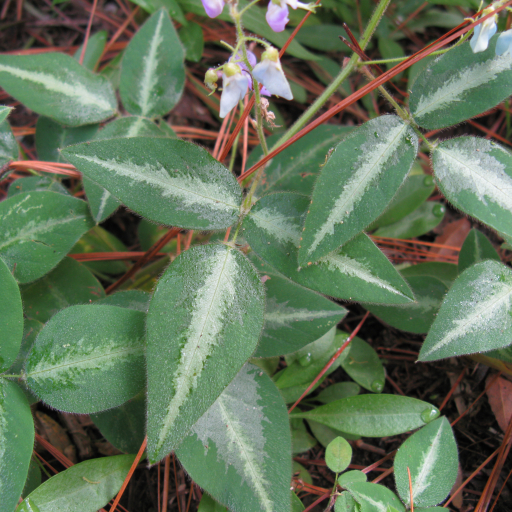
- 🌿 The Silver Streak: Each leaf consists of three leaflets (trifoliate), featuring a distinctive, irregular silver-gray stripe running down the center midrib.
- 🪝 Velcro Texture: The stems and seed pods are covered in tiny, hooked hairs (uncinate hairs) that feel rough to the touch and allow the plant to "climb" or stick to passing animals.
- 🌸 Pea-Like Blooms: It produces delicate, butterfly-shaped flowers that range in color from pale pink to a soft lavender, clustered on long, upright stalks.
🏡 In Your Garden
- 🌱 Nitrogen Powerhouse: As a legume, this plant works with soil bacteria to "fix" nitrogen from the air into the ground, acting as a living fertilizer for neighboring plants.
- 🚜 The "Push-Pull" Hero: In sustainable farming, it is used to protect crops like maize; its scent "pushes" away harmful moths, while also suppressing parasitic weeds like Striga beneath the soil.
- 🧗 Space Explorer: Because it has a scrambling, vine-like habit, it can quickly cover a fence or a patch of bare ground, making it an excellent choice for erosion control in tropical or subtropical climates.
⚠️ Safety & Toxicity
- ✅ Generally Safe: Silver-leaf Desmodium is considered non-toxic to humans and is frequently used as a high-protein forage for livestock like cattle and goats.
- 🐾 Pet Nuisance: While not poisonous to dogs or cats, the "sticky" seed pods can become deeply matted in long-haired fur, which may require a tedious grooming session (or scissors) to remove.
✨ Fun Fact
The "Uncinatum" in its name comes from the Latin word uncinatus, meaning "hooked." This refers to the microscopic hooks on its seeds that served as one of the many biological inspirations for the invention of modern Velcro!

Detailed Care Instructions
To grow Desmodium Uncinatum, also known as silverleaf desmodium, follow these steps:
- Climate and soil: Determine if your climate is suitable for the plant. Desmodium Uncinatum grows best in tropical and subtropical regions with a temperature range of 20-28°C (68-82°F). It requires a well-draining soil with a pH range of 5.6-7.
- Propagation: You can propagate Desmodium Uncinatum using seeds or cuttings. Seeds should be scarified (nick or scratch the seed coat) and soaked in warm water for 24 hours before planting. Cuttings can be taken from established plants and rooted in water or soil.
- Planting: Prepare the planting area by clearing weeds and tilling the soil. Sow the seeds or plant the cuttings at a depth of 1-2 cm (0.4-0.8 inches) and space them about 30 cm (12 inches) apart.
- Watering: Water the plants regularly, especially during dry periods. Avoid overwatering, as this can lead to root rot. The soil should be kept moist but not waterlogged.
- Fertilization: Apply a balanced fertilizer or organic compost during the growing season to provide necessary nutrients for healthy growth. Follow the manufacturer's instructions for the recommended dosage.
- Pruning: Regularly prune the plants to encourage branching and bushier growth. This will also help prevent legginess and promote a more compact form.
- Weed control: Control weeds around the plants to reduce competition for nutrients, sunlight, and moisture. Mulching around the base of the plants can also help suppress weed growth.
- Pest and disease management: Monitor the plants for any signs of pests or diseases such as aphids, leaf miners, or powdery mildew. Use appropriate pest control methods such as insecticidal soap or neem oil if necessary.
- Harvesting: Desmodium Uncinatum can be harvested once it reaches a height of 60-90 cm (24-36 inches). Cut the stems about 15 cm (6 inches) above the ground to promote regrowth.
- Maintenance: Regularly inspect the plants for any signs of stress, nutrient deficiencies, or diseases. Provide adequate care and attention to keep the plants healthy and productive.
Remember to do further research and consult local experts to ensure that you have the necessary knowledge and resources for successful Desmodium Uncinatum cultivation in your specific region.

Place in a bright room that is sun drenched almost all day. Or directly in a south-facing window.

Desmodium Uncinatum is a type of plant that requires regular watering in order to maintain healthy growth. In order to water this plant effectively, it is important to follow a few key guidelines.
The first step in watering Desmodium Uncinatum is to choose an appropriate watering schedule. This will depend on a variety of factors, including the size of the plant, the climate in which it is growing, and the soil conditions. In general, it is best to water Desmodium Uncinatum when the soil is dry to the touch, but not completely parched.
When watering Desmodium Uncinatum, it is important to use a gentle stream of water that will not damage the leaves or stems of the plant. It is also important to water the plant at the base, rather than from above, as this helps to avoid wetting the foliage and preventing fungal growth.
Finally, it is important to ensure that the soil around Desmodium Uncinatum is well-draining, as this will prevent water from pooling around the roots and potentially causing damage to the plant. If the soil is dense or heavy, it may be necessary to add sand or other organic material to improve drainage.
Overall, watering Desmodium Uncinatum requires a delicate balance of frequency, volume, and technique, but with the right approach, this plant can thrive and produce beautiful blooms and foliage.
To fertilize this plant, it is recommended to use a balanced fertilizer with equal amounts of nitrogen, phosphorus, and potassium. Apply the fertilizer every 4-6 weeks during the growing season, and make sure to water the plant thoroughly after each application. Avoid over-fertilizing, as this can lead to root damage and other issues. Finally, always follow the instructions on the fertilizer packaging for best results.
Desmodium Uncinatum plant thrives best in well-draining soil with a pH range of 5.5 to 7.5. It requires a soil that is high in organic matter and nutrient-rich. The soil should be moist but not waterlogged, as waterlogging can cause root rot. The ideal soil type for Desmodium Uncinatum plant is loamy soil, which has a good balance of sand, silt, and clay. Loamy soil is known for its ability to retain water, while still allowing for good drainage. It is also beneficial to mix fertilizer into the soil before planting, as this will provide the necessary nutrients for the plant's growth and development. Overall, the soil surrounding the Desmodium Uncinatum plant should be healthy and fertile, allowing for optimal growth and vitality.
To propagate this plant, you can take stem cuttings from the parent plant. The stem cuttings should be around 4-6 inches long and have a few leaves on them. Make sure to use a clean, sharp knife to make the cut.
Once you have your stem cuttings, remove the lower leaves from the stem, leaving only a few at the top. You can then dip the cut end of the stem cutting into rooting hormone powder, which will help encourage root growth.
You can then plant the stem cuttings in a well-draining potting mix, with the cut end inserted about an inch into the soil. Water the soil lightly to moisten it, but avoid overwatering as this can cause the stem cuttings to rot.
Place the pot in a bright, indirect light location and keep the soil moist but not waterlogged. With proper care, your stem cuttings should start to develop roots and new growth within a few weeks.








