Plant Overview
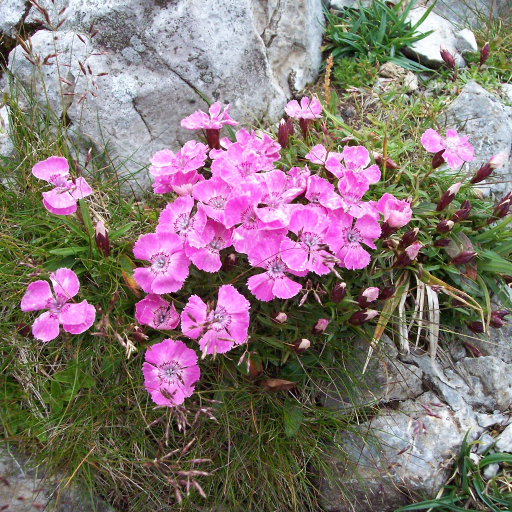
Often called the "Alpine Pink," Dianthus alpinus is a tiny but mighty mountaineer native to the limestone peaks of the Austrian Alps. Unlike its lanky cousins found in florist shops, this species is a "cushion" plant, hugging the ground to stay warm against mountain winds. It is widely considered the "King of the Rock Garden" because its flowers are almost comically large compared to its petite, grassy foliage.
🔍 How to Identify
- 🌸 Oversized Blooms: The flowers are surprisingly large for the plant's size, often stretching nearly 2 inches across, featuring five fringed or serrated petals.
- 🎨 Zoned Coloring: Each flower is a deep, vibrant pink or carmine, usually marked with a distinct ring of darker spots and a white, fuzzy center (the "eye").
- 🍃 Glossy Mats: The foliage consists of short, narrow, lance-shaped leaves that are a darker, glossier green than the silvery-blue leaves typical of other Dianthus species.
🏡 In Your Garden
- ⛰️ The Mountain Habit: This plant evolved in rocky crevices, meaning it demands "perfect" drainage. It thrives in gravelly or gritty soil; if its roots sit in heavy, wet clay, the plant will likely rot before the season ends.
- 🦴 Calcium Lover: Most garden plants prefer slightly acidic soil, but the Alpine Pink is a "calciphile." It craves alkaline conditions and thrives when planted near limestone or in soil supplemented with a bit of lime.
- ☀️ Sun but Cool: While it loves bright sun, it is a true cold-weather specialist. It may struggle in humid, sweltering climates and prefers "alpine troughs" where its roots can stay cool beneath a layer of stone mulch.
⚠️ Safety & Toxicity
- 🐾 Mildly Toxic to Pets: Like most members of the Dianthus family, this plant contains triterpenoid saponins. If ingested by dogs or cats, it can cause mild gastrointestinal upset or vomiting.
- 👶 Skin Sensitivity: The sap can occasionally cause minor skin irritation (dermatitis) in sensitive individuals or small children if the stems are crushed.
✨ Fun Fact
The name Dianthus comes from the Greek words "Dios" (God) and "Anthos" (Flower), translating literally to "The Flower of God." The Alpine Pink is so highly regarded by botanists that it received the Royal Horticultural Society’s Award of Garden Merit for its outstanding beauty and resilience.

Detailed Care Instructions
To grow Dianthus Alpinus, also known as alpine pink, follow these steps:
- Choose a suitable location: Dianthus Alpinus prefers full sun to partial shade. Make sure the soil is well-draining and slightly alkaline (pH 6.7-7.5). If the soil is heavy clay, amend it with organic matter to improve drainage.
- Prepare the soil: Clear the area of any weeds or grass. Loosen the soil with a garden fork or tiller to a depth of 6-8 inches. Remove any large rocks or debris.
- Sow seeds or plant seedlings: You can either start the plants from seed or purchase seedlings from a nursery. If starting from seed, sow them on the soil surface and gently press them down. Keep the soil evenly moist until germination occurs. For seedlings, dig a hole slightly larger than the root ball and place the plant in it, firming the soil around it.
- Watering: Dianthus Alpinus prefers regular watering, but avoid overwatering as it can cause root rot. Allow the top inch of soil to dry out between waterings.
- Fertilizing: Apply a balanced, slow-release fertilizer in spring and then again in midsummer to promote healthy growth. Follow the package instructions for the appropriate dosage.
- Mulching: Apply a layer of organic mulch around the plants to help retain moisture, suppress weeds, and keep the roots cool. Keep the mulch about an inch away from the plant's stem to prevent rotting.
- Pruning: Deadhead spent flowers regularly to encourage continuous blooming. Cut back the plant after the blooming season to maintain its compact shape.
- Pests and diseases: Dianthus Alpinus is generally resistant to pests and diseases. However, keep an eye out for aphids, snails, or slugs. Use appropriate organic pest control methods if needed.
- Winter care: Dianthus Alpinus is hardy in zones 3-8. In colder regions, apply a layer of organic mulch in late fall to protect the plant's roots from freezing.
By following these steps, you should be able to successfully grow Dianthus Alpinus and enjoy its beautiful flowers.

Place in a bright room that is sun drenched almost all day. Or directly in a south-facing window.

To water this particular plant, you should have a watering can or a hose with a gentle spray attachment. The amount of water needed will depend on various factors such as the weather, the soil, and the stage of growth. It is important not to overwater the plant as it can easily lead to rotting roots.
When watering, it is best to direct the water at the base of the plant and avoid getting the leaves and flowers wet. Watering early in the day is also preferable as it allows the plant to absorb the water before the heat of the day evaporates it.
You should also regularly check the soil moisture level to ensure that it does not dry out completely between watering. This can be done by sticking your finger into the soil about an inch or two deep. If it feels dry, then it is time to water the plant.
Overall, it is important to provide consistent and moderate watering for Dianthus Alpinus to help it thrive and produce beautiful blooms.
To fertilize this plant, you should consider using a slow-release, balanced fertilizer with a ratio of 10-10-10. Apply the fertilizer in the early spring or late fall, following the instructions on the package for general application rates. Be careful not to over-fertilize, as this can cause damage to the plant and potentially harm the surrounding environment. Additionally, consider using organic fertilizers, such as compost or well-rotted manure, to help improve soil health and nutrient availability. Finally, make sure to water the plant thoroughly after fertilizing to help move the nutrients into the soil and promote healthy growth.
Dianthus Alpinus prefers a well-draining soil that is on the slightly acidic side with a pH range between 5.5 to 7.5. The soil should be rich in organic matter and able to hold moisture without becoming waterlogged. A sandy loam soil mixed with compost or peat moss would be ideal for this plant. It also benefits from a soil that is slightly alkaline. Make sure the soil is not too heavy or compacted as this can cause issues with drainage and root development. Additionally, adding a slow-release fertilizer to the soil before planting can help provide the necessary nutrients for optimal growth and blooming.
To propagate this plant, take softwood cuttings in the spring or early summer. Cut a portion of the stem that is 4-6 inches long just below a node. Remove the lower leaves of the cutting, leaving only two at the top. Dip the cut end in rooting hormone powder and plant the cutting in a pot filled with a mixture of peat moss and perlite. Keep the cutting in a warm, bright location with consistent moisture, misting the leaves occasionally. In about 4-6 weeks, roots should have formed and you can transplant the cutting into a larger pot or directly into the garden.








