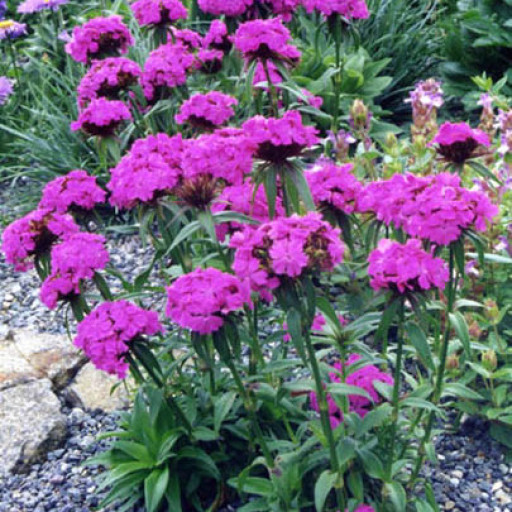
Plant Overview
Often called "Sweet William" or "Beard Pink," this charming biennial has been a staple of English cottage gardens for centuries. Known for its intense, clove-like fragrance and ruffled, multi-colored blooms, it is a plant that bridges the gap between wild meadows and formal borders. In the Victorian "Language of Flowers," giving someone a Sweet William was a symbol of gallantry and finesse.
🔍 How to Identify
- 🌸 Fringed Petals: The individual flowers have distinctive "serrated" or "toothed" edges, looking as if they were trimmed with pinking shears (which is where the common name "Pinks" originates).
- 💐 Bouquet Clusters: Unlike many other Dianthus species, these flowers grow in dense, flat-topped clusters (cymes) that look like a ready-made mini-bouquet on a single stem.
- 🍃 Lance-Shaped Foliage: The leaves are long, narrow, and grow in opposite pairs along the stem, often forming a lush green rosette at the base before the flower stalks emerge.
🏡 In Your Garden
- ⏳ Life Cycle Nuance: Sweet William is usually a biennial. This means it spends its first year growing green leaves to establish roots and then waits until its second summer to produce those famous flowers. If you want blooms every year, it’s best to sow new seeds each spring.
- 🌬️ Dampness Danger: While it loves a drink, it hates "wet feet." Ensuring your soil drains well is vital to prevent crown rot. It also appreciates good air circulation; if packed too tightly, it can develop rust, a fungal disease that leaves orange spots on the foliage.
⚠️ Safety & Toxicity
- 🐾 Mildly Toxic: The plant contains triterpenoid saponins. While not usually life-threatening, it can cause gastrointestinal upset (vomiting or diarrhea) in cats and dogs if eaten in large quantities.
- 🧤 Skin Irritation: The sap can cause mild contact dermatitis in sensitive individuals or pets. It’s always a good idea to wear gloves when deadheading or pruning a large patch.
✨ Fun Fact
The name "Pink" doesn't actually refer to the flower's color! It comes from the verb "to pink," meaning to decorate with a perforated or jagged edge. Even the deep red or pure white varieties of Dianthus barbatus are still technically called "Pinks."

Detailed Care Instructions
| Humidity | Normal |
| Lighting | Part Sun |
| Difficulty | Medium |
| Hibernation | Cold Period |
| Temperature | 20°C - 30°C |
| Hardiness Zones | Min 5A |
To grow Dianthus barbatus (also known as sweet william) successfully, follow these steps:
- Location: Choose a location that receives full sun or partial shade. The soil should be well-draining, rich in organic matter, and with a slightly acidic to neutral pH level.
- Sowing seeds: Dianthus barbatus can be grown from either seeds or nursery-bought plants. If you prefer seeds, sow them directly into the garden bed or start them indoors around 6-8 weeks before the last frost date in your area. Press the seeds lightly onto the soil surface without covering them with soil.
- Soil preparation: Prepare the soil by removing any weeds or rocks. Loosen the soil and mix in some organic compost or well-rotted manure to improve drainage and enrich the soil.
- Watering: Keep the soil consistently moist but not waterlogged. Avoid overwatering, as it can cause root rot. Water deeply and allow the top inch of soil to dry out between waterings.
- Thinning: If you've sowed seeds directly into the garden bed, thin out seedlings when they reach a few inches in height, leaving the strongest ones spaced around 6-8 inches apart.
- Mulching: Add a layer of organic mulch, such as straw or wood chips, around the plants to help conserve moisture, suppress weed growth, and maintain a cool root zone.
- Fertilizing: Once the plants have established themselves, you can apply a slow-release balanced fertilizer around the base of the plants following the manufacturer's instructions.
- Pruning: Regularly deadhead faded flowers to encourage prolonged blooming. Trim back the plant after flowering to maintain its shape and promote bushier growth.
- Pests and diseases: Dianthus barbatus is generally resistant to pests and diseases. However, keep an eye out for slugs, snails, and aphids. Apply appropriate organic pest control methods if necessary.
- Winter care: In colder climates, Dianthus barbatus is considered a biennial or short-lived perennial. Protect the plants from severe winter weather by adding a layer of mulch around the base to insulate the roots.

Place in a window with dappled sun or a spot in the middle of a room. Or directly in a window facing west or east.

To water this plant, it is important to keep the soil consistently moist but not waterlogged. Check the soil moisture by sticking your finger 1-2 inches into the soil. If it feels dry, it is time to water. Water deeply, ensuring the water reaches the roots, but avoid getting water on the foliage. Allow the soil to dry out slightly between waterings. It is better to underwater than overwater, as this plant can be susceptible to root rot. In hot or dry weather, this plant may require more frequent watering.
To enhance the growth and health of this plant, it is recommended to fertilize it with a balanced fertilizer during the spring season. The fertilizer should have equal amounts of nitrogen, phosphorus, and potassium. Apply the fertilizer around the base of the plant and water it well. It is important to follow the manufacturer's instructions on the fertilizer packaging for the correct amount to use. Over-fertilization can cause plant damage, so make sure not to exceed the recommended amount.
The ideal soil for cultivating the Dianthus Barbatus plant should have a well-drained and slightly alkaline pH level. It should be rich in nutrients, particularly phosphorus and potassium, and high in organic matter. A soil that is too wet or too dry can harm the plant, so it is important to strike a balance. Avoid using heavy soil, such as clay, as it can restrict root growth and lead to poor plant health. A mixture of loamy, sandy, and peaty soil, along with perlite or sand to aid drainage, is recommended for optimal growth and development. Additionally, the soil should be prepared with compost or manure before planting to provide the necessary nutrients for the Dianthus Barbatus plant to thrive.
To propagate this plant, select a healthy stem and take a cutting that is about 4-6 inches in length. Remove the bottom leaves and dip the cut end in rooting hormone. Place the cutting in a pot filled with moist soil and cover it with a plastic bag to create a mini greenhouse. Keep the soil consistently moist and place the pot in a warm, bright spot but out of direct sunlight. In about 2-4 weeks, the cutting should begin to grow roots. After rooting, transplant the cutting into a larger pot or directly into the garden.
Common pests of the sweet william include Spider mites, aphids, thrips. Make a habit of checking your sweet william frequently for pests so that any infestations can be caught and managed early.








