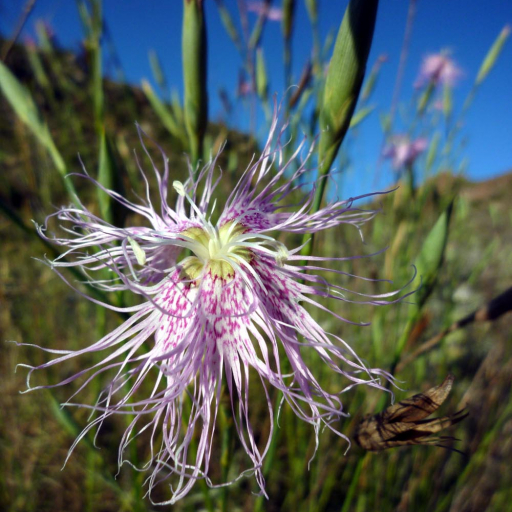
Plant Overview
Hailing from the sun-drenched rocky slopes of the Iberian Peninsula, Dianthus broteroi—often called the Spanish Pink—is a master of Mediterranean elegance. This wild relative of the common carnation is beloved for its delicate, shredded-looking petals that seem to float atop thin, wiry stems. It is a resilient survivor that brings a touch of untamed European cliffside beauty to any rock garden or dry border.
🔍 How to Identify
- 🌸 Fringed Petals: The most striking feature is the deeply fimbriated (fringed) edges of the flowers, which are typically a soft pink or lilac, giving them a "shaggy" or lace-like appearance.
- 🍃 Blue-Green Foliage: The leaves are narrow, grass-like, and covered in a waxy, glaucous coating that gives the plant a distinct silvery or blue-green tint.
- 📏 Slender Stems: Unlike the heavy-headed florist carnations, this species stands on long, elegant, and very slender stems that sway gracefully in the wind.
🏡 In Your Garden
- 🪨 Rocky Roots: Because it naturally grows in limestone crevices, this plant demands exceptional drainage. It is prone to crown rot if left in soggy, heavy clay soil; it much prefers a gritty or sandy mix.
- ☀️ Sun Seeker: To keep the stems strong and prevent them from becoming "leggy" or floppy, place it in the brightest spot available. It thrives on heat and is remarkably drought-tolerant once its root system is established.
⚠️ Safety & Toxicity
- 🐱 Pet Warning: Like many members of the Dianthus family, this plant contains triterpenoid saponins. While not usually fatal, it can cause mild gastrointestinal upset (vomiting or diarrhea) in cats and dogs if ingested.
- 👐 Skin Sensitivity: The sap may cause mild skin irritation or dermatitis in sensitive individuals. It is best to wear gloves when pruning or dividing large clumps.
✨ Fun Fact
The name Dianthus comes from the Greek words "Dios" (Zeus/Divine) and "Anthos" (Flower), literally translating to the "Flower of the Gods." Ancient Greeks used these hardy blooms in ceremonial crowns and garlands.

Detailed Care Instructions
The best type of soil to use with this particular plant is well-draining soil that contains a mix of sand, clay, and organic matter. The soil should have a pH level between 6.5 and 7.5. The plant prefers soil that is slightly acidic to neutral. It is important to avoid using heavy soils or soils that retain moisture for prolonged periods of time, as this can lead to root rot. A good way to ensure the proper type of soil is to mix equal parts of garden soil, perlite, and peat moss. This will create a well-draining and nutrient-rich environment for the plant to grow in. In addition, adding a layer of mulch around the base of the plant can help to conserve moisture and prevent weed growth.








