Plant Overview
Known affectionately as the Cheddar Pink, this charming perennial is the quintessential rock garden treasure. Named after the iconic Cheddar Gorge in England where it famously clings to limestone cliffs, it is beloved for its "spicy" fragrance that smells remarkably like cloves. Its low-growing, blue-grey cushions provide year-round interest even when its delicate blossoms aren't stealing the show.
🔍 How to Identify
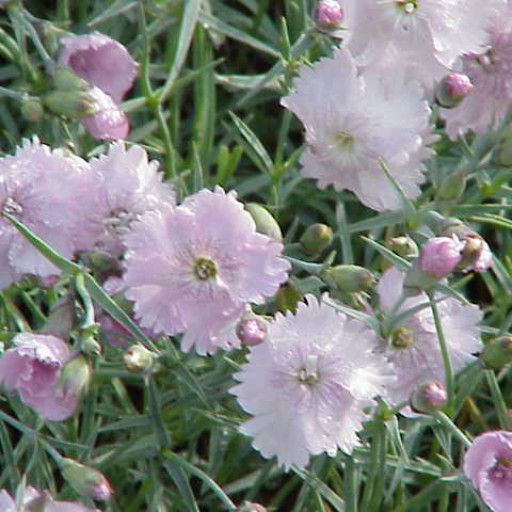
- 🌸 Fringed Petals: The flowers are typically a vibrant rose-pink with deeply notched or "toothed" edges, looking as if they were trimmed with pinking shears.
- 🍃 Steel-Blue Foliage: The leaves are narrow, needle-like, and grow in dense, evergreen mats. Their distinct glaucous (waxy) blue-green color sets them apart from common grass.
- 📏 Compact Habit: It maintains a tidy, mounding shape, rarely exceeding 6 to 12 inches in height, making it a perfect "ground-hugger" for tight spaces.
🏡 In Your Garden
- 🪨 The Drainage Expert: Because its wild ancestors live on rocky cliffs, this plant has a zero-tolerance policy for "wet feet." It thrives in gritty, sandy, or alkaline soils where water moves quickly; otherwise, it is highly susceptible to crown rot.
- ☀️ Sun Seeker: To maintain that tight, silvery cushion and produce a carpet of flowers, it needs full sun. In too much shade, the plant becomes "leggy" and the foliage loses its signature blue tint.
- ✂️ Post-Bloom Grooming: Once the flowers fade, shearing the plant back slightly encourages a flush of fresh foliage and keeps the mat dense and healthy for the following season.
⚠️ Safety & Toxicity
- 🐾 Mildly Toxic: Like many members of the Dianthus family, the Cheddar Pink contains triterpenoid saponins.
- 🤢 The Risk: If ingested by dogs or cats, it can cause mild gastrointestinal upset (vomiting or diarrhea). The sap may also cause minor skin irritation or "contact dermatitis" in sensitive individuals or pets. It is generally safe for humans but should not be treated as an edible flower.
✨ Fun Fact
The term "pink" in its name doesn't actually refer to the color! It comes from the 14th-century verb "to pink," meaning to decorate with a perforated or jagged edge (like pinking shears). It is believed the flower gave the color its name, rather than the other way around.

Detailed Care Instructions
| Lighting | Full Sun |
To grow Dianthus gratianopolitanus, also known as Cheddar Pinks, follow these steps:
- Select a suitable location: Choose a sunny spot in your garden, as Dianthus plants thrive in full sunlight. Ensure the soil is well-draining, as excess moisture can cause root rot.
- Prepare the soil: Loosen the soil using a garden fork or tiller. Mix in organic matter, such as compost or well-rotted manure, to improve fertility and moisture retention.
- Planting: Dig holes that are slightly wider and deeper than the plant's root ball or container. Space the holes about 6 inches apart to provide enough room for the Dianthus plants to spread. Gently place the plants in the holes, making sure the crown (where the stem meets the roots) is level with the soil surface.
- Watering: After planting, water the Dianthus plants thoroughly to settle the soil around the roots. Water the plants regularly, allowing the top inch of soil to dry out between waterings. Avoid overwatering, as it can cause root diseases.
- Mulching: Apply a layer of organic mulch, such as straw or wood chips, around the plants. Mulching helps retain moisture, suppress weed growth, and maintain a more even soil temperature.
- Feeding: Dianthus plants benefit from a balanced fertilizer application once or twice during the growing season. Use a slow-release granular fertilizer or a liquid fertilizer diluted according to the package instructions.
- Deadheading: Remove faded or spent flowers to encourage more blooms. This process, known as deadheading, helps the plant redirect energy from seed production to new growth and flowering.
- Winter care: Dianthus gratianopolitanus is a perennial plant, which means it will come back year after year. In colder regions, it may benefit from a layer of mulch to protect the roots during the winter.
By following these steps and providing proper care, your Dianthus gratianopolitanus plants should grow and thrive, producing beautiful, fragrant flowers. Enjoy watching them bloom!

Place in a bright room that is sun drenched almost all day. Or directly in a south-facing window.

Dianthus gratianopolitanus is a plant that requires regular watering during the growing season to thrive. When watering this plant, you should avoid overwatering, which can lead to root rot and other issues. It is best to water deeply and infrequently, allowing the soil to dry out slightly between waterings.
The best time to water Dianthus gratianopolitanus is early in the morning or late in the evening. This helps to reduce evaporation and ensure that the water reaches the roots where it is needed most. When watering, you should aim to moisten the soil to a depth of at least 6 inches to encourage deep root growth.
It is important to water the plant at the base, rather than from above, to avoid wetting the foliage. Wet foliage can increase the risk of fungal diseases and other issues. You can use a watering can or hose with a gentle spray nozzle to water Dianthus gratianopolitanus at the base.
During periods of hot and dry weather, you may need to water Dianthus gratianopolitanus more frequently to prevent the soil from drying out completely. Be sure to check the soil moisture level regularly by inserting a finger into the soil to a depth of an inch. If the soil feels dry at this depth, it is time to water.
Overall, watering Dianthus gratianopolitanus is a simple process as long as you keep a few key tips in mind. Water deeply and infrequently, avoid overwatering, and water at the base to keep the foliage dry. With these basic guidelines, your plant should thrive and produce beautiful blooms year after year.
To fertilize this plant, use a slow-release granular fertilizer with a balanced N-P-K ratio applied in the spring and summer. Apply the fertilizer at the base of the plant and water thoroughly after application. Avoid over-fertilizing as it can cause excessive foliage growth at the expense of flower production.
Dianthus Gratianopolitanus plant thrives well in well-draining sandy loam or loamy soil that has an airy, porous texture. The Ideal soil pH for this plant is slightly acidic to neutral, ranging from 6.0 to 7.5. The soil should be rich in organic matter like compost or leaf mold and should have good drainage to prevent stagnant water at the roots which can cause root rot. The soil should also be moist but not waterlogged, so it's essential to add some sand or perlite to improve drainage if the soil is heavy. This plant prefers full sun, but it can tolerate some shade. Adding a balanced fertilizer during the spring helps to ensure healthy growth and abundant blooms.
- Begin by selecting a mature and healthy Dianthus Gratianopolitanus plant from which to propagate.
- Using clean and sharp pruning shears, cut a stem from the plant that is approximately 3-4 inches long.
- Strip off any lower leaves from the stem, leaving only a few at the top.
- Dip the cut end of the stem in rooting hormone powder or gel.
- Place the stem in a pot filled with a well-draining soil mix, making sure it is planted deep enough so that the remaining leaves are just above the soil line.
- Water the newly planted stem thoroughly and cover the pot with a plastic bag or clear plastic wrap to create a humid environment.
- Place the pot in bright, indirect light and keep the soil moist.
- After several weeks, gently tug on the stem to test for root growth. If roots have formed, the cutting can be transferred to a larger pot or planted outdoors.
- Once the new plant has established itself, it can be cared for in the same way as the original plant.
Common pests of the cheddar pink include Spider mites, aphids, thrips. Make a habit of checking your cheddar pink frequently for pests so that any infestations can be caught and managed early.








