Plant Overview
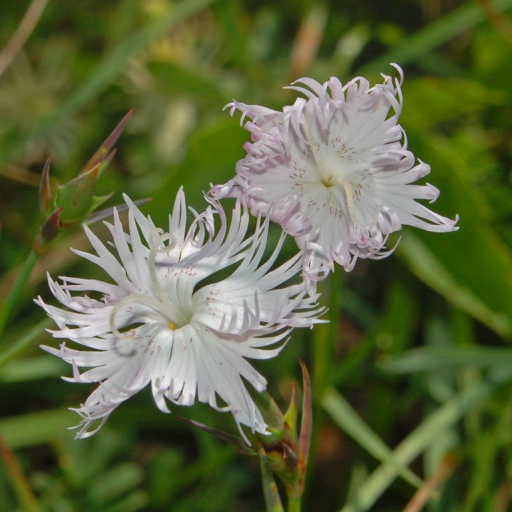
The Dianthus monspessulanus, widely known as the Fringed Pink or Montpellier Pink, looks like a wildflower that stepped out of a delicate Victorian lace painting. Native to the mountain meadows of Southern Europe, this perennial is beloved for its ethereal, "shredded" petals and an intoxicating scent that mimics sweet cloves. It is a hardy survivor that brings a touch of wild, romantic elegance to any rocky landscape.
🔍 How to Identify
- 🌸 The Petals: The most striking feature is the five pale pink to lilac petals, which are deeply fringed or "laciniated" more than halfway to the base, giving them a feathery, wispy appearance.
- 🍃 The Foliage: Like many in the pink family, it features narrow, grass-like leaves that often have a distinct blue-green or glaucous tint, growing in low, tidy mounds.
- 👃 The Scent: Unlike modern unscented cultivars, this species produces a powerful, spicy fragrance that is particularly noticeable on warm summer evenings.
🏡 In Your Garden
- ⛰️ Alpine Aspirations: Because it originates in mountainous regions, this plant thrives in rock gardens or gaps in stone walls. It demands excellent drainage and will "melt" or rot if kept in soggy, heavy clay soil.
- ☀️ Sun Seeker: While it loves the sun, in exceptionally hot climates, it appreciates a bit of afternoon shade to keep its delicate fringes from crisping.
- 🦋 Pollinator Magnet: The deep nectar tubes and fragrance make it a favorite stop for long-tongued insects, especially butterflies and hawkmoths.
⚠️ Safety & Toxicity
- 🐾 Mildly Toxic: Like most members of the Dianthus genus, the Fringed Pink contains triterpenoid saponins.
- 🐱 Pets & Kids: If ingested, it can cause mild gastrointestinal upset (vomiting or diarrhea) in cats and dogs. The sap may also cause slight skin irritation or "contact dermatitis" in sensitive individuals, so wearing gloves while pruning is a good idea.
✨ Fun Fact
The name Dianthus comes from the Greek words "Dios" (divine/Zeus) and "anthos" (flower), translating literally to the "Flower of the Gods." The species name monspessulanus is the Latin botanical designation for the city of Montpellier, France, where the plant was historically documented.

Detailed Care Instructions

Place in a bright room that is sun drenched almost all day. Or directly in a south-facing window.

Some plants require more regular watering than others, which should be done every few days. It's critical to maintain the soil moist all of the time. The water requirements of the same plant placed in pots with varying sizes will differ. Because the water in the smaller pot evaporates faster than the water in the larger pot, it will require more watering. Regardless of pot size, the surface should constantly be maintained moist.








