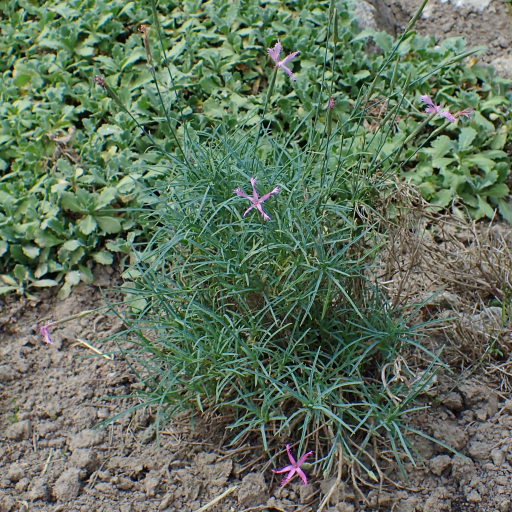
Plant Overview
Known as the Eastern Pink, this hardy perennial is a gem from the sun-drenched, rocky slopes of Western Asia and the Middle East. While many garden pinks are prized for their soft perfumes, Dianthus orientalis is celebrated for its rugged elegance and its ability to thrive in challenging, dry environments. It brings a touch of ancient, wild beauty to modern rock gardens, appearing like a delicate embroidery against harsh stone.
🔍 How to Identify
- 🌸 The Petals: Features classic "fringed" or "pinked" edges that look as though they were meticulously trimmed with decorative craft scissors.
- 🌿 The Foliage: Slender, needle-like leaves with a distinct silvery-blue or glaucous coating, which acts as a natural sunscreen for the plant.
- 📐 Growth Habit: It forms tight, low-growing cushions or tufts, rarely exceeding a foot in height, making it an excellent ground-hugging specimen.
🏡 In Your Garden
- 🪨 The Great Drainer: Because it naturally originates from mountainous terrain, it is extremely sensitive to "wet feet." It thrives in gritty, alkaline soil and will often fail in heavy clay that holds too much winter moisture.
- ☀️ Sun Seeker: This plant is a true sun-worshipper. To keep its foliage dense and its stems from becoming "leggy," it requires a spot with full, unobstructed sunlight for the majority of the day.
⚠️ Safety & Toxicity
- 🐾 Mildly Toxic: Like most members of the Dianthus family, this plant contains triterpenoid saponins in its leaves and stems.
- ⚠️ The Risk: While not usually life-threatening, ingestion can cause mild gastrointestinal upset (vomiting or drooling) in cats and dogs. The sap may also cause a slight itchy rash (contact dermatitis) for gardeners with sensitive skin.
✨ Fun Fact
🏛️ The Flower of the Gods: The genus name Dianthus was coined by the ancient Greek botanist Theophrastus. He combined the words Dios (referring to the god Zeus) and anthos (flower), literally naming this group of plants the "Divine Flowers."

Detailed Care Instructions
To grow Dianthus Orientalis plants, you can follow these steps:
- Choose a suitable location: Dianthus Orientalis plants prefer full sun to partial shade. Select a spot in your garden that receives at least 6 hours of direct sunlight a day.
- Prepare the soil: Dianthus Orientalis plants prefer well-draining soil with a pH range of 6.0 to 7.0. Amend heavy or clay soils with organic matter, such as compost, to improve drainage.
- Planting: Dig a hole that is slightly larger than the plant's root ball. Place the plant in the hole, ensuring that the top of the root ball is level with or slightly above the soil surface. Space multiple plants about 12 inches apart to allow for adequate air circulation.
- Watering: After planting, water the Dianthus Orientalis thoroughly. Water regularly to keep the soil moist, but not waterlogged. Avoid overwatering, as it can lead to root rot.
- Mulching: Apply a layer of organic mulch, such as wood chips or straw, around the base of the plant. Mulching helps conserve moisture, suppresses weed growth, and regulates soil temperature.
- Fertilizing: Dianthus Orientalis plants are generally low-maintenance and do not require heavy fertilization. However, you can apply a balanced, slow-release fertilizer in the spring to promote healthy growth.
- Pruning: To encourage continuous blooming, deadhead faded flowers by removing the entire flower stalk. Regularly trimming back any leggy or straggly growth can help maintain a compact shape.
- Division: Over time, Dianthus Orientalis plants may become crowded. To prevent overcrowding, divide the plants every 2-3 years in early spring or fall. Dig up the clump, separate the rooted sections, and replant them individually.
- Pests and diseases: Dianthus Orientalis plants are relatively resistant to pests and diseases. However, keep an eye out for aphids, slugs, and snails. Treat infestations with organic insecticides or remove them by hand.
By following these guidelines, you can successfully grow Dianthus Orientalis plants and enjoy their beautiful, fragrant flowers in your garden.

Place in a bright room that is sun drenched almost all day. Or directly in a south-facing window.

Dianthus orientalis is a perennial flowering plant that belongs to the Caryophyllaceae family. It is native to various regions across Asia, including China, Korea, and Japan. This plant is commonly grown for its vibrant and fragrant flowers, which come in a range of colors including pink, white, and red.
To ensure the healthy growth of Dianthus orientalis, proper watering is crucial. Here's how you can provide adequate water to this plant:
1. Understanding the water needs: Dianthus orientalis prefers a moderately moist soil environment. It is important to strike a balance between keeping the soil moist and avoiding excess water, which may lead to root rot and other issues. The plant's water requirements may vary depending on climate, season, and specific local conditions.
2. Soil moisture check: Before watering, it's important to check the moisture level of the soil. Poke your finger approximately an inch deep into the soil surrounding the plant. If it feels dry at this depth, it's an indication that watering is needed.
3. Watering frequency: Generally, Dianthus orientalis should be watered deeply once or twice a week. However, this can vary depending on factors such as local climate, rainfall patterns, and soil type. It's crucial to avoid overwatering, as waterlogged soil can lead to root diseases.
4. Watering method: When watering, it is advisable to use a gentle and slow watering method. This allows the water to penetrate the soil evenly and prevents runoff. Try to water at the base of the plant, avoiding the leaves and flowers as much as possible.
5. Mulching: Applying a layer of organic mulch, such as wood chips or straw, around the base of the plant can help conserve moisture in the soil. Mulching also helps to reduce weed growth and maintain a more stable soil temperature.
6. Adaptation to weather conditions: During extremely hot or dry periods, you may need to increase the frequency of watering. Conversely, during periods of heavy rainfall, it may be necessary to reduce or even pause watering to prevent waterlogging.
7. Observing plant health: Pay attention to the overall health of your Dianthus orientalis plant. Wilting, yellowing leaves, or a general lack of vigor can indicate both overwatering and underwatering. Adjust your watering schedule accordingly, keeping in mind the particular needs of the plant.
By following these guidelines, you can provide appropriate watering for Dianthus orientalis, promoting its optimal growth and colorful blooms.
- Choose a well-draining soil mix suitable for perennial plants, with a pH level around 6.5 to 7.5.
- Before planting, incorporate organic matter such as compost or well-aged manure into the soil to improve fertility and moisture retention.
- Apply a balanced slow-release fertilizer according to the product instructions or mix a granular, all-purpose fertilizer into the top few inches of soil around the plant.
- Water the plant thoroughly after fertilization to help nutrients penetrate the soil and reach the plant's root zone.
- Apply a liquid, water-soluble fertilizer at half strength every 4-6 weeks during the growing season, following the manufacturer's recommended dosage.
- Avoid over-fertilizing, as it can lead to excessive foliage growth at the expense of blooms.
- Mulch around the base of the plant with organic mulch, such as wood chips or straw, to conserve moisture, suppress weeds, and slowly release nutrients.
- Monitor the plant for signs of nutrient deficiencies, such as pale or yellowing leaves, and adjust the fertilizer application as needed.
- During winter dormancy, withhold fertilization as the plant's growth slows down.
- Regularly remove spent flowers to encourage continuous blooming and divert energy towards new flower production.
Remember to follow the specific instructions on the fertilizer packaging and consult local gardening resources for any additional guidance specific to your region.
Dianthus orientalis is a charming perennial plant that requires specific soil conditions to thrive. Ideally, it prefers a well-draining soil that contains a balanced mix of clay, sand, and loam. The soil should have a slightly acidic to neutral pH level, ranging from 6.0 to 7.0.
This plant is not particularly tolerant of heavy clay soils that retain excess moisture, as it can lead to root rot and other moisture-related issues. Therefore, it is crucial to ensure that the soil is well-drained and does not become waterlogged.
Furthermore, Dianthus orientalis benefits from rich, fertile soil. Organic matter, such as compost or well-rotted manure, can be added to improve the soil's nutrition and moisture-holding capacity. However, it is important not to over-fertilize, as excessive nutrients can hinder its growth or even be detrimental to the plant.
When growing Dianthus orientalis, it is advisable to mix some sand or perlite into the soil to enhance drainage and prevent waterlogging. This will allow the plant's roots to breathe and prevent the accumulation of moisture, protecting it from potential diseases caused by overly moist conditions.
In summary, this lovely perennial plant thrives in a well-draining soil that contains a mixture of clay, sand, and loam. It prefers slightly acidic to neutral soil with a pH level ranging from 6.0 to 7.0. Adding organic matter can improve soil nutrition and moisture retention, but it is important to maintain a good balance and avoid excessive fertilization. Incorporating sand or perlite into the soil will ensure proper drainage and prevent waterlogging, promoting the health and vitality of the Dianthus orientalis plant.
To propagate Dianthus Orientalis plant, you can follow these steps:
- Choose a healthy and established mother plant from which you want to propagate new plants.
- Prepare a sharp and sterilized pair of gardening shears or scissors to avoid any infections or diseases.
- Select a non-flowering stem on the mother plant that has a healthy growth pattern and is free from any signs of diseases or pests.
- Gently cut a 4-6 inch (10-15 cm) long stem from the mother plant, making sure to include a few sets of leaves.
- Remove the lower set of leaves, leaving only the top sets intact.
- If desired, you can apply a rooting hormone to the cut end of the stem. This can help promote root development, but it is optional.
- Prepare a well-draining rooting medium by combining equal parts of perlite, vermiculite, and peat moss. This will provide the ideal conditions for root formation.
- Moisten the rooting medium slightly so that it is evenly moist but not saturated.
- Create a small hole in the rooting medium using a pencil or your finger and gently insert the cut end of the stem into the hole.
- Gently press the medium around the stem to ensure it remains upright.
- Place the potted cutting in a warm location with bright, indirect light. Avoid exposing it to direct sunlight, as this can scorch the delicate cutting.
- Mist the cutting and the surrounding area to increase humidity. Alternatively, you can cover the cutting with a clear plastic bag or a propagator to create a mini greenhouse effect.
- Check the cutting regularly to ensure the rooting medium remains moist. Be cautious not to overwater, as excessive moisture can lead to rot.
- Within a few weeks, you should notice new root growth on the cutting. Once the roots are well-established, you can transplant the new Dianthus Orientalis plant into a larger pot or directly into the garden.
- Provide the newly propagated plants with proper care, including regular watering, well-drained soil, and full to partial sun exposure, to encourage healthy growth.
Note: It is essential to use accurate botanical names when discussing plant propagation to ensure clarity and avoid any confusion with similar species.








