Plant Overview
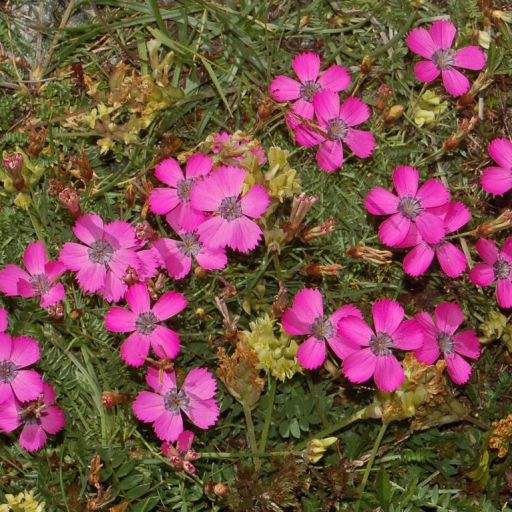
Known as the "Peacock-eye Pink," this tiny alpine gem looks like a living jewel tucked into the rocky crevices of the Alps and Pyrenees. It earns its nickname from the stunning, dark-centered blooms that resemble the "eyes" on a peacock’s feather. This hardy perennial is a favorite for rock gardeners who want a splash of neon color without the maintenance of larger, thirstier flowers.
🔍 How to Identify
- 🌸 The "Peacock" Eye: The most striking feature is the deep pink-to-purple petal color contrasted with a dark, blueish-brown or purple center.
- 🎨 Hidden Undersides: In a unique twist, the backs of the petals are often a pale, creamy-yellow or buff color, providing a beautiful contrast when the buds are half-open.
- 🌿 Tufted Foliage: It grows in tight, low-mounded cushions of stiff, blue-green leaves that look almost like a patch of ornamental grass when not in bloom.
🏡 In Your Garden
- ⛰️ Alpine Origins: Because it naturally grows on mountain scree, this plant demands "sharp" drainage. It is much more likely to struggle from soggy winter soil than from freezing temperatures.
- ☀️ Sun and Stones: It thrives in full sun but appreciates having its roots kept cool. Planting it in a rock garden or surrounding the base with gravel mulch helps mimic its high-altitude home.
⚠️ Safety & Toxicity
- 🐾 Mildly Toxic to Pets: Like many members of the Dianthus family, the leaves contain saponins. If ingested by cats or dogs, it can cause mild gastrointestinal upset or vomiting.
- 🧤 Skin Sensitivity: While generally safe to handle, the sap may cause minor skin irritation or "contact dermatitis" in humans with very sensitive skin.
✨ Fun Fact
The genus name Dianthus is derived from the Greek words Dios (God) and anthos (flower), literally translating to "The Flower of the Gods" or "Divine Flower."

Detailed Care Instructions
| Humidity | Dry |
| Difficulty | Easy |
| Hibernation | Cold Period |
| Hardiness Zones | 5 - 8 |
To grow Dianthus pavonius, also known as the Peacock Dianthus, you can follow these steps:
- Choose a suitable location: Dianthus pavonius prefers full sun to partial shade. Select a well-draining location with fertile soil.
- Prepare the soil: Amend the soil with well-rotted organic matter, such as compost, to improve drainage and fertility. Dianthus pavonius prefers slightly alkaline soil, so adding lime may be beneficial if your soil is acidic.
- Planting: Sow the seeds directly into the soil in early spring or late fall. Alternatively, you can start the seeds indoors 6-8 weeks before the last frost date and transplant them outside when the soil warms up. Space the plants 6-12 inches apart to allow them to spread and grow.
- Watering: Keep the soil consistently moist but not waterlogged. Water deeply when the top inch of soil feels dry, especially during periods of drought. Dianthus pavonius doesn't tolerate excessive moisture, so avoid overwatering.
- Mulching: Apply a layer of organic mulch, such as wood chips or straw, around the plants to help retain moisture, suppress weed growth, and regulate soil temperature.
- Fertilizing: Fertilize the plants once or twice during the growing season with a balanced slow-release fertilizer. Follow the manufacturer's instructions for application rates.
- Pruning: Deadhead the spent flowers regularly to encourage continuous blooming and prevent the plant from setting seeds. Cut back the plant's foliage by one-third in late summer or early fall to promote new growth.
- Pests and diseases: Monitor the plants for any signs of pests, such as aphids or slugs, and apply appropriate treatments if needed. Dianthus pavonius is generally resistant to diseases, but proper spacing and good air circulation can help prevent issues.
- Winter care: In regions with cold winters, adding a layer of mulch around the base of the plant can help protect it from freezing temperatures. Dianthus pavonius is generally hardy, but some winter protection can be beneficial.
By following these steps and providing proper care, you can successfully grow Dianthus pavonius and enjoy its beautiful and fragrant flowers.

Place in a bright room that is sun drenched almost all day. Or directly in a south-facing window.

To properly hydrate the Dianthus Pavonius plant, you can follow the guidelines below:
1. Observe the soil moisture: Before watering the plant, check the moisture level of the soil. Insert your finger into the soil up to the first knuckle. If the top inch of soil feels dry to the touch, it is an indication that the plant requires watering.
2. Watering frequency: Dianthus Pavonius typically prefers moderate watering, allowing the soil to dry out slightly between waterings. As a general rule, water the plant once every 7 to 10 days during the growing season. However, watering frequency may vary based on your climate, humidity, and soil conditions.
3. Watering technique: When watering Dianthus Pavonius, be careful not to overwater or let water sit on the leaves or crown of the plant, as it may lead to rot or fungal diseases. Instead, aim to water at the base of the plant directly onto the soil. This ensures that the root system receives adequate hydration.
4. Deep watering: When watering, it is essential to provide a deep soak to the plant. This encourages the roots to establish deeper in the soil, making the plant more drought-resistant. Water the plant until the soil is evenly moistened about 6-8 inches deep. Avoid shallow watering, as it can promote weak root growth.
5. Watering time: Early morning or late afternoon is the ideal time to water Dianthus Pavonius. Watering during these cooler hours reduces evaporation and allows the plant to absorb moisture before the sun intensifies. Avoid watering during the heat of the day to prevent excessive moisture loss.
6. Mulching technique: Applying a layer of organic mulch, such as wood chips or compost, around the base of the plant can help conserve soil moisture. Mulch acts as a protective barrier, reducing evaporation and keeping the roots cool during hot weather. This can reduce the need for frequent watering.
7. Monitor the plant: After watering, keep an eye on the plant's response. Look for signs of over or under hydration, such as wilting, yellowing leaves, or root rot. Adjust your watering routine accordingly to ensure the plant's overall health.
Remember, the watering needs can vary depending on factors like climate, season, and the overall health of the plant. It is essential to consider the unique conditions of your specific Dianthus Pavonius plant before settling on a watering routine.
Dianthus pavonius, also known as the pheasant's eye, is a perennial flowering plant that can benefit from proper fertilization. Here are some instructions to consider for fertilizing this particular plant:
- Choose the right time: Fertilize Dianthus pavonius in early spring, just as new growth starts to appear. Avoid fertilizing during the dormant winter period.
- Use a balanced fertilizer: Look for a balanced or general-purpose fertilizer with an N-P-K ratio of around 10-10-10 or 20-20-20. This means it contains equal amounts of nitrogen (N), phosphorus (P), and potassium (K).
- Apply the fertilizer sparingly: Dianthus pavonius plants generally do not require heavy fertilization. Use a low concentration or a slow-release fertilizer to avoid overfeeding the plant. Follow the package instructions for proper dosage.
- Spread the fertilizer evenly: Scatter the fertilizer granules around the base of the plant, ensuring they are spread evenly and not concentrated in one spot. Avoid placing it directly on the leaves or stems.
- Water the plant after fertilization: Once you've applied the fertilizer granules, water the plant thoroughly. This helps to rinse off any potential fertilizer residue from the leaves and allows the nutrients to penetrate the root zone.
- Repeat fertilization: As Dianthus pavonius grows throughout the season, you may consider giving it another light application of fertilizer in mid-summer if necessary. However, be cautious not to overfeed, as excessive fertilization can result in weak growth or damage.
Remember to always follow the specific instructions provided by the chosen fertilizer brand and adjust the fertilization routine based on the plant's response and needs.
When selecting soil for the Dianthus Pavonius plant, it is important to consider its specific needs and characteristics. The ideal soil should provide a combination of good drainage, adequate moisture retention, and optimal nutrient content, promoting healthy growth and flowering.
Opt for a well-draining soil mix that allows excess water to freely pass through, preventing waterlogged conditions that can lead to root rot. A sandy soil or a mix that includes perlite, vermiculite, or coarse sand can improve drainage.
Maintaining adequate moisture is crucial for the Dianthus Pavonius plant. However, it is essential to avoid overly soggy conditions that can compromise root health. A soil mix that retains some moisture but doesn't become overly saturated is recommended. Adding organic matter, such as compost or well-rotted manure, can enhance moisture retention capabilities.
In terms of nutrient content, the Dianthus Pavonius plant thrives in well-fertilized soil. Adding balanced slow-release fertilizer or incorporating organic matter rich in nutrients during planting can provide the necessary nourishment. This helps sustain healthy foliage growth, vibrant flower production, and overall plant vigor.
It is worth noting that specific requirements may vary slightly based on regional conditions, such as climate and local soil composition. Thus, it is advisable to consult local gardening resources or a horticulturist for precise recommendations regarding soil composition for the Dianthus Pavonius plant in your area.
Dianthus pavonius is a perennial flowering plant that can be propagated through multiple methods including seed sowing, stem cuttings, and division. Here's a detailed guide on each propagation method:
- Seed Sowing:
- Begin by collecting ripe seedheads from the Dianthus pavonius plant.
- Carefully remove the seeds from the seedheads and clean any debris or chaff.
- Fill a tray or pots with well-draining seed-starting mix.
- Sow the Dianthus pavonius seeds on the surface of the soil without burying them.
- Mist the soil lightly to provide moisture.
- Place the tray or pots in a warm and bright location, out of direct sunlight.
- Keep the soil consistently moist, but avoid overwatering.
- Germination can take anywhere from 1 to 4 weeks. Once the seedlings have grown a few inches tall, they can be transplanted into individual pots or directly into the garden.
- Begin by collecting ripe seedheads from the Dianthus pavonius plant.
- Stem Cuttings:
- Select a healthy, non-flowering stem from the Dianthus pavonius plant.
- Using a sharp and clean pair of shears, cut a 3-4 inch long stem just below a leaf node.
- Remove any leaves from the lower half of the cutting.
- Dip the cut end of the stem into a rooting hormone powder or gel to promote root development (optional).
- Fill a small pot with a well-draining potting mix.
- Make a hole in the soil with a pencil or finger to avoid damaging the hormone coating.
- Insert the stem cutting into the hole and gently press the soil around it to secure it in place.
- Mist the cutting lightly and cover the pot with a clear plastic bag or a propagator lid to create a humid environment.
- Place the pot in a warm and bright location, but not under direct sunlight.
- Check regularly to ensure the potting mix stays moist.
- After a few weeks, the cutting should start developing roots. You can check by gently tugging on it. Once roots are established, transplant the cutting into a larger pot or the garden.
- Select a healthy, non-flowering stem from the Dianthus pavonius plant.
- Division:
- Choose an established Dianthus pavonius plant that is at least two years old.
- Carefully dig up the entire plant from the ground or pot.
- Gently shake off any excess soil to expose the plant's root system.
- Using a sharp and clean garden knife or shovel, divide the clump into smaller sections.
- Each section should have a portion of the roots and a few stems.
- Trim back any damaged or overly long roots.
- Fill pots or directly plant the divisions in the garden using well-draining soil.
- Water thoroughly after planting and continue to keep the soil consistently moist until the divisions establish themselves.
By following these propagation methods, you can propagate Dianthus pavonius and create new plants to enhance your garden or share with others.
- Choose an established Dianthus pavonius plant that is at least two years old.








