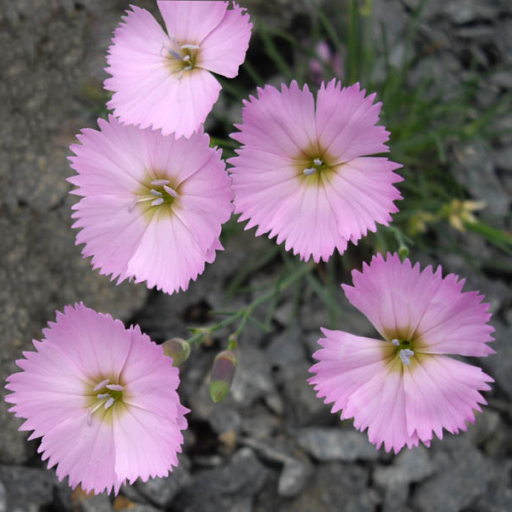
Plant Overview
Known as the Wood Pink, this hardy alpine beauty is a master of minimalism. Often found clinging to rocky slopes or sun-drenched limestone cliffs in the mountains of Europe, its delicate, fringed petals offer a soft contrast to the rugged terrains it calls home. Despite the "Wood" in its name, it is a sun-seeker that brings a dash of wild, effortless elegance to any rock garden.
🔍 How to Identify
- 🌸 Petal Detail: Delicate, five-petaled flowers typically in shades of pale pink to deep rose, often featuring a subtle notched or fringed edge that looks hand-cut with scissors.
- 🌿 Foliage: Slender, blue-green (glaucous) leaves that resemble stiff blades of grass, forming a tidy, low-growing cushion at the base.
- 📏 Stature: Long, wiry, and leafless stems that hold the flowers high above the foliage, allowing them to sway gracefully in the mountain breeze.
🏡 In Your Garden
- 🪨 Rocky Foundations: This plant thrives in "lean" soil. In a lush, over-fertilized garden, it may become floppy; it prefers gritty, well-draining spots that mimic its native limestone crevices.
- ☀️ Sun Worshiper: It requires bright, direct light to maintain its compact shape and ensure a vibrant bloom cycle throughout the mid-summer months.
- 🌬️ Hardy Nature: Because it evolved in harsh alpine conditions, it is incredibly wind-resistant and drought-tolerant once the root system is established.
⚠️ Safety & Toxicity
- 🐾 Pet Sensitivity: Like many Dianthus species, it contains triterpenoid saponins. If ingested by dogs or cats, it may cause mild gastrointestinal upset or vomiting.
- ✋ Skin Irritation: The sap can occasionally cause minor skin redness or itching for sensitive individuals; wearing gloves while deadheading is a simple precaution.
✨ Fun Fact
The genus name Dianthus comes from the Greek words Dios (God) and anthos (flower), effectively crowning this wild pink as the "Flower of the Gods." Legend says they were created from the tears of the goddess Artemis.

Detailed Care Instructions
To successfully grow Dianthus sylvestris, also known as woodland pink, follow these steps:
- Selecting the right location: Choose a spot with well-draining soil that receives full sun to partial shade. Dianthus sylvestris prefers slightly acidic to neutral soil.
- Preparing the soil: Amend the soil with organic matter, such as compost, to improve drainage and fertility. Remove any weeds or large rocks from the planting area.
- Sowing seeds: You can sow Dianthus sylvestris seeds directly into the garden bed in early spring or autumn. Lightly press the seeds into the soil and keep the area moist until germination occurs. Alternatively, you can start seeds indoors 6-8 weeks before the last frost and transplant them outside once the seedlings are well-established.
- Watering: Provide regular watering to keep the soil consistently moist but not waterlogged. Avoid overwatering, as this can lead to root rot.
- Mulching: Applying a layer of organic mulch, such as bark chips or straw, around the plants can help conserve soil moisture, suppress weeds, and maintain an even soil temperature.
- Fertilizing: Dianthus sylvestris typically doesn't require heavy feeding. However, you can apply a balanced fertilizer once or twice during the growing season to promote healthy growth.
- Deadheading and pruning: Regular deadheading, which involves removing spent flowers, can encourage continuous blooming. Pruning faded flower stems and any leggy growth helps maintain the plant's shape and vigor.
- Winter care: Dianthus sylvestris is a hardy perennial in temperate climates. In colder regions, protect the plant during winter by applying a layer of mulch around the base to insulate the roots.
By following these steps and providing adequate care, you can enjoy the beautiful blooms of Dianthus sylvestris in your garden.

Place in a bright room that is sun drenched almost all day. Or directly in a south-facing window.

Dianthus Sylvestris is a type of flowering plant that requires adequate water to grow and thrive. When watering this plant, it is important to avoid overwatering as it can lead to root rot and other issues that can cause damage to the plant.
To water Dianthus Sylvestris, it is important to first check the soil for moisture. If the soil feels dry to the touch, it is time to water the plant. However, if the soil feels moist, it is best to wait a few more days before watering to prevent overwatering.
When watering, it is best to use a gentle stream of water that will not disturb the soil or damage the plant. It is also important to water the plant at the base rather than on the leaves or flowers to avoid fungal growth and other issues.
Depending on the climate and conditions, Dianthus Sylvestris may require watering once or twice a week. It is important to monitor the soil moisture and adjust watering accordingly to ensure that the plant stays healthy and well-hydrated.
To fertilize Dianthus Sylvestris, you can follow these instructions:
- Choose a balanced, slow-release fertilizer suitable for flowering plants.
- Before applying fertilizer, make sure the soil is moist.
- Sprinkle the fertilizer around the base of the plant, avoiding direct contact with the stem or foliage.
- Gently work the fertilizer into the topsoil using a hand trowel or a rake.
- Water the plant thoroughly after fertilizing to help nutrients reach the roots.
- Apply the fertilizer according to the package instructions, usually once every four to six weeks during the growing season.
- Avoid overfertilizing, as it can lead to excessive foliage growth instead of flower production.
- Monitor the plant's response to the fertilizer and adjust the application rate as needed.
- Always follow the recommended dosage and safety guidelines provided by the manufacturer.
- Regularly remove any weeds or dead flowers from the planting area to ensure the plant receives the maximum benefit from the fertilizer.
The ideal soil for the Dianthus Sylvestris plant is well-draining and has a slightly acidic pH range of 6.0 to 7.0. It should be rich in nutrients and organic matter, but not too heavy or compacted, as this can impede the plant's growth and root development. The addition of sand or perlite can help improve drainage, while compost or potting mix can provide the necessary nutrients. Avoid using heavy clay soils or those that are too alkaline, as these can prevent the plant from thriving.
Dianthus sylvestris is a perennial flowering plant that can be propagated through various methods. Here's how to propagate this plant:
- Seeds: Start by collecting mature seeds from the dried flower heads. It's best to harvest the seeds when they start turning brown or black. Remove the seeds from the pod and store them in a cool, dry place until planting.
- Stratification: Dianthus sylvestris seeds often require a period of stratification before germination. This means exposing them to a period of cold temperatures to break their dormancy. To do this, you can place the seeds in a damp paper towel or zip-lock bag and store them in the refrigerator for 3-4 weeks.
- Sowing: After stratification, the seeds are ready to be sowed. Fill seed trays or small pots with a well-draining potting mix. Make sure to moisten the soil before sowing the seeds. Scatter the seeds evenly over the surface, then lightly press them into the soil. Cover them with a thin layer of loose soil or vermiculite.
- Germination: Place the tray or pots in a warm location with indirect sunlight. Maintain consistent moisture in the soil by misting it regularly or using a spray bottle. Germination usually takes around 1-3 weeks. Once the seedlings have developed a few sets of leaves, they can be transplanted into individual pots.
- Division: Dianthus sylvestris can also be propagated through division. This method is suitable for mature plants that have established clumps. Start by carefully lifting the clump from the ground using a garden fork or shovel. Gently separate the plant into smaller sections, ensuring each section has a good root system and a few healthy shoots. Replant the divisions in prepared holes or pots, making sure the soil is well-drained and the plants are at the same level as before.
- Root cuttings: Another propagation method for Dianthus sylvestris is through root cuttings. In late winter or early spring, dig up a mature plant and select healthy roots. Cut them into 2-3 inch sections and plant them horizontally in pots or seed trays filled with a well-draining potting mix. Keep the soil moist and place the containers in a warm area with indirect sunlight. After a few weeks, the cuttings will develop new shoots, indicating successful propagation.
Remember to provide adequate care, including regular watering, well-draining soil, and suitable sunlight conditions, to ensure the success of propagated Dianthus sylvestris plants.








