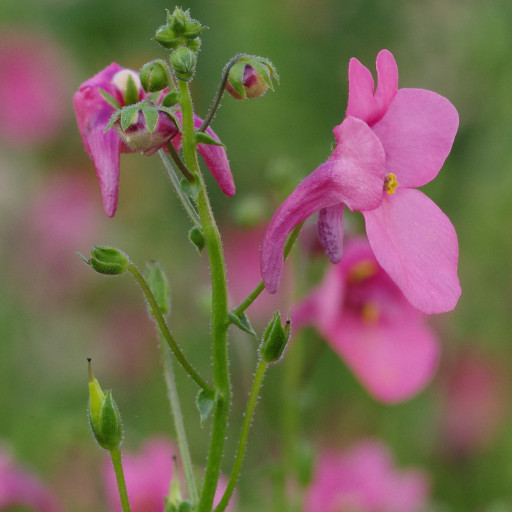
Plant Overview
Known affectionately as the Twinspur, Diascia barberae is a South African gem that blankets gardens in delicate, pastel clouds. Often called "The Fairy Flower" for its dainty, translucent petals, it is a favorite for hanging baskets and rock gardens where it can trail elegantly over edges. This resilient little perennial acts like a seasonal bridge, offering vibrant color when other garden stars are still waking up or winding down.
🔍 How to Identify
- 🌸 The Twin Spurs: If you flip the flower over, you will see two tiny, horn-like "spurs" protruding from the back—a unique trait that gives the plant its common name.
- 🍃 Heart-Shaped Foliage: The leaves are small, dark green, and slightly serrated (toothed) at the edges, usually forming a dense, low-growing mat.
- 🎨 Open-Faced Blooms: The flowers are five-lobed with a prominent, wide "lip" at the bottom, typically appearing in shades of soft pink, coral, salmon, or plum.
🏡 In Your Garden
- 🌬️ Cool Season Specialist: Unlike many summer annuals, Twinspur actually prefers the mild temperatures of spring and autumn. In regions with scorching summers, the plant might take a "mid-summer nap" and stop blooming until the air cools down again.
- ✂️ The Mid-Season Refresh: If your plant starts to look leggy or tired in the July heat, give it a light "haircut" (trimming the stems back by a third). This encourages a fresh, bushy flush of growth and a second wave of flowers for the fall.
- 💧 Thirsty but Drainage-Dependent: While it hates drying out completely, its fine roots are prone to rot in heavy, waterlogged soil. It performs best in airy potting mixes or sloped rockeries where water can move freely.
⚠️ Safety & Toxicity
- ✅ Non-Toxic Status: Diascia barberae is generally considered safe and non-toxic for both humans and common household pets like dogs and cats.
- 👐 Garden Safety: Even though it is safe, it is always a good practice to discourage pets from grazing on ornamental plants to prevent any minor digestive upset from the fibrous plant material.
✨ Fun Fact
In its native South African habitat, the spurs on the back of the flower aren't just for show—they contain a specialized oil instead of nectar. It is pollinated by a very specific type of bee (Rediviva) that has evolved extra-long front legs specifically to reach deep into those spurs to collect the oil for its larvae!

Detailed Care Instructions
| Color | Pink |
| Soil Ph | 6.0-6.5 |
| Lighting | Full Sun |
| Toxicity | Non-Toxic |
| Soil Type | Fertile, Well-Drained |
| Bloom Time | Spring And Fall |
| Plant Type | Annual Flower |
| Mature Size | 12” Tall |
| Native Area | South Africa |
| Sun Exposure | Full Sun To Partial Sun |
| Hardiness Zones | 8-11 |
To grow Diascia barberae plants, follow these steps:
- Choose a suitable location: Diascia barberae plants prefer full sun to partial shade. Ensure that the location has well-draining soil.
- Prepare the soil: Diaiscia plants thrive in a rich, fertile soil. Add organic matter like compost or aged manure to improve the soil texture and nutrient content.
- Sow seeds or plant seedlings: If starting from seeds, sow them indoors 8-10 weeks before the last frost. Cover them lightly with soil and keep the soil moist until germination occurs. Alternatively, you can purchase seedlings from a nursery and transplant them into the garden after the last frost.
- Transplanting: If planting seedlings, space them about 6-8 inches apart to allow for proper growth. Ensure that the soil is moist before transplanting, and gently remove the seedlings from their containers without damaging the roots.
- Watering: Water the plants regularly, especially during dry spells, to keep the soil evenly moist. Avoid overwatering as it can lead to root rot.
- Fertilizing: Apply a balanced slow-release fertilizer once every month during the growing season to provide essential nutrients to the plants.
- Mulching: Apply a layer of mulch around the base of the plants to retain moisture, suppress weed growth, and maintain a more stable soil temperature.
- Pinching: To encourage bushier growth and more abundant flowering, pinch back the tips of the plants by removing the growing tips. This will cause the plant to branch out and produce more blooms.
- Deadheading: Remove spent flowers regularly to encourage the plant to produce more blooms and extend the flowering period.
- Winter care: Diascia Barberae is generally treated as an annual, but it can be grown as a short-lived perennial in warmer climates. In colder regions, you can either bring the plants indoors or collect seeds to sow the following spring.
By following these steps, you can successfully grow Diascia Barberae plants and enjoy their beautiful flowers.

Place in a bright room that is sun drenched almost all day. Or directly in a south-facing window.

To water this plant, make sure to thoroughly soak the soil until the water drains out of the bottom of the pot or container. Do not let the soil completely dry out between watering, but also avoid overwatering as this can lead to root rot. Check the soil regularly to determine when it is time to water again. It is important to provide adequate drainage to prevent waterlogged soil. Watering frequency may vary depending on the environment and climate in which the plant is growing.
To fertilize this plant, apply a balanced fertilizer with equal amounts of nitrogen, phosphorous, and potassium once a month during the growing season. Avoid over-fertilizing, as this can lead to weak growth and damage to the plant. Water the plant thoroughly after applying fertilizer to ensure it gets properly absorbed by the roots. Additionally, you can also add organic matter to the soil to improve overall nutrient levels and promote healthy growth.
Diascia Barberae thrives in soil that is well-draining and rich in nutrients. The soil should have a pH range between 6 and 7.5, which is slightly acidic to neutral. Clay soils should be avoided as they tend to retain water and can lead to root rot. The ideal soil for this plant should be a loamy mix that includes compost or well-rotted organic matter. A soil that retains moisture but drains well will promote healthy growth and abundant flowering. Additionally, occasional applications of fertilizers containing nitrogen, phosphorus, and potassium will help maintain its growth and blooming.
To propagate this plant, first prepare a pot with well-draining soil. Cut a stem with a sharp, sterilized knife just below a node, making sure to include at least one leaf. Remove any lower leaves. Dip the cut end in rooting hormone powder, tapping off any excess. Make a hole in the soil with a pencil and insert the cutting, gently packing the soil around it. Water the cutting and cover the pot with a clear plastic bag or plastic wrap to create a miniature greenhouse. Place the pot in a warm, bright location but out of direct sunlight. Keep the soil consistently moist but not waterlogged. After a few weeks, new growth should appear, indicating that the cutting has rooted. Gradually remove the plastic over the course of a week to acclimate the new plant to normal humidity levels. Once the plant has established itself, it can be transplanted into a larger pot or into the garden.
Common pests of the twinspur include Spider mites, aphids, whiteflies. Make a habit of checking your twinspur frequently for pests so that any infestations can be caught and managed early.








