Plant Overview
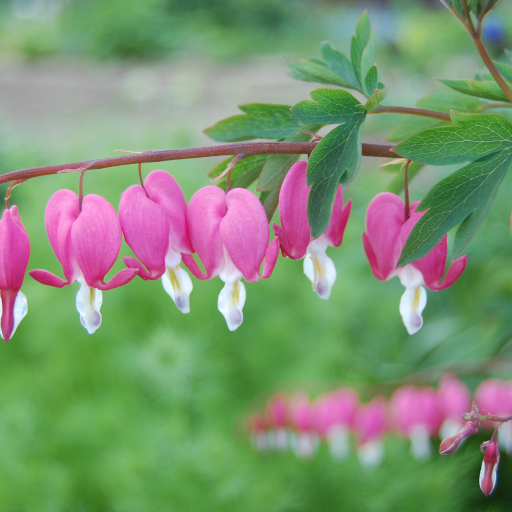
Often called the "Asian Bleeding Heart" or "Lady-in-a-Bath," this plant looks like it stepped straight out of a Victorian storybook. With its perfectly symmetrical heart-shaped blooms, it has been a cottage garden staple since the mid-1800s. It’s the ultimate symbol of romantic charm, bringing a touch of whimsical elegance to the darker, cooler corners of the garden.
🔍 How to Identify
- 💖 The Blooms: Dozens of puffy, heart-shaped flowers dangle from arching stems. A small white petal protrudes from the bottom, looking like a delicate "drop" at the base of the heart.
- 🌿 The Foliage: The leaves are deeply lobed and fern-like, offering a soft, lacey texture that contrasts beautifully with bolder garden plants like Hostas.
- 🏹 Growth Habit: The plant grows in soft, mounding clumps, but its most distinct feature is the long, horizontal, wand-like flower stalks that lean gracefully under the weight of the blossoms.
🏡 In Your Garden
- 🍃 The Summer Sleep: One of the most important things to know is that this plant is an "ephemeral." Once the summer heat hits, the plant often turns yellow and goes completely dormant, disappearing into the ground until next spring. Don't dig it up—it's just taking a long nap!
- 🌲 Woodland Roots: Because it naturally grows on the edges of forests, it craves "leaf mold" style soil that is rich in organic matter. It loves consistent moisture but will rot quickly if the soil is heavy, stagnant, or waterlogged.
⚠️ Safety & Toxicity
- 🚫 Toxic if Ingested: All parts of the Dicentra spectabilis contain isoquinoline alkaloids. If eaten, it can cause severe stomach upset, drooling, and trembling.
- 🐾 Pets & Skin: It is toxic to dogs, cats, and horses. Additionally, the sap can cause "contact dermatitis" (an itchy skin rash) for some people, so it is best to wear gloves when pruning or dividing the plant.
✨ Fun Fact
- 🛁 Whimsical Nickname: If you turn a single flower upside down and gently pull the two pink outer petals apart, the inner white structure resembles a tiny person sitting in a bathtub, which is why older generations often call it "Lady-in-a-Bath."

Detailed Care Instructions
Here are some steps you can follow to grow Dicentra spectabilis (also known as bleeding heart) plants:
- Choose a suitable location: Select a spot in your garden that receives partial shade to full shade. Bleeding heart prefers cool and moist conditions, so avoid areas that are too sunny or hot.
- Prepare the soil: The soil should be well-draining, fertile, and enriched with organic matter. Add compost or aged manure to improve the soil's nutrient content and drainage.
- Planting: Dig a hole that is slightly larger than the root ball of the bleeding heart plant. Place the plant in the hole, making sure that the crown (base of the plant where the stem meets the soil) is level with or slightly above the soil surface. Backfill the hole with soil and gently firm it around the roots.
- Watering: Bleeding heart plants require regular watering, particularly during dry periods. Keep the soil evenly moist but not overly saturated or waterlogged. Mulching around the plant can help conserve moisture and suppress weeds.
- Fertilizing: Apply a balanced slow-release fertilizer in early spring before the plant starts its active growth. Follow the manufacturer's instructions for application rates. Avoid excessive fertilization, as it can lead to weak growth and reduced blooming.
- Maintenance: Remove any weeds around the plant to prevent competition for nutrients and water. Cut back the foliage after the plant has finished blooming to encourage fresh growth. Bleeding heart plants may benefit from staking, especially if they tend to flop or become top-heavy.
- Division: Every 3-4 years, the bleeding heart plant can be divided to propagate new plants and maintain its vigor. Wait until the plant enters dormancy in late fall or early spring, then carefully dig up the clump and separate it into smaller sections with a sharp knife. Each divided section should have healthy roots and shoots. Replant the divisions immediately or pot them up for later planting.
- Pest and disease control: Bleeding heart plants are generally not prone to major pest or disease problems. However, keep an eye out for slugs, snails, and aphids, which may occasionally feed on the foliage and flowers. Regularly inspect the plant and take appropriate measures, such as handpicking or using organic pest control methods, if necessary.
By following these steps, you can successfully grow and enjoy the beautiful Dicentra spectabilis plants in your garden.

Place in a window with dappled sun or a spot in the middle of a room. Or directly in a window facing west or east.

One of the important factors to consider when watering this plant is to ensure that the soil is always moist but not waterlogged. A good way to achieve this is to water deeply once or twice a week, depending on the weather conditions and the moisture level of the soil. It is advisable to water in the morning or early in the day to minimize evaporation and to allow the plant to absorb water during the day. When watering, it is essential to avoid wetting the leaves and flowers of the plant as this can promote fungal diseases. To ensure that the water is reaching the roots, it is helpful to direct the water at the base of the plant and to soak the soil around it thoroughly. Additionally, it is helpful to apply a layer of mulch around the plant to retain moisture in the soil and reduce the frequency of watering.
To promote healthy growth for this plant, it is recommended to fertilize during the growing season, which typically lasts from early spring to mid-summer. Use a balanced, slow-release fertilizer with equal parts of nitrogen, phosphorus, and potassium. Apply the fertilizer according to the manufacturer's instructions, typically a few tablespoons per plant. Be sure to water thoroughly after fertilizing to avoid burning the roots. Avoid fertilizing in late summer and fall, as this can stimulate new growth that may not survive the winter.
Dicentra Spectabilis requires a well-draining soil with high fertility and good moisture retention. A loamy soil with moderate acidity and pH range of 6.0 to 7.5 is ideal for this plant. It is recommended to mix compost or other organic matter into the soil before planting to improve nutrient content and moisture retention. Additionally, adding a slow-release fertilizer during planting can help provide adequate nutrients. The soil should be consistently moist, but not waterlogged, as this plant prefers moist conditions. It is important to avoid planting in areas with poor drainage or in soils with high clay content, as this can cause root rot and other issues.
To propagate this plant, the best way is through root division. In early spring or fall, carefully dig the plant up from the ground and gently separate the roots into sections. Make sure each section has a few healthy roots and stems. Plant each section in a new location with well-draining soil and partial shade. Water the new plants regularly until they are established.
Common pests of the asian bleeding-heart include Scale insect, aphids, snails. Make a habit of checking your asian bleeding-heart frequently for pests so that any infestations can be caught and managed early.








