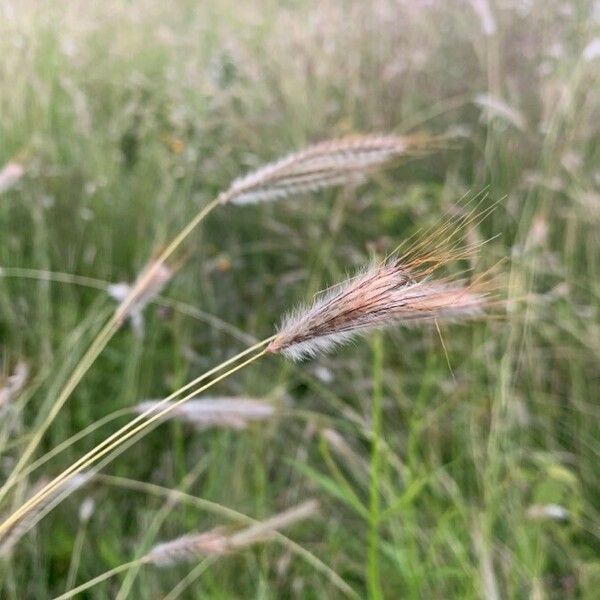
Plant Overview
Known as "Queensland Bluegrass" or "Silky Bluegrass," this Australian native is a shimmering gem of the grasslands. It is beloved by landscape designers for its distinct blue-grey hue and by farmers for its high nutritional value. In the wind, a field of these grasses looks like a rolling silver-blue sea, earning it a reputation as one of the most aesthetic native grasses in the Southern Hemisphere.
🔍 How to Identify
- 🌾 Silky Seed Heads: The most defining feature is the flower head, which consists of several finger-like spikes covered in soft, silver-white hairs that feel like silk to the touch.
- 💙 Glaucous Foliage: The leaves and stems have a distinct waxy, bluish-green coating, which helps the plant reflect intense sunlight and conserve moisture.
- 📏 Upright Habit: It grows in neat, dense tufts (clumps) that typically reach about 30 to 80 centimeters in height, standing tall and straight rather than sprawling.
🏡 In Your Garden
- 🧱 Clay Specialist: This grass is a champion of heavy, cracking clay soils. If you have "difficult" soil that feels like concrete when dry and glue when wet, Queensland Bluegrass will feel right at home.
- ☀️ Sun Worshipper: To maintain that striking blue color, it needs a position in full sun. In the shade, the blue tint fades to a duller green as the plant struggles to photosynthesize.
- ✂️ Self-Seeding Nature: It is a prolific seeder. While this is great for filling in bare patches or creating a meadow look, you may want to trim the flower heads before they dry if you want to keep it contained to a specific clump.
⚠️ Safety & Toxicity
- ✅ Safe for All: This plant is non-toxic to humans, dogs, cats, and livestock. It is actually a highly "palatable" species, meaning grazing animals find it delicious and easy to digest.
- 🐕 Mechanical Irritation: While not poisonous, the dried seed "awns" (the tiny hairs) can occasionally get stuck in the fur or between the paw pads of long-haired pets, much like other ornamental grasses.
✨ Fun Fact
The seeds of Queensland Bluegrass are "self-planting." The long, hair-like tails (awns) on the seeds are hygroscopic—they twist and untwist as the humidity changes. This mechanical movement actually screws the seed into the cracks of the soil, ensuring it finds a safe place to germinate!

Detailed Care Instructions








