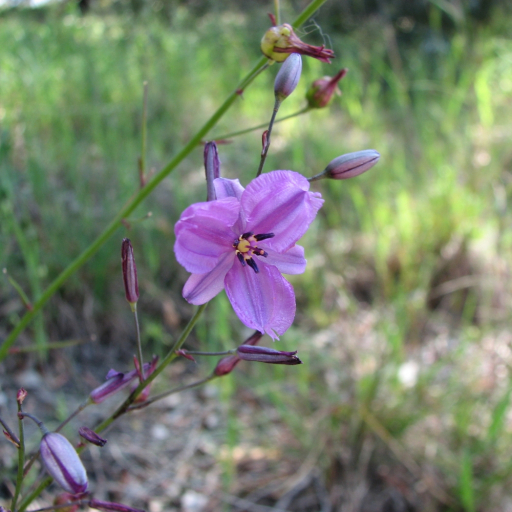
Plant Overview
Known as the Chocolate Lily, this slender Australian wildflower is a sensory treat for any nature lover. While it looks like a delicate grass at first glance, it reveals its true magic on warm, sunny days when its violet blooms release a rich, unmistakable scent of cocoa and vanilla. It has long been a staple of Australian grassy woodlands, appearing like a purple mist across the landscape in springtime.
🔍 How to Identify
- 🌸 The Blooms: Features nodding, star-shaped flowers that range from deep violet to pale mauve. Each flower has six petals and prominent dark purple anthers.
- 🍃 The Foliage: Long, narrow, grass-like leaves that grow in a tuft at the base. These often begin to wither just as the plant starts to flower.
- 📏 Growth Habit: A single, wiry green stem (scape) rises upright, reaching up to 1 meter tall, often swaying gently in the breeze.
🏡 In Your Garden
- 💤 Summer Dormancy: This plant is a "geophyte," meaning it dies back to an underground tuber during the heat of summer. If the leaves turn brown and disappear, don't worry—the plant is simply resting underground and will return with the autumn rains.
- 🧱 Soil & Placement: It thrives in well-drained soil and loves rockeries or meadow-style plantings. Because it grows from a tuber, it is quite drought-hardy once established, but it dislikes being moved frequently.
- 🦋 Pollinator Magnet: The chocolate scent isn't just for us; it is highly attractive to native bees and hoverflies, making it an excellent choice for a biodiversity-friendly garden.
⚠️ Safety & Toxicity
- 🟢 Status: Generally considered non-toxic and safe.
- 🥔 Edibility: Historically, the small tubers were a traditional food source for Aboriginal Australians, who ate them either raw or roasted. They are described as having a slightly salty, nutty flavor.
- 🐾 Pets & Kids: There are no known records of toxicity to domestic pets or children, but as with any garden plant, it is best to discourage curious nibbling to avoid digestive upset.
✨ Fun Fact
The scent of the Chocolate Lily is so potent that on a still, warm afternoon, a small patch of these flowers can make an entire section of a garden smell like a freshly opened box of dark chocolates!

Detailed Care Instructions
Growing Dichopogon strictus, commonly known as the Coast Dog Lily, is relatively easy. Here are some steps to help you grow this plant successfully:
- Choose a suitable location: Coast Dog Lilies thrive in full sun to partial shade, so find a spot in your garden that receives at least 4-6 hours of direct sunlight per day.
- Prepare the soil: The plant prefers well-draining soil. Amend the soil with organic matter like compost or peat moss to improve its drainage, especially if your soil is heavy clay.
- Planting: Dig a hole that is twice as wide and deep as the root ball of the plant. Place the plant in the hole, ensuring that the top of the root ball is level or slightly higher than the surrounding soil. Backfill the hole with soil and firm it gently around the plant.
- Watering: Keep the soil consistently moist but not overly saturated. Water deeply once a week during the hotter months, and reduce frequency during cooler periods. Avoid letting the soil dry out completely.
- Mulching: Apply a layer of organic mulch, such as wood chips or straw, around the base of the plant. Mulching helps retain moisture, suppress weeds, and maintain cooler soil temperatures.
- Fertilization: Apply a balanced, slow-release fertilizer in early spring to support growth. Follow the instructions on the fertilizer packaging for application rates.
- Pruning: Prune off any dead or damaged foliage as needed. After the flowers fade, you can deadhead or remove the spent flower stalks to maintain a neater appearance.
- Pests and diseases: Coast Dog Lilies are generally resistant to pests and diseases. However, keep an eye out for snails, slugs, or aphids. Apply organic pest control methods if necessary.
- Propagation: Dichopogon strictus can be propagated from seeds or by dividing existing plants in early spring or fall.
Remember to check your specific climate and growing conditions, as they can affect the plant's requirements.

Place in a bright room that is sun drenched almost all day. Or directly in a south-facing window.

In order to effectively water this plant, it is important to consider its native environment and natural growing conditions. This plant is typically found in areas with moderate to high rainfall, so it prefers consistently moist soil.
To water this plant, begin by checking the top layer of soil to ensure that it has dried out somewhat since the last watering. If the soil is still moist, hold off on watering for a few more days. If the soil is dry to the touch, water the plant thoroughly, allowing water to soak deeply into the soil.
It is important to avoid overwatering this plant, as it can lead to root rot and other issues. Allow the soil to dry out slightly between waterings, and always ensure that excess water is able to drain away from the plant.
In general, this plant prefers a moderate to high level of humidity, so consider placing a pebble tray or humidifier near the plant to help maintain adequate moisture levels in the air.
To fertilize this plant, use a balanced, slow-release fertilizer with equal amounts of nitrogen, phosphorus, and potassium. Apply the fertilizer around the base of the plant, avoiding contact with the stems and foliage. Water the plant thoroughly after fertilizing. Fertilize the plant once a month during the growing season, which is typically spring and summer. Avoid fertilizing during the fall and winter dormancy period.
For optimal growth and health of this particular plant species, it is recommended to use well-draining soil that is rich in organic matter. The pH level of the soil should be slightly acidic to neutral, with a range of 6.0-7.0. It is also important to ensure that the soil is not compacted and has good aeration, as this plant has a fibrous root system that requires ample oxygen for proper nutrient uptake. Adding perlite or sand to the soil mix can help improve drainage and prevent waterlogging, which can lead to root rot. Over-fertilization should be avoided, as this can burn the plant's roots and damage its overall growth. Instead, a balanced, slow-release fertilizer can be applied sparingly during the growing season to provide necessary nutrients.
Propagation of this plant can be done through division of its underground rhizomes. To do this, carefully dig up the plant and gently separate the rhizomes into smaller sections, each with several shoots or buds. Replant the sections in well-draining soil and keep them moist until they have established a new root system. It is best to do this in the early spring, just as new growth is beginning.








