Plant Overview
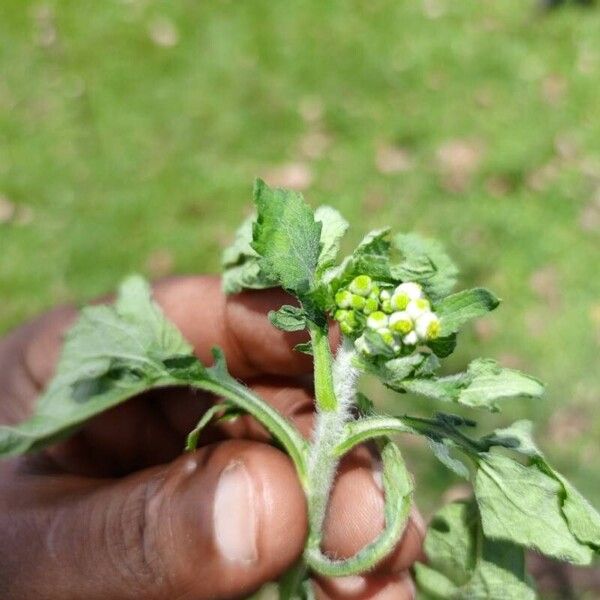
Often called the Button Weed, Dichrocephala integrifolia is a humble but fascinating wanderer found across the tropical and subtropical landscapes of Africa and Asia. While many modern gardeners might dismiss it as a mere weed, this plant has a long history in traditional medicine and possesses a geometric beauty that reveals itself upon closer inspection. Its tiny, spherical flower heads look like miniature green planets orbiting a lush, leafy stem.
🔍 How to Identify
- 🟢 Flower Heads: The most striking feature—tiny, perfectly round, yellowish-green spheres (capitula) that later turn brownish as they mature and release seeds.
- 🍃 Leaf Shape: The leaves are usually "lyrate-pinnatifid," meaning they have a large, rounded terminal lobe and smaller side lobes, often with jagged or serrated edges.
- 🌱 Growth Habit: This is a soft-stemmed, branched herb that can range from a few inches to about two feet tall, often sprawling across the ground in a carpet-like fashion.
🏡 In Your Garden
- 💧 Moisture Seeker: This plant thrives in damp, disturbed soil. If you find it appearing spontaneously in your yard, it’s usually a sign that the area stays consistently moist or has slightly compacted soil that retains water.
- 🌱 The Colonizer: It is a prolific self-seeder. Because it is an annual, it focuses all its energy on creating those little "buttons" full of seeds. If you enjoy its unique look, let it be; if you want to control it, be sure to pull it before the green spheres turn brown.
⚠️ Safety & Toxicity
- 🐾 General Safety: Dichrocephala integrifolia is generally considered non-toxic to humans and pets in terms of casual contact.
- 👅 Ingestion Caution: While it is used in traditional medicine, it should never be consumed without professional guidance. Some individuals may also experience mild skin irritation when handling the sap or crushed foliage if they have sensitive skin.
✨ Fun Fact
- 💊 Nature's First Aid: In various cultures across East Africa and Southeast Asia, this plant is a staple in the "forest pharmacy." It has been used for centuries to treat everything from skin infections to digestive issues. Interestingly, its species name integrifolia suggests "entire leaves," which is a bit of a botanical misnomer since its leaves are often deeply lobed and divided!

Detailed Care Instructions

Place in a bright room that is sun drenched almost all day. Or directly in a south-facing window.

Some plants require more regular watering than others, which should be done every few days. It's critical to maintain the soil moist all of the time. The water requirements of the same plant placed in pots with varying sizes will differ. Because the water in the smaller pot evaporates faster than the water in the larger pot, it will require more watering. Regardless of pot size, the surface should constantly be maintained moist.







