Plant Overview
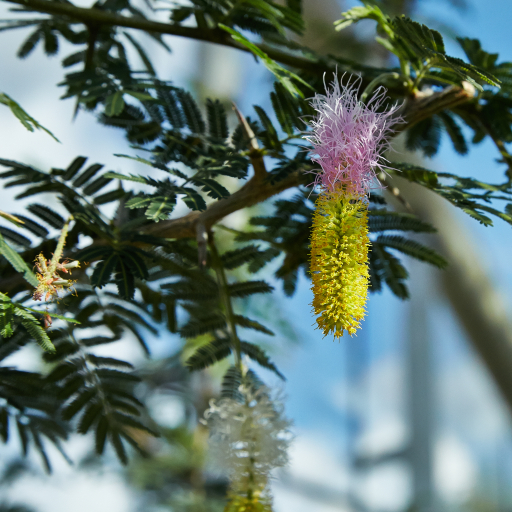
Often called the "Sickle Bush" or the "Chinese Lantern Tree," Dichrostachys cinerea is a master of disguise. From a distance, it looks like a common acacia, but when it blooms, it reveals spectacular, two-toned flowers that look like delicate hanging earrings or tiny, glowing lanterns. In many cultures, it is respected as a "pioneer plant" for its incredible ability to restore life to tired, nutrient-poor soil.
🔍 How to Identify
- 🌸 The "Lantern" Flowers: These are the plant's signature. The cylindrical flower spikes are split into two colors: the top half is a fluffy, sterile pink or mauve, while the bottom half is a fertile, vibrant yellow.
- 🌿 Feathery Foliage: It features deep green, bipinnate leaves that look like tiny ferns. Interestingly, these leaves often "sleep" by folding up at night or during heavy rain to protect themselves.
- ⚔️ Armor of Thorns: The tree is heavily armed with very hard, sharp points. These aren't actually "true" thorns but are modified branchlets that end in a woody spike, protecting the plant from hungry wildlife.
🏡 In Your Garden
- 🌳 The Ultimate Survivor: This plant thrives in difficult conditions, including rocky soil and extreme drought. It uses a powerful taproot to find water deep underground, making it a popular choice for "low-maintenance" xeriscaping or for enthusiasts looking for a dramatic, hardy Bonsai subject.
- 🧪 Soil Healer: As a member of the legume family, it works with specialized soil bacteria to "fix" nitrogen. This means it actually improves the quality of the earth around it, acting as a natural fertilizer for neighboring plants.
⚠️ Safety & Toxicity
- 🛡️ Physical Hazard: Dichrostachys cinerea is not known to be chemically toxic to humans or pets. However, its "thorns" are incredibly stiff and needle-sharp. They can easily puncture skin or thin-soled shoes, so it should be planted well away from walkways or play areas.
- 🐾 Pet Safety: While the leaves and seed pods are often used as high-protein fodder for livestock, the sharp spines pose a significant injury risk to curious dogs or cats who might try to jump through the branches.
✨ Fun Fact
The wood of the Sickle Bush is so dense and heavy that it is nicknamed "African Ironwood." It is famously difficult to cut, but it is highly prized for making tool handles and walking sticks because it is almost impossible to break!

Detailed Care Instructions
To grow Dichrostachys cinerea, also known as the sickle bush or Chinese lantern tree, you can follow these steps:
- Seed collection: Collect seeds from a mature Dichrostachys cinerea plant. Make sure to choose healthy and ripe seeds.
- Seed preparation: Remove the outer shell or soak the seeds in water overnight to help with germination.
- Soil preparation: Prepare well-draining soil with a mix of sand, compost, and loam. This plant can tolerate a wide range of soil types, but it prefers a slightly acidic soil pH.
- Germination: Sow the treated seeds into pots or seed trays filled with the prepared soil. Plant the seeds at a depth of around 1 inch and keep them moist.
- Temperature and light: Place the pots or trays in a warm location with indirect sunlight. Dichrostachys cinerea prefers temperatures between 68-86°F (20-30°C).
- Watering: Keep the soil consistently moist but not soaked. Water the plant when the top inch of soil feels dry to the touch.
- Transplanting: Once the seedlings reach a height of around 6 inches, they can be transplanted into larger containers or directly into the ground. Choose a location with full sun or partial shade for outdoor planting.
- Pruning and shaping: Regularly prune and shape the plant to maintain its desired form and encourage healthy growth. This can include removing dead or damaged branches.
- Fertilization: Fertilize the plant during the growing season with a balanced fertilizer. Follow the instructions on the fertilizer package for the appropriate amount and frequency.
- Pest and disease control: Monitor the plant for common pests like aphids, scale insects, and spider mites. Treat any infestations promptly with appropriate insecticides or other remedies. Diseases are not common in Dichrostachys cinerea but keep an eye out for signs of fungal infections.
Remember to research the specific care requirements for Dichrostachys cinerea in your region, as they can vary slightly based on climate and growing conditions.

Place in a window with dappled sun or a spot in the middle of a room. Or directly in a window facing west or east.

To water this plant, first check the soil moisture by inserting your finger approximately 2-3 inches deep into the soil. If the soil feels dry at this depth, it's time to water the plant. Use room temperature, filtered water and pour it directly onto the soil, making sure to avoid getting water on the leaves. Water until the soil is moist but not waterlogged. Allow the soil to partially dry out before watering again, as overwatering can lead to root rot and other issues. In general, this plant prefers well-draining soil and does not like to sit in water.
- Choose a balanced fertilizer with equal proportions of nitrogen, phosphorus, and potassium.
- Apply the fertilizer every 2-3 months during the growing season.
- Use a slow-release or organic fertilizer to avoid burning the plant.
- Apply the fertilizer evenly around the base of the plant.
- Water the plant after fertilizing to help distribute the fertilizer throughout the soil.
- Avoid fertilizing during winter or when the plant is dormant.
- Monitor the plant for signs of overfertilization, such as yellowing leaves or stunted growth, and adjust the fertilizer application accordingly.
The Dichrostachys Cinerea plant requires a well-draining soil mix that is rich in organic matter. The ideal soil should have good porosity and water retention capacity. It is recommended to use a soil mix that is made up of a combination of loam, sand, and peat moss in equal parts. The soil should be slightly acidic to slightly alkaline with a pH level between 6.0 and 7.0. Additionally, it is important to ensure that the soil is free of any harmful pathogens or chemicals that may harm the plant. To ensure optimal growth and health, the soil should be regularly fertilized with a balanced fertilizer.
To propagate this plant, take semi-hardwood cuttings from the tips of branches during the growing season. Remove the leaves from the bottom two-thirds of the cutting. Dip the cutting in rooting hormone and plant it in well-draining soil. Place it in a bright, but indirect light and keep the soil moist until roots begin to grow. After roots have developed, transplant the cutting to a larger pot or into the ground.








