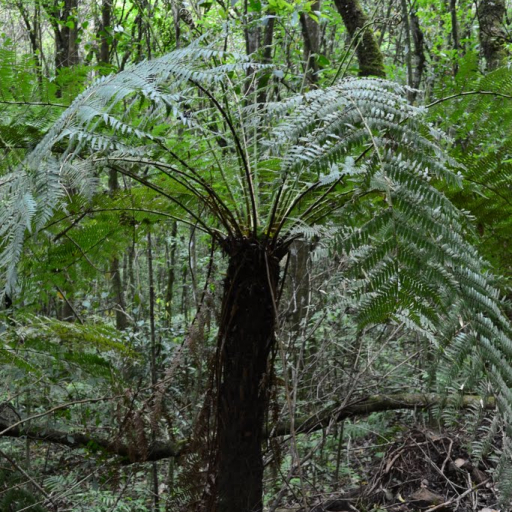
Plant Overview
Commonly known as the Xaxim or South American Tree Fern, Dicksonia sellowiana is a majestic survivor from the ancient cloud forests of Brazil and Argentina. This living fossil has graced the Earth since the time of the dinosaurs, instantly recognizable by its massive, fibrous trunk and crown of lacy greenery. Because it was once heavily harvested to make orchid pots, it is now a protected species, making every cultivated specimen a true botanical treasure.
🔍 How to Identify
- 🧶 The Fibrous Trunk: The "trunk" is actually a vertical rhizome covered in a thick, dark brown mat of aerial roots and soft, hair-like fibers that feel velvety to the touch.
- 🌿 The Fronds: Massive, arching leaves that can grow up to 2-3 meters long. They are "bipinnate," meaning they have a delicate, lace-like appearance with a deep, glossy green color.
- 🌀 The Croziers: In spring, new leaves emerge from the center of the crown as "fiddleheads" or croziers, tightly coiled and covered in protective reddish-brown fuzz.
🏡 In Your Garden
- 💧 Trunk Hydration: Unlike most plants, this fern needs to be watered from the top down. In hot weather, you must soak the fibrous trunk directly, as it acts like a sponge that feeds the crown.
- ☁️ The "Cloud Forest" Vibe: It hates dry air and direct midday sun. To keep it happy, place it in a sheltered, humid spot where it can enjoy dappled light, mimicking the misty canopy of its native home.
- 🐌 Slow Motion Growth: Be patient! This species is famous for its slow growth rate, often only adding a few centimeters of height per year.
⚠️ Safety & Toxicity
- ✅ Safe for All: Dicksonia sellowiana is generally considered non-toxic to humans, dogs, and cats. It is a "friendly" giant for household gardens.
- 🌫️ Spore Caution: While not poisonous, mature plants produce fine dust-like spores on the underside of their leaves. If you are prone to hay fever or respiratory sensitivity, avoid shaking the fronds in enclosed spaces.
✨ Fun Fact
For decades, the trunks of these ferns were cut up and carved into "Xaxim" pots because the fibrous material is perfect for growing orchids. This practice became so popular in Brazil that the species nearly went extinct, leading to a total ban on the commercial extraction of wild Dicksonia.

Detailed Care Instructions
To grow a Dicksonia Sellowiana plant, also known as a tree fern, you will need to follow certain steps and provide the appropriate conditions:
- Choose a suitable location: Dicksonia Sellowiana plants prefer a partially shaded or dappled light location. They should be protected from strong winds and direct sunlight, which can cause their fronds to dry out.
- Prepare the planting area: Ensure the soil is rich in organic matter and well-draining. If the soil is heavy or clayey, you can improve its drainage by adding compost, sand, or peat moss. Avoid planting in areas prone to waterlogging.
- Planting the tree fern: Dig a hole that is wide and deep enough to accommodate the plant's rootball. Place the tree fern in the hole, ensuring the crown is level with or slightly above the soil surface. Backfill the hole gently, firming the soil around the roots.
- Watering: Water the newly planted tree fern thoroughly and keep the soil consistently moist. However, avoid waterlogging, as excess moisture can lead to root rot. Regularly check the soil moisture levels, especially during hot or dry periods, and adjust watering accordingly.
- Fertilization: Tree ferns benefit from a regular application of balanced slow-release fertilizer during the growing season. Follow the instructions on the fertilizer package for the appropriate amount and frequency of application.
- Mulching: Apply a layer of organic mulch, such as bark chips or compost, around the base of the tree fern. This helps conserve moisture, suppress weeds, and gradually enrich the soil as it breaks down.
- Maintenance: Ensure the tree fern receives regular watering, especially during dry periods. Remove any dead or damaged fronds to maintain the health and appearance of the plant. You can also protect the fronds during winter by wrapping the trunk with burlap or straw to insulate them from frost.
Remember, Dicksonia Sellowiana plants are native to cool climates, so these guidelines are general recommendations. Adjustments may be necessary based on your specific climate conditions and local expert advice.
- Determine the watering needs: Before watering Dicksonia Sellowiana, it is important to determine its watering needs. Assess the moisture level of the soil, the humidity level of the air, and the weather conditions. Also, take into consideration the size of the plant and the container it is planted in.
- Watering frequency: Dicksonia Sellowiana likes to be kept moist but not waterlogged. Water it regularly but avoid over-watering. During summers, it may need watering a few times a week, while during winters, watering once or twice a week may be sufficient.
- Watering method: When watering, pour water at the base of the plant and avoid getting water on the leaves or fronds. The water should be given directly to the soil, ensuring that it penetrates deeply into the root zone.
- Soil type: Dicksonia Sellowiana grows well in a well-draining soil that is rich in organic matter. Keep the soil moist but not waterlogged. If the soil retains water for too long, the roots may become waterlogged, causing root rot.
- Rainwater: Dicksonia Sellowiana prefers rainwater as it is free of chemicals and has a natural balance of minerals.
- Mist the fronds: Dicksonia Sellowiana loves humidity, so misting the fronds occasionally will help maintain a moist and humid environment around the plant.
- Monitor the water uptake: Keep an eye on the soil's moisture level and adjust watering frequencies accordingly. It is important to prevent the soil from drying out or becoming waterlogged.
- Outdoor plants: If you are growing Dicksonia Sellowiana outdoors, consider growing it in a shaded area to avoid direct sunlight. This will help reduce water loss through transpiration.
To fertilize a Dicksonia Sellowiana plant, use a balanced slow-release or organic fertilizer. Follow these instructions:
- Choose a fertilizer with a balanced NPK ratio, such as 10-10-10 or 14-14-14.
- Dilute the fertilizer according to the package instructions, or use it at full strength for outdoor plants.
- Apply the fertilizer evenly around the base of the plant, avoiding direct contact with the foliage.
- Water the plant thoroughly after fertilizing to help the nutrients penetrate into the soil.
- Avoid overfertilization, as excessive nutrients can harm the plant. Follow the package instructions for the correct dosage and frequency.
- During the active growing season, which is usually spring and summer, fertilize the plant every 4-6 weeks.
- In late autumn or winter, reduce or stop fertilizing as the plant enters its dormant phase.
- Monitor the plant for any signs of nutrient deficiencies or excesses, such as yellowing leaves or stunted growth. Adjust the fertilization accordingly.
The optimal soil to use with this plant is a mix of organic matter, such as peat moss or well-rotted compost, and coarse sand or perlite. The soil should be well-draining but able to retain moisture, as the plant prefers a consistently moist environment. Avoid using heavy clay soils or those that are constantly saturated with water, which can lead to root rot. A slightly acidic soil with a pH between 5.5 and 6.5 is preferred. It is important to ensure the soil is free of any plant pathogens or diseases that can harm the plant.
Dicksonia Sellowiana is a type of fern commonly propagated through spore reproduction. Here's a step-by-step guide on how to propagate this plant:
- Obtain mature fronds: Choose healthy and mature fronds from the existing plant. These fronds will contain spores necessary for propagation.
- Collect spores: Cut the selected fronds close to the base, as this is where the spores are located. Place the fronds in a paper bag or envelope to collect the spores.
- Prepare a spore-propagation mix: Create a mixture of equal parts peat moss and coarse sand or perlite. This will provide a suitable medium for spore germination.
- Sterilize the mixture: To prevent the growth of pathogens, sterilize the spore-propagation mix by moistening it and heating it in an oven at around 250°F (121°C) for approximately 30 minutes. Allow it to cool before proceeding.
- Sow the spores: Sprinkle the collected spores evenly onto the sterilized propagation mix. Make sure to distribute them as thinly as possible. Cover the container with a clear plastic lid or place it in a clear plastic bag to maintain humidity.
- Maintain humidity and temperature: Place the container with the spores in a warm location with bright, indirect light. Maintain a consistently high humidity level by lightly misting the surface daily or enclosing the container within a plastic bag. Avoid direct sunlight as it can cause excessive heat and dry out the spores.
- Monitor and wait: Keep a close eye on the spores, as they will gradually start to develop into tiny green gametophytes, which are the first stage of the fern's life cycle. This process can take weeks or even months to occur.
- Transplant the gametophytes: Once the gametophytes grow to a size that allows easy handling, carefully transplant them into small pots filled with a well-draining potting mix. Ensure the gametophytes are established in the pots before moving on to the next step.
- Provide appropriate care: Maintain consistently moist soil without overwatering the young plants. Place them in a shaded location with indirect light to protect them from excessive sunlight. Continue to monitor and care for the young ferns as they grow.
- Gradually expose to brighter light: As the ferns grow and become more established, gradually increase their exposure to brighter light. This helps them adjust to higher light intensity gradually.
By following these steps, you can successfully propagate Dicksonia Sellowiana ferns from spores and enjoy growing new plants.








