Plant Overview
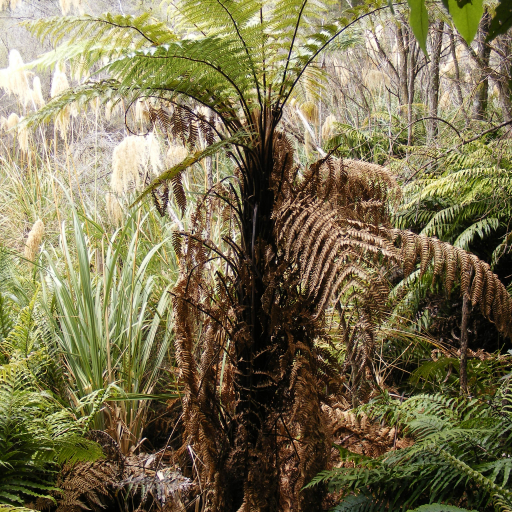
Often called the Wheki or Rough Tree Fern, Dicksonia squarrosa is a quintessential piece of New Zealand’s prehistoric landscape. This architectural wonder looks like it was plucked straight from a Jurassic forest, standing tall with a dark, slender trunk and a crown of emerald fronds. It is a resilient survivor, known for its ability to bounce back after disturbances and its unique habit of sprouting new life directly from its "dead" trunk.
🔍 How to Identify
- 🪵 The Fibrous Trunk: The trunk is remarkably dark—almost black—and covered in the rough, woody remains of old leaf bases. It is much more slender than the chunky Dicksonia antarctica.
- 🌿 Stiff Fronds: The fronds are mid-green, leathery, and quite harsh to the touch. They grow in a horizontal, slightly upwards-pointing crown, giving the plant a structured, formal appearance.
- 👗 The "Skirt": As older fronds die, they tend to hang down around the trunk, forming a protective brown skirt that shelters the plant from drying winds.
🏡 In Your Garden
- 💧 Trunk Hydration: Unlike most plants, this fern drinks through its trunk as much as its roots. In dry weather, it appreciates being hosed down from the top to keep the aerial roots and fibrous stem moist.
- 🌱 Sprouting Pups: One of the most exciting features of the Wheki is its ability to produce "pups" or side-shoots along the trunk. This means you can eventually end up with a multi-stemmed fern, creating a dense, lush thicket.
- 🌬️ Wind Resistance: While it loves humidity, the Wheki is tougher than many other tree ferns. Its stiff fronds handle wind better than the delicate Cyathea species, though it still prefers a sheltered spot to look its best.
⚠️ Safety & Toxicity
- 🛡️ Non-Toxic: This fern is generally considered non-toxic to humans, cats, and dogs. It is a safe addition to a family garden.
- 🧤 Physical Irritant: While not poisonous, the trunk and the base of the fronds are very rough and covered in tiny, stiff hairs. These can cause mild skin irritation or "splinters" if handled with bare hands, so gardening gloves are recommended.
✨ Fun Fact
🏛️ The Living Fence: In its native New Zealand, the rot-resistant trunks of the Wheki were traditionally used by Māori for building the walls of huts and fences. Because the trunks can store so much moisture, these "fence posts" would often spontaneously sprout new fronds, creating a living, growing wall!

Detailed Care Instructions
To grow a Dicksonia squarrosa plant, also known as the New Zealand tree fern, you will need to create a suitable environment that mimics its native habitat. Here are some steps to help you successfully grow this plant:
- Climate: Dicksonia squarrosa prefers cool, moist conditions. It thrives in areas with mild temperatures ranging from 50 to 75°F (10 to 24°C). If you live in a region with a hot climate, ensure that you provide enough shade and humidity for the plant.
- Location: Find a suitable spot that receives filtered or indirect sunlight throughout the day. Avoid exposing the plant to direct sunlight, especially during the hottest parts of the day.
- Soil: The New Zealand tree fern prefers well-draining soil that retains moisture. A mixture of peat moss, perlite, and some organic matter such as compost will create an ideal growing medium. Avoid heavy clay soils that may cause root rot.
- Planting: Dig a hole that is slightly larger than the size of the fern's root ball. Gently place the plant in the hole and backfill with the prepared soil mixture. Make sure the crown of the plant, where the fronds emerge, is level with the ground surface.
- Watering: Keep the soil consistently moist but not waterlogged. Water the plant deeply and regularly during dry periods, ensuring that it doesn't dry out completely. Mist the fronds often to maintain humidity.
- Mulching: Apply a layer of organic mulch, such as bark or leaf litter, around the base of the plant. This helps retain moisture, suppresses weed growth, and protects the roots from extreme temperatures.
- Fertilization: Use a balanced slow-release fertilizer specifically designed for ferns. Apply the fertilizer as directed on the packaging during the growing season, typically from spring to autumn.
- Pruning: Remove any dead or damaged fronds from the plant to encourage healthy growth. Be cautious when removing fronds, as excessive pruning can weaken the plant.
- Protection: Dicksonia squarrosa can be sensitive to frost and strong winds. If you live in an area prone to these conditions, consider covering the plant with fleece or moving it to a more sheltered location during the colder months.
By following these steps and providing the appropriate care, you can successfully grow a thriving Dicksonia squarrosa plant. Remember to regularly monitor the plant's health and make adjustments as needed to ensure its well-being.

Place in a window with dappled sun or a spot in the middle of a room. Or directly in a window facing west or east.

To water the plant, it is important to consider its specific needs. Dicksonia Squarrosa prefers a consistent moisture level in its soil, but it is essential to avoid overwatering. Here is a detailed guide on how to water this plant:
1. Assess the moisture level: Before watering, check the moisture level of the soil. Insert your finger or a moisture meter into the soil about 2-3 inches deep to determine if it is damp or dry.
2. Frequency of watering: Dicksonia Squarrosa plants generally need to be watered regularly during the warmer months. However, the frequency may differ depending on various factors such as climate, pot size, and humidity. As a general guideline, aim to water it every 7-10 days.
3. Watering techniques: A good watering technique for this plant is a thorough, deep watering. This means watering until the water starts to drain out from the bottom of the pot, ensuring the entire root ball receives moisture. Avoid shallow watering as it may lead to water accumulation on the surface without reaching the roots.
4. Consider the environment: Take into account the environmental conditions surrounding the plant. If it is situated in a location that receives direct sunlight or experiences high temperatures, the soil may dry out more quickly, requiring more frequent watering. Conversely, if the plant is in a cooler, shaded area, it may need less frequent watering.
5. Observe the plant: It is crucial to observe the plant's response to watering. If the fronds start to appear wilted or droopy, it may indicate under-watering. On the other hand, if the fronds turn yellow or brown and the soil is consistently damp, it could suggest overwatering.
6. Adjust watering schedule: Based on your observations, adjust the watering schedule accordingly. If the soil is often dry and the plant shows signs of dehydration, consider watering more frequently. Conversely, if the soil remains consistently damp and the plant displays signs of stress, reduce the frequency of watering.
Remember, it is important to strike a balance between keeping the soil consistently moist and avoiding excessive moisture that could lead to root rot. Regularly monitoring the moisture level and observing the plant's response will help you provide optimal water requirements for your Dicksonia Squarrosa plant.
To fertilize your plant, use a balanced, slow-release fertilizer with equal amounts of nitrogen, phosphorus, and potassium (N-P-K). Follow these instructions:
- Choose a suitable fertilizer: Opt for a slow-release granular fertilizer specifically formulated for ferns or shade-loving plants. The N-P-K ratio should be balanced, such as 10-10-10 or 14-14-14.
- Dilute the fertilizer: If using a liquid fertilizer, follow the manufacturer's instructions to dilute it to the recommended concentration. If using granules, apply them directly without dilution.
- Timing: Fertilize your Dicksonia Squarrosa plant during the growing season, typically from spring to early autumn. However, avoid fertilizing during winter or when the plant is dormant.
- Application: Sprinkle the granular fertilizer around the base of the plant, making sure to keep it away from the fronds. If using liquid fertilizer, apply it to the soil following the recommended quantity.
- Watering: After applying the fertilizer, water the plant thoroughly. This helps to dissolve the granules and ensures the nutrients reach the plant's roots.
- Frequency: Fertilize your plant every 4-6 weeks during the active growing season. However, always follow the specific instructions on the fertilizer packaging for the recommended frequency.
Remember, it's important not to over-fertilize your Dicksonia Squarrosa plant, as excessive nutrients can lead to foliage burn or other issues. Regularly monitor its response to the fertilizer and adjust the frequency or concentration if necessary.
Dicksonia Squarrosa, also known by its scientific name, is a type of fern that requires specific soil conditions to thrive. The ideal soil for Dicksonia Squarrosa should be rich in organic matter and have good drainage properties. It is recommended to use a mix of peat moss, well-rotted compost, and coarse sand or perlite.
The peat moss provides moisture retention, which is crucial for the fern's growth. Additionally, it improves the structure of the soil, allowing for proper aeration. Well-rotted compost adds nutrients and enhances the overall fertility of the soil, promoting healthy growth.
The inclusion of coarse sand or perlite is important to improve drainage. These materials help prevent waterlogging, as excessive moisture can lead to root rot and other diseases. Good drainage is critical for the fern's well-being since it is native to areas with high rainfall and thrives in moist, but not overly saturated, soil conditions.
When planting Dicksonia Squarrosa, ensure that the soil is loose and well-mixed. It is best to maintain a slightly acidic soil pH level ranging from 5.5 to 6.5. This pH range allows for efficient nutrient uptake by the plant and supports optimal growth.
Overall, by providing a suitable soil mix that is rich in organic matter, well-drained, and slightly acidic, you can create an ideal growing environment for Dicksonia Squarrosa, enabling it to thrive and flourish.
Dicksonia squarrosa is a type of fern that can be propagated through spore propagation or by division. Here are the steps to propagate this plant:
- Spore Propagation:
a. Collect spores from mature, brownish sori (spore-bearing structures) located on the underside of fertile fronds.
b. Place a sterile container with a tight-fitting lid on a stable surface.
c. Fill the container with a moist, well-draining growing medium, such as a mixture of peat moss and perlite.
d. Sprinkle the collected spores evenly over the surface of the growing medium.
e. Cover the container to maintain humidity and keep it in a warm, well-lit area (preferably under indirect light).
f. Mist the surface regularly to keep it moist but not waterlogged.
g. After a few weeks to a couple of months, tiny green gametophytes (heart-shaped structures) will begin to appear. At this stage, transfer the container to an area with more shade to prevent excessive drying.
h. Once the gametophytes are well established, carefully transplant them into individual small pots, ensuring they remain moist throughout the process.
i. Continue to provide the young plants with proper care, including humidity, shade, and regular watering, until they grow into ferns.
- Division:
a. Choose a mature Dicksonia squarrosa plant that has developed a clump of rhizomes and well-established fronds.
b. Carefully dig up the entire clump, taking care not to damage the roots or rhizomes.
c. Gently shake off excess soil to expose the root system.
d. Identify natural divisions within the clump – areas where the rhizomes can be separated without causing harm to the plant.
e. Using a sharp, sterilized knife or garden shears, carefully separate these sections, ensuring each division has a healthy portion of roots and fronds.
f. Plant each divided section in an appropriate-sized container or directly into the ground, making sure they are at the same soil level as they were before.
g. Provide the divisions with proper care, including shade, moisture, and protection from extreme temperatures until they establish themselves and show signs of new growth.
Both methods require patience and consistent care to successfully propagate Dicksonia squarrosa. By following these steps, you can create new plants and expand your fern collection.








