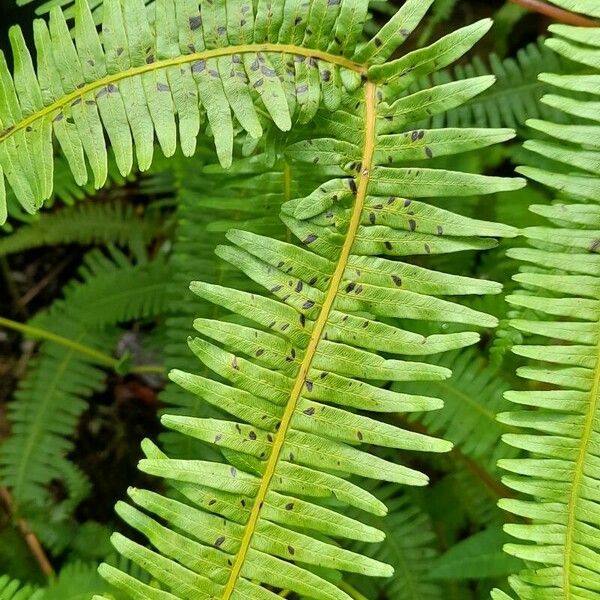
Plant Overview
Often called the Savannah Fern or the Flexuous Forking Fern, this plant is a geometric masterpiece of the tropical world. Unlike most ferns that hide in the damp shadows of the forest floor, this hardy pioneer thrives in the spotlight, sprawling across open landscapes and hillsides. It is famous for its unique "forking" habit, creating intricate, tangled mats that look like a sea of green lace.
🔍 How to Identify
- 🌿 Dichotomous Branching: The most striking feature is how the stems split into equal "Y" shapes repeatedly, creating a beautiful fractal-like appearance.
- 📐 Zig-Zag Stems: The main stalks (rachis) often change direction at each fork, giving the plant its "flexuose" (wavy or zig-zag) name.
- 🍃 Comb-like Leaflets: The final segments are lined with small, narrow leaflets that are firm, leathery, and arranged like the teeth of a comb.
🏡 In Your Garden
- ☀️ The Sun-Worshiper: While many ferns crave deep shade, Dicranopteris flexuosa is a sun-lover. It is a "pioneer species," often the first plant to colonize disturbed soil or sunny roadside banks to prevent erosion.
- 📉 The "Do Not Disturb" Rule: This fern is notoriously difficult to transplant. It develops a complex underground rhizome system that hates being moved. If you are growing it, pick a permanent spot and let it establish itself without interference.
- 🧶 Thicket Formation: In a landscape, it acts as a natural groundcover. However, be aware that it can become quite dense and "scrambling," climbing over low-lying rocks or smaller plants if not managed.
⚠️ Safety & Toxicity
- ✅ Safe Status: This fern is generally considered non-toxic to humans and common household pets like cats and dogs.
- ✂️ Physical Irritation: While not chemically toxic, the mature stems become very wiry and stiff. Handling large, dried thickets can lead to minor skin scratches or "paper cuts" from the rigid fronds.
✨ Fun Fact
The forking growth pattern of Dicranopteris flexuosa is a perfect example of fractal geometry in nature. It follows a mathematical consistency so precise that it is often used by botanists to demonstrate primitive plant evolution!

Detailed Care Instructions

Place in a bright room that is sun drenched almost all day. Or directly in a south-facing window.

Water-loving plants flourish in wet or sloppy soil and near ponds. The extensive root system enables these plants to absorb plenty of water. The surface of the soil should be kept moist at all times. Place your pot in a container filled with water to guarantee that plants get enough water. If the ground becomes dry, it is recommended that you water it well. Plants in smaller pots will need to be watered more frequently. Water the soil in which the plant is standing thoroughly using a watering can.








