Plant Overview
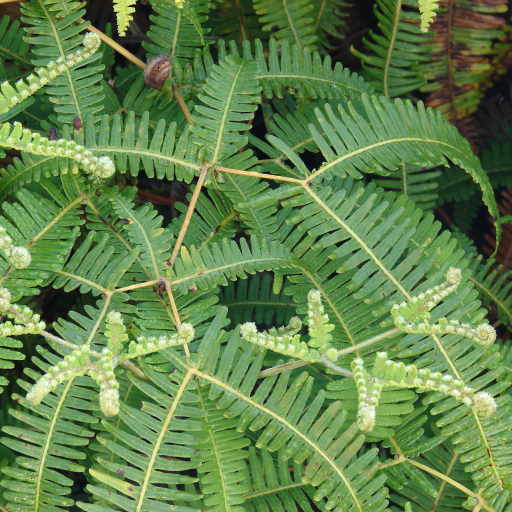
Often called the Old World Forked Fern or Uluhe in Hawaii, Dicranopteris linearis is a prehistoric-looking marvel that acts as nature’s first responder. Known for its geometric, recurring "Y" shapes, it blankets tropical hillsides in a rugged, vibrant green carpet. It is a resilient pioneer, often being the very first plant to reclaim the earth after a landslide or a volcanic eruption.
🔍 How to Identify
- 🍴 Forked Fronds: Its most striking feature is its "dichotomous" branching. The stems split into two equal parts (a perfect fork) repeatedly, creating a layered, geometric pattern that looks like a living fractal.
- 🌿 Scrambling Habit: Unlike upright ferns, this species is a "scrambler." It uses its wiry, stiff stems to lean on other plants or crawl across the ground, forming dense, springy thickets.
- 🍂 Sori Placement: On the underside of the narrow leaflets, you will find tiny, circular clusters of spores (sori) that lack a protective covering, appearing as naked golden-brown dots.
🏡 In Your Garden
- ⛰️ The Erosion Expert: Because it thrives in disturbed, nutrient-poor, or acidic soils, it is a master at stabilizing slopes. If you have a steep tropical bank prone to washing away, this fern provides a natural, interlocking net.
- ☀️ Sun Seeker: While most ferns hide in the deep shadows, Dicranopteris linearis is a sun-lover. It requires high light levels to maintain its dense growth; in deep shade, it will become leggy and lose its characteristic "forked" vigor.
- 🧪 Acidic Preferences: It is a specialist in "sour" soil. It helps rejuvenate land by thriving in high-aluminum or low-phosphorus environments where other garden plants might wither.
⚠️ Safety & Toxicity
- ✅ Non-Toxic: This fern is generally considered safe and is not known to be poisonous to humans, cats, or dogs.
- 🧤 Physical Hazard: The stems are exceptionally wiry and tough. When they dry out, they become brittle and sharp. If you are clearing a patch of this fern, wear thick gloves to avoid "fern-burn" or small punctures from the stiff, broken stalks.
✨ Fun Fact
In many Pacific cultures, the dense thickets of this fern were considered a natural "fortress." The growth is so tightly intertwined and springy that it is nearly impossible for humans or large animals to walk through, making it a perfect natural boundary for sacred or private lands.

Detailed Care Instructions
To grow Dicranopteris linearis plant, you can follow these steps:
- Acquire rhizomes: Obtain rhizomes of Dicranopteris linearis from a reputable nursery or through online sources.
- Choose a suitable location: Select a spot with partial shade to full shade. Dicranopteris linearis prefers slightly acidic soil conditions, so ensure the soil pH is around 5.5 to 6.5.
- Prepare the soil: Before planting, loosen the soil and remove any weeds or debris. Add organic matter like well-decomposed compost or leaf mold to improve soil quality.
- Planting: Dig a hole that allows the rhizome to be covered with 1 to 2 inches (2.5 to 5 cm) of soil. Place the rhizome horizontally in the hole, making sure the growing tips are facing upward. Cover it with soil and gently firm it down.
- Watering: Water the plant immediately after planting. Keep the soil consistently moist but not waterlogged. During dry periods, watering once or twice a week should be sufficient.
- Mulching: Apply a layer of organic mulch around the plant to help retain moisture and suppress weed growth. Avoid piling mulch directly against the rhizome to prevent rot.
- Fertilization: Dicranopteris linearis generally does not require extensive fertilization. However, you can provide a balanced, slow-release fertilizer once or twice a year, following the packaging instructions.
- Pruning: Trim any dead or damaged fronds to maintain plant health and appearance. Avoid cutting too many fronds at once, as it can stress the plant.
- Pest and disease control: Monitor the plant for any signs of pests or diseases. If found, consider using appropriate organic methods or consult with a local plant expert for suitable treatments.
- Winter care: In colder regions, protect the plant during winter by providing extra mulch or bringing containers indoors.
With proper care and suitable growing conditions, your Dicranopteris linearis plant should thrive and grow into a beautiful fern.

Place in a bright room that is sun drenched almost all day. Or directly in a south-facing window.

Dicranopteris Linearis is a plant species that requires consistent watering to ensure healthy growth and development. When watering this plant, it is essential to avoid overwatering, which can lead to root rot and other issues.
One way to determine when to water Dicranopteris Linearis is to check the soil moisture level. The soil should be moist but not saturated. If the top layer of the soil feels dry to the touch, it's time to water.
When watering Dicranopteris Linearis, it is best to use room temperature water. Avoid using cold water, as this can shock the plant and cause damage. It is advisable to water the plant early in the morning or late in the evening to avoid water evaporation and ensure that the plant gets ample time to absorb the water.
Another important thing to consider when watering Dicranopteris Linearis is the container and drainage system. Ensure that the plant is in a pot with ample drainage holes to allow excess water to drain. This helps prevent water from sitting in the pot, which can lead to root rot.
Lastly, it is essential to give the plant time to absorb water before watering it again. Avoid overwatering, as this can cause the roots to become waterlogged and lead to eventual plant death. In general, water dicranopteris linearis once a week or when the soil feels dry to the touch.
To fertilize this plant, you should use a well-balanced fertilizer with a nitrogen, phosphorus, and potassium ratio of 10-10-10 or 20-20-20. Apply the fertilizer during the growing season, which is typically in the spring and summer months. Use a slow-release fertilizer that will slowly release nutrients over a longer period of time to prevent over-fertilization and damage to the plant. Avoid fertilizing in the fall and winter when the plant is dormant. Always follow the manufacturer's instructions for application rates and frequency.
The soil type that is best suited for growing the Dicranopteris Linearis plant is a well-draining mixture. The soil should be moderately rich in organic matter and have a pH level between 5.5 and 7.5. This type of plant prefers moist soil, but it does not like to be waterlogged, so it's important to make sure that the soil drains well. A mixture of peat moss, vermiculite, and perlite is a good choice for growing Dicranopteris Linearis. The plant also benefits from occasional fertilization with a balanced fertilizer to promote healthy growth and vibrant leaves. It's important to avoid using heavy, clay soil as this can lead to root rot. Overall, a well-draining, nutrient-rich soil mixture is ideal for growing this plant.
Dicranopteris Linearis can be propagated through spores or by dividing its rhizomes.
For spore propagation, mature fronds with spores can be collected and placed into a plastic bag to dry. Once the spores are dry, they can be rubbed off and placed onto a pot of soil that has been sterilized and moistened. The pot of soil and spores can then be placed in a warm, humid area with indirect light until the spores develop into small plants.
For rhizome division, the plant can be carefully dug up and the rhizomes can be separated into smaller sections, each with roots and a small shoot. These sections can then be planted in separate pots containing sterilized soil and placed in a warm, humid area with indirect light until they grow into full-sized plants.








