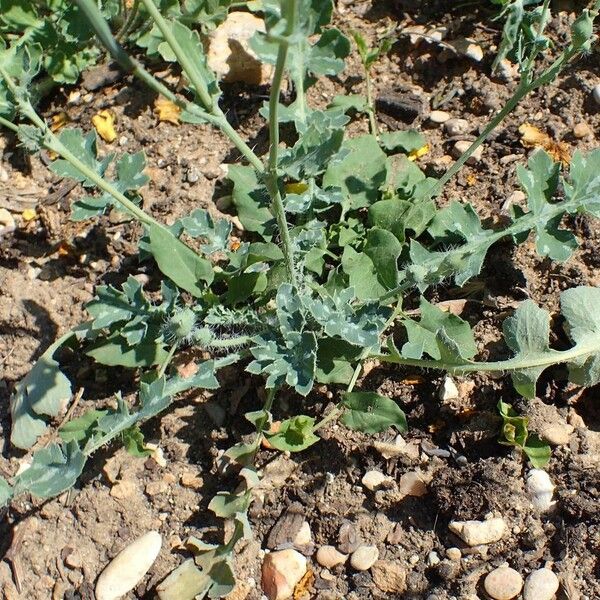
Plant Overview
Commonly known as the Himalayan Celandine Poppy, this delicate beauty brings a splash of sunshine to rocky slopes and shady garden corners. Native to the mountain regions of China and the Himalayas, it is often admired for its papery, bright yellow blooms that look like they were plucked from a vintage botanical illustration. While it may look fragile, it is a resilient biennial that gracefully bridges the gap between wild woodland charm and cultivated elegance.
🔍 How to Identify
- 🌼 Golden Blooms: Features four-petaled, bowl-shaped flowers in a vivid lemon-yellow, often reaching 1-2 inches in diameter with a dense cluster of yellow stamens at the center.
- 🌿 Frosted Foliage: The leaves are a striking glaucous (blue-green) color, deeply lobed or "pinnatifid," giving the plant a feathery, fern-like texture.
- 🌱 Slender Seed Pods: After the petals fall, it produces long, very thin seed pods. The species name leptopodum actually translates to "slender-footed," referring to these delicate stalks.
🏡 In Your Garden
- 💧 The Taproot Rule: Like many members of the poppy family, this plant develops a deep taproot early on. It strongly dislikes being moved once established, so it is best to sow seeds exactly where you want them to glow.
- 🌤️ Woodland Preferences: It thrives in "dappled light"—the kind of sunlight that filters through tree canopies. While it loves moist, well-drained soil, it is surprisingly drought-tolerant once its roots have settled deep into the earth.
⚠️ Safety & Toxicity
- 🚫 Status: Toxic if ingested.
- 🐾 Details: As a member of the Papaveraceae (Poppy) family, the plant contains various alkaloids. If stems are broken, they may leak a yellowish sap that can cause skin irritation for some people. Keep it away from curious pets and toddlers who might be tempted by the bright flowers.
✨ Fun Fact
The name Dicranostigma comes from the Greek words for "two-headed" and "stigma." If you look very closely at the center of the flower with a magnifying glass, you can see the unique forked shape of the female reproductive part that gives the genus its name!

Detailed Care Instructions

Place in a bright room that is sun drenched almost all day. Or directly in a south-facing window.

Some plants require more regular watering than others, which should be done every few days. It's critical to maintain the soil moist all of the time. The water requirements of the same plant placed in pots with varying sizes will differ. Because the water in the smaller pot evaporates faster than the water in the larger pot, it will require more watering. Regardless of pot size, the surface should constantly be maintained moist.








