Plant Overview
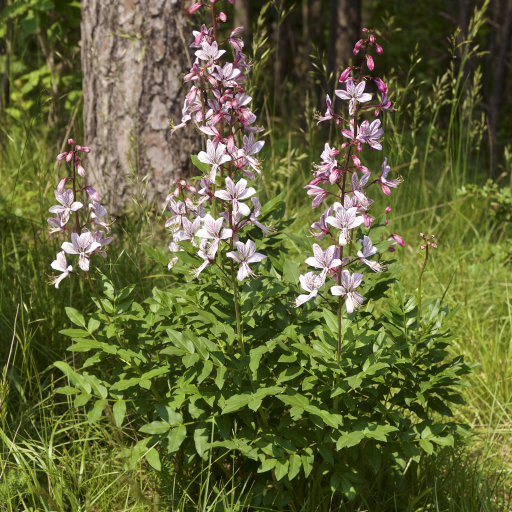
Known as the "Gas Plant" or "Burning Bush," Dictamnus albus is a legendary perennial that seems to belong in a wizard’s garden. Native to the warm slopes of Europe and Asia, it has been cherished since the Middle Ages for its aromatic oils and striking, spidery flower spikes. It is a slow-growing, noble resident of the garden that rewards patient keepers with decades of loyalty and a citrusy fragrance.
🔍 How to Identify
- 🌿 The Foliage: The glossy, dark green leaves are pinnate (shaped like a feather) and bear a striking resemblance to the leaves of an Ash tree, which earned it the name "Dittany of Crete" in some old texts.
- 🌸 The Bloom: It produces upright racemes of five-petaled flowers, typically white or pale pink with prominent purple veins. The stamens are notably long and curve upward, giving the flower a delicate, "whiskered" appearance.
- 🍋 The Scent: If you gently rub the leaves or stems, they release a potent, refreshing aroma reminiscent of lemon peel or balsamic resin.
🏡 In Your Garden
- 🌱 The Golden Rule: This plant is famous for its "stubbornness" regarding relocation. It develops a very deep, thick taproot and absolutely hates being moved once established. Choose its forever home carefully—somewhere with excellent drainage and plenty of sunlight.
- ⏳ A Lesson in Patience: Dictamnus albus is a slow starter. It may take two to three years to produce its first significant bloom, but it is one of the longest-lived perennials available, often outliving the person who planted it.
⚠️ Safety & Toxicity
- 🚫 Phytophotodermatitis: This plant contains furanocoumarins. When the oils get on your skin and are exposed to sunlight, they can cause a chemical burn or painful blistering (similar to Giant Hogweed). Always wear gloves and long sleeves when pruning or handling.
- 🐾 Pet Safety: It is generally considered toxic if ingested by pets or children, and the sticky seed pods can cause skin irritation upon contact.
✨ Fun Fact
The name "Gas Plant" is literal! On hot, still summer evenings, the plant secretes so much volatile isoprene gas that it forms a "cloud" around the flowers. If you hold a match near the base of the flower stalk, the gas will ignite in a brief, dramatic flash of blue flame—a trick that usually leaves the plant completely unharmed!

Detailed Care Instructions
| Color | Pink-Purple, White, Red |
| Soil Ph | Neutral, Alkaline |
| Humidity | Normal |
| Soil Type | Loamy, Sandy, Chalky, Clay |
| Bloom Time | Summer |
| Difficulty | Medium |
| Plant Type | Perennial, Herbaceous |
| Hibernation | Cold Period |
| Mature Size | Up To 3 Ft. Tall |
| Native Area | Europe, Asia |
| Temperature | Min 20°C |
| Sun Exposure | Full Sun |
| Hardiness Zones | 3-8 |
To grow Dictamnus Albus, also known as the Gas Plant or Burning Bush, follow these steps:
- Location: Choose a sunny or partially shaded spot in your garden with well-draining soil. The plant prefers full sun but can tolerate some shade.
- Soil Preparation: Prepare the soil by removing any weeds or debris. Amend the soil with organic matter, such as compost, to improve drainage and fertility.
- Planting: Plant young Dictamnus Albus plants in spring or early fall. Dig a hole slightly larger than the root ball, place the plant in the hole, and backfill with soil. Gently firm the soil around the plant and water thoroughly.
- Watering: Dictamnus Albus prefers moist but well-drained soil. Water regularly, especially during dry spells, but avoid overwatering as this plant does not tolerate standing water.
- Mulching: Apply a layer of organic mulch, such as wood chips or straw, around the base of the plant. This helps conserve moisture and suppresses weed growth.
- Fertilizing: Dictamnus Albus generally doesn't require much fertilizer. However, if the plant seems to be struggling, you can feed it with a balanced slow-release fertilizer in spring.
- Pruning: Dictamnus Albus doesn't require much pruning. In late winter or early spring, you can remove any dead, damaged, or overcrowded branches. This promotes healthy growth and improves the plant's appearance.
- Propagation: Dictamnus Albus can be propagated through division or by sowing seeds. Dividing the plant is best done in early spring or fall. Sow seeds in spring, either directly in the garden or in pots indoors, and transplant the seedlings once they are sturdy enough.
- Pests and diseases: Dictamnus Albus is generally pest and disease-resistant. However, like any plant, it may occasionally be attacked by common pests such as aphids or snails. Regularly inspect your plants and take appropriate measures, such as using organic pest control methods or removing pests by hand.
Remember to research and consider your specific climate and growing conditions as they may affect the success of Dictamnus Albus. It's always helpful to consult with local gardening experts or refer to reliable gardening resources for more precise information.

Place in a bright room that is sun drenched almost all day. Or directly in a south-facing window.

Dictamnus Albus plant should be watered regularly, making sure that the soil is moist but not waterlogged. It is important to avoid overwatering as it can lead to root rot. It is best to water in the morning or evening when the sun is not at its peak. You can use a watering can or a hose with a gentle spray nozzle to water the plant. Always check the soil moisture level before watering to avoid overwatering.
Dictamnus Albus requires a nutrient-rich soil to encourage plant growth and flower production. To fertilize this plant, begin by selecting a high-quality, balanced fertilizer and applying it once a month. An ideal NPK ratio for Dictamnus Albus is 10-10-10 or 20-20-20. Be sure to water the plant before and after applying fertilizer to prevent root burn. Avoid over-fertilizing, as this can lead to excessive foliage growth at the expense of flower production. Additionally, top-dressing with compost or well-aged manure can help enrich soil over time and improve overall plant health.
Dictamnus Albus plant prefers a well-draining soil that is neutral to slightly acidic in pH. It is best to avoid soils that are too rich and moist as they can lead to root rot. A mixture of sandy loam and gravel can provide the ideal growing conditions for this plant. The soil should also be amended with organic matter and well-aerated for optimal growth. It is important to avoid using heavy clay soils that can impede drainage and cause waterlogging. A good practice is to ensure the soil is moist but not waterlogged and to avoid overwatering, especially during the winter months.
To propagate this plant, collect the seeds in the summer after they have ripened and formed their hard, outer coat. Soak the seeds overnight and then plant them in a well-draining soil mix. The seeds will germinate in the following spring.
Another propagation method is by division. This can be done in the spring when the plant is coming out of dormancy. Carefully dig up the root ball and separate the individual plants, making sure each division has some leaves and roots intact. Replant the divisions in a well-draining soil mix.
Propagation can also be achieved by stem cuttings in the summer. Take a 4-6 inch cutting with a clean, sharp pair of scissors and remove the lower leaves. Dip the base of the cutting in a rooting hormone and plant it in a well-draining soil mix. Keep the pot in a warm, bright location and keep the soil moist. The cutting should root within a few weeks and be ready for transplanting.








