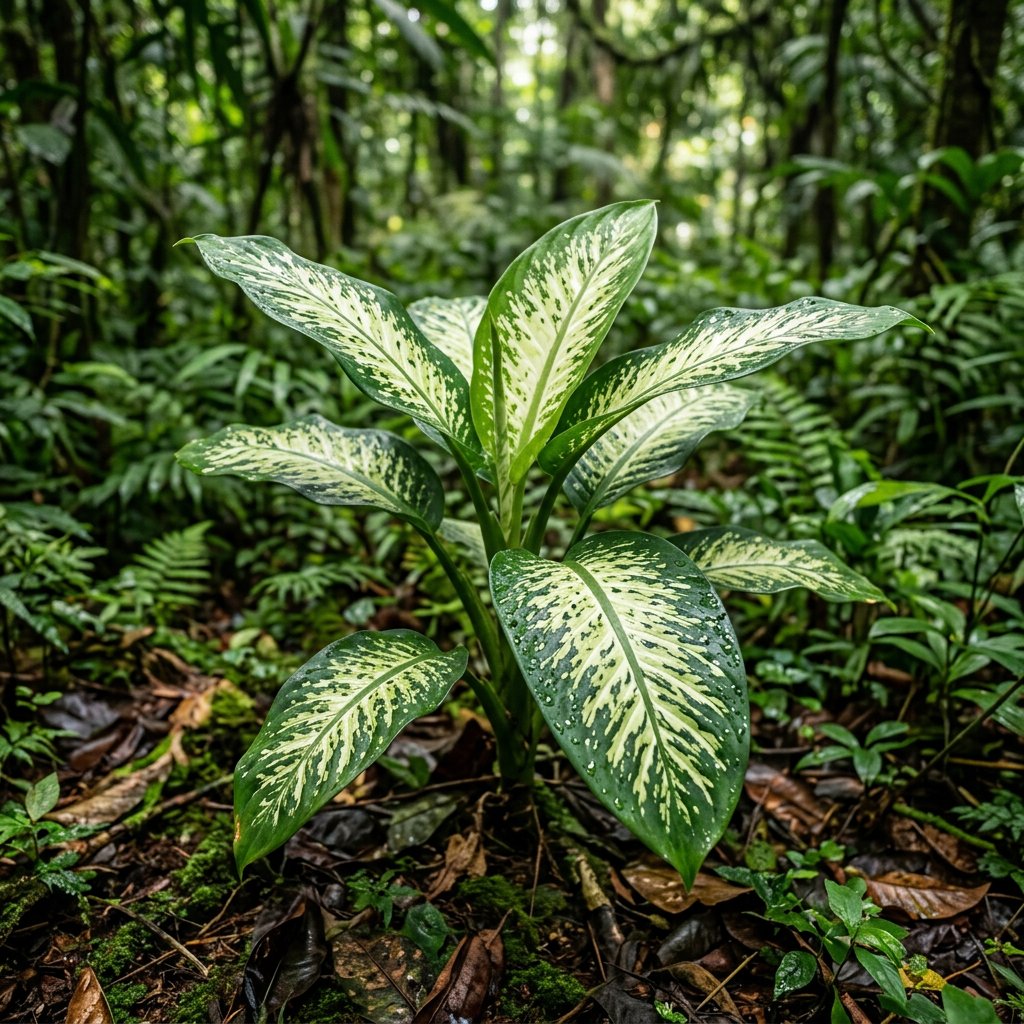
Plant Overview
Often called the Dumb Cane or Leopard Lily, Dieffenbachia maculata is a tropical showstopper known for its broad, "painted" leaves. Native to the lush rainforests of Central and South America, it brings a dramatic, architectural feel to any indoor space. It is a favorite for beginners who want a "big impact" plant that feels like a piece of living art.
🔍 How to Identify
- 🍃 Leaf Pattern: Large, oblong leaves splashed with irregular, marbled patterns of cream, white, or pale green against a deep emerald background.
- 📏 Growth Habit: It grows upright on thick, succulent-like stalks that resemble bamboo or canes as the plant matures and sheds lower leaves.
- ✨ Texture: The leaves have a smooth, matte-to-waxy finish and can grow up to 12 inches long, creating a dense, bushy canopy.
🏡 In Your Garden
- 💧 Humidity Lover: Because it hails from the tropics, it thrives in high humidity. If the leaf tips turn brown and crispy, it’s often a "cry for help" for a pebble tray or a nearby humidifier.
- ☀️ Variegation Needs: While it is tolerant of low light, its beautiful white patterns will fade to solid green if it spends too much time in the dark. However, avoid direct afternoon sun, which can "bleach" or burn the delicate foliage.
- 🪴 The Aging Process: It is natural for the bottom-most leaves to yellow and drop. This reveals the "cane" beneath, giving the plant a miniature palm-tree aesthetic over time.
⚠️ Safety & Toxicity
- 🚫 High Toxicity: This plant is considered toxic to humans, cats, and dogs if any part of it is ingested.
- 👅 The "Dumb" Effect: It contains raphides—needle-like calcium oxalate crystals. If chewed, these cause intense stinging and swelling of the mouth and throat, which can lead to a temporary loss of speech.
- 🧤 Skin Irritant: The milky sap can cause itchy rashes or eye irritation. It is best to wear gloves when pruning or taking cuttings.
✨ Fun Fact
The nickname "Dumb Cane" isn't just a quirky label; it’s a literal description of the plant's effect. Historically, the plant was sometimes used as a cruel form of punishment because the swelling it causes in the mouth prevents a person from speaking for several days!

Detailed Care Instructions
To grow a Dieffenbachia Maculata plant, also known as a Dumb Cane plant, follow these steps:
- Selecting a suitable location: Choose a location in your home that receives bright, indirect sunlight. These plants can tolerate lower light conditions, but they thrive in brighter areas. Avoid placing them in direct sunlight, as this can scorch the leaves.
- Temperature and humidity: Maintain a temperature range of 60-85°F (15-29°C) for optimal growth. These plants prefer high humidity levels, so consider placing a humidifier nearby or misting the leaves regularly to create a humid environment.
- Potting: Use a well-draining potting mix to ensure that excess water can drain easily. A mixture of peat moss, perlite, and sand is ideal. Choose a pot that is slightly larger than the current root ball, leaving some room for growth.
- Watering: Keep the soil consistently moist but not soggy. Check the moisture level by sticking your finger about an inch into the soil; if it feels dry, it's time to water. Avoid overwatering, as this can lead to root rot.
- Fertilizing: Feed your Dieffenbachia Maculata plant with a balanced, water-soluble houseplant fertilizer every 4-6 weeks during the growing season (spring and summer). Follow the instructions on the fertilizer packaging for proper dosage.
- Pruning: Regularly remove any yellowing or dead leaves to maintain the plant's health and appearance. Additionally, you can prune the plant to control its size and shape. Use sterile pruning shears to prevent the spread of diseases.
- Propagation: You can propagate Dieffenbachia Maculata plants through stem cuttings. Cut a section of healthy stem, with several leaves attached, just below a node. Place the cutting in a jar of water, ensuring that at least one node is submerged. After a few weeks, roots will develop, and you can transfer the cutting to a pot with potting soil.
- Pests: Monitor your plant for common pests like spider mites, mealybugs, and scale insects. If you notice any infestation, treat it immediately with an appropriate pesticide or insecticidal soap, following the instructions on the product label.
Remember to handle Dieffenbachia Maculata plants with caution, as their sap can cause skin irritation and is toxic if ingested. Wear gloves while handling and keep them away from children and pets.

Place in a window with dappled sun or a spot in the middle of a room. Or directly in a window facing west or east.

When watering this plant, it is important to ensure that the soil is moist but not waterlogged. Before watering, make sure to check the top inch of soil to see if it's dry. If it is, water the plant thoroughly, allowing water to flow out of the drainage holes at the bottom of the pot. Avoid letting the plant sit in standing water as this can lead to root rot.
In terms of frequency, the watering schedule will vary depending on the environmental conditions and size of the plant. Generally, Dieffenbachia Maculata plants should be watered every 7-10 days, but this can be adjusted based on the season and humidity levels. It's better to underwater than overwater, as this plant can be sensitive to overly wet soil.
If the plant is kept in a particularly dry environment or if the leaves begin to droop, misting the plant can help increase humidity levels and keep the leaves hydrated.
To fertilize this plant, use a balanced fertilizer with equal amounts of nitrogen, phosphorus, and potassium. Apply the fertilizer once every two to three weeks during the growing season, which is typically spring and summer. It is important not to over-fertilize as this can damage the plant. Dilute the fertilizer in water according to the package instructions and apply it to the soil around the base of the plant. Water the soil thoroughly after fertilizing. During the dormant season, which is typically fall and winter, it is not necessary to fertilize the plant.
When planting the aforementioned plant, it is best to use a loose and well-draining potting mix. The mixture should consist of organic matter, such as peat moss or compost, and perlite or vermiculite to ensure proper drainage and aeration. It is also important to ensure that the soil is slightly acidic, with a pH level between 5.5 and 6.5. This can be achieved by adding sulfur or aluminum sulfate to the soil mix. The plant should be planted at the same depth as it was previously in its pot, and the soil should be lightly compacted around the base of the plant. When watering the plant, it is important to allow the soil to dry out slightly between waterings to prevent overwatering and root rot. It is recommended to fertilize the plant regularly with a balanced fertilizer, following the instructions on the packaging.
To propagate this plant, you will need to take a healthy stem cutting from the parent plant. The stem should be about 6-8 inches in length and have at least two leaves attached. You should make the cut just below a node, which is where the leaves are attached to the stem.
After you have taken the cutting, you should remove the bottom leaves and any flowers or buds. This will help the plant put more energy into growing roots instead of trying to support these other parts.
Next, you will need to prepare a pot with well-draining soil. Make a hole in the soil with your finger or a pencil and insert the stem cutting. You should bury it deep enough so that at least one node is covered with soil.
Water the soil well and place the pot in a location with bright, indirect sunlight. You should continue to water the soil regularly, but avoid over-watering as this can lead to root rot.
After several weeks, you should start to see new growth on the cutting. Once the plant has established a good root system and has grown several new leaves, you can transplant it into a larger pot or into your garden.
Common pests of the tuftroot include Mealybugs, spider mites, thrips. Make a habit of checking your tuftroot frequently for pests so that any infestations can be caught and managed early.







