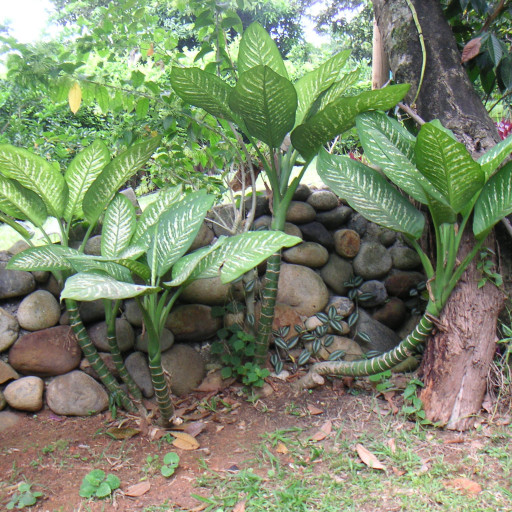
Plant Overview
Commonly called "Dumb Cane" or "Leopard Lily," the Dieffenbachia is a tropical showstopper beloved for its oversized, painterly leaves. Native to the lush rainforests of Central and South America, it has been a staple in indoor gardens since the Victorian era. It is famous not just for its dramatic patterns, but for a unique biological defense mechanism that gives it its notorious nickname.
🔍 How to Identify
- 🍃 Lush Foliage: Large, broad, oblong leaves that can grow over a foot long. They often have a waxy or velvety texture depending on the specific cultivar.
- 🎨 Variegation Patterns: Most varieties feature deep green borders with striking creamy-white or yellow splashes, spots, or "feathering" through the center.
- 🎋 Cane-Like Stems: As the plant matures, the lower leaves naturally drop, revealing a thick, succulent-like stalk that resembles bamboo or sugar cane.
🏡 In Your Garden
- ☁️ Light & Leaf Health: While it loves bright, indirect light, its variegated leaves act like sensitive solar panels. Too much direct sun will scorch the white patches, while too little light will cause the plant to lose its vibrant patterns and turn solid green.
- 💧 Moisture Balance: Dieffenbachia prefers to stay "consistently moist but never soggy." Because it stores some water in its thick stems, it is prone to root rot if left in standing water; it appreciates a pot that breathes and well-draining soil.
- 🌡️ Tropical Vibes: This plant is a true tropical and will react poorly to cold drafts or AC vents. It thrives in high humidity—mimicking the jungle floor—so it will thank you for an occasional misting or a pebble tray.
⚠️ Safety & Toxicity
- 🚫 Status: High Toxicity (Contains Calcium Oxalate Crystals).
- 👅 The "Dumb Cane" Effect: The plant’s cells contain microscopic, needle-shaped crystals called raphides. If any part of the plant is chewed, these needles "shoot" into the tissues of the mouth and throat, causing immediate swelling, intense pain, and a temporary loss of speech.
- 🐾 Pets & Kids: This plant should be kept on high shelves or in rooms inaccessible to curious pets and toddlers. The sap can also cause skin irritation or rashes, so it is best to wear gloves when pruning or taking cuttings.
✨ Fun Fact
- 🏛️ Royal Roots: The genus was named in the 1830s to honor Joseph Dieffenbach, the head gardener of the Royal Botanical Gardens at Schönbrunn Palace in Vienna. He was the personal gardener to the Austrian Emperor and was responsible for introducing many tropical species to European greenhouses.

Detailed Care Instructions
| Humidity | High |
| Lighting | Part Sun |
| Toxicity | Poisonous |
| Difficulty | Medium |
| Hibernation | Cold Period |
| Temperature | 18°C - 25°C |
| Hardiness Zones | 11A - 12B |
To grow Dieffenbachia plants successfully, follow these steps:
- Choose a suitable location: Select an area where the plant can receive bright, indirect sunlight. It should not be exposed to direct sunlight as it may scorch the leaves.
- Optimal temperature and humidity: Dieffenbachia plants prefer temperatures between 60-75°F (15-24°C) during the day and slightly lower at night. They also require high humidity levels of around 50-60%.
- Watering: Keep the soil consistently moist but not waterlogged. Water the plant when the top inch of soil feels dry. Ensure proper drainage and avoid standing water, as it can lead to root rot.
- Fertilizing: Use a balanced, water-soluble fertilizer every 4-6 weeks during the growing season (spring and summer). Follow the instructions on the fertilizer packaging for dosage and application.
- Pruning: Regularly remove any yellow or wilted leaves to maintain plant health and appearance. Trim leggy stems to promote bushier growth.
- Repotting: When the plant outgrows its pot, repot it into a slightly larger container with fresh, well-draining soil. This is usually necessary every 1-2 years.
- Propagation: Dieffenbachia plants can be propagated through stem cuttings. Take a 4-6 inch section of a stem with a few leaves, dip it in rooting hormone, and plant it in a moist potting mix. Keep the soil consistently moist until new growth appears.
- Common issues and care tips:
a. Yellow leaves: Overwatering or low humidity can cause yellowing of leaves. Adjust watering and increase humidity levels.
b. Brown leaf tips: This can indicate dry air or inconsistent watering. Mist the leaves regularly and ensure proper watering.
c. Pests: Inspect the foliage regularly for signs of pests such as mealybugs or spider mites. Use appropriate insecticides or soaps to control them.
Following these guidelines will help promote healthy growth and lush foliage for your Dieffenbachia plant.

Place in a window with dappled sun or a spot in the middle of a room. Or directly in a window facing west or east.

To water this plant, you should check the soil's moisture level regularly before watering. Stick your finger about an inch deep into the soil. If the soil feels dry, it's time to water. When watering, pour water slowly and evenly into the soil, allowing it to soak in. Avoid getting water on the leaves as it can cause damage. Wait until the soil has drained and empty the saucer underneath the pot of any excess water. Water once every 5-7 days, depending on the humidity and temperature of the plant's environment.
To fertilize this plant, you should use a balanced houseplant fertilizer. Mix the fertilizer at half strength and apply it every two weeks during the growing season, which is typically spring and summer. Reduce fertilization to once a month during the fall and winter months. Avoid over-fertilizing as it can cause leaf burn and other damage. Ensure that the soil is moist before fertilizing to prevent root burn.
When selecting a soil for your Dieffenbachia plant, opt for a well-draining soil mix that is slightly acidic in pH. It should be a blend of organic matter, such as peat moss or compost, and coarse sand or perlite. The pH of the soil should be around 5.5-6.5. The soil should be able to retain moisture, but not be too compact to prevent drainage issues. Avoid using heavy clay soils or soils that may retain too much water, as this can lead to root rot.
To propagate this plant, you will need to take a stem cutting from a mature and healthy plant. Choose a stem that is at least 6 inches long and has several leaves on it. Cut the stem just below a leaf node using a sharp and clean pair of scissors. Remove the lower leaves from the stem, leaving only a few at the top. Dip the cut end of the stem into rooting hormone powder to help it root faster. Plant the stem cutting in a pot filled with moist, well-draining soil. Cover the pot with a plastic bag to create a humid environment and place it in a spot with indirect sunlight. Water the soil lightly and regularly to keep it moist but not waterlogged. After a few weeks, check for signs of new growth, which means the cutting has rooted successfully. Gradually remove the plastic bag and expose the new plant to more light. Once it has a few new leaves, you can transplant it into a larger pot or into the garden.







