Plant Overview
Known affectionately as the "Large Wild Iris" or the "Fairy Iris," this South African native is the undisputed "iron lady" of the garden. It bridges the gap between delicate floral beauty and rugged survivalist, making it a staple for both beginner gardeners and professional landscapers. In folklore, these flowers are often said to appear in mass "bursts" to signal the coming of rain or shifts in the season.
🔍 How to Identify
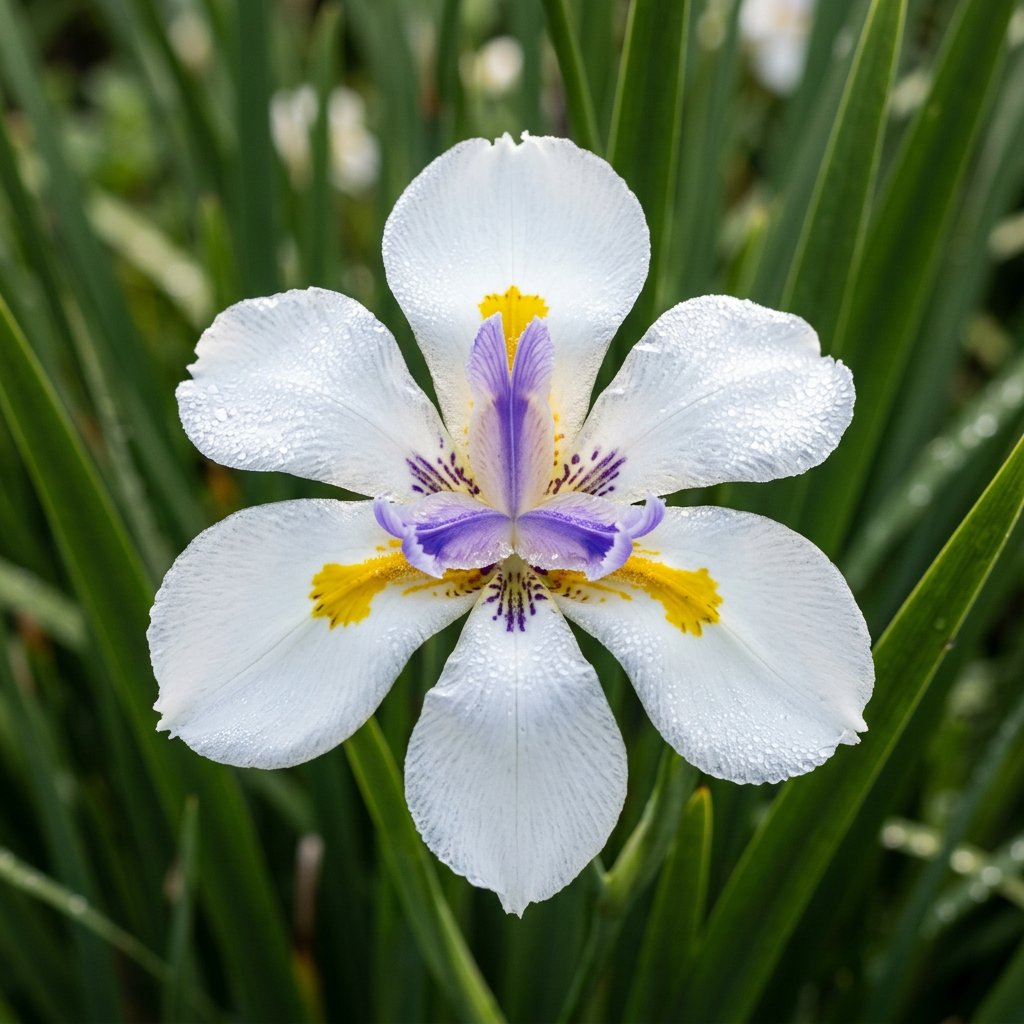
- 🌸 The Bloom: Large, three-petaled white flowers marked with three distinct yellow "nectar guides" and soft violet-mauve centers that look like tiny landing strips for bees.
- 🍃 The Foliage: Stiff, dark green, sword-shaped leaves that grow in a fan-like clumping habit, providing a structural, grassy look even when the plant isn't blooming.
- 🌱 The Stalks: Long, wiry flower stems that arch above the foliage. A key ID tip: never cut these stalks down to the ground after the flower fades, as they will produce new buds from the same spot for several years!
🏡 In Your Garden
- 🏗️ Mass Planting Power: Because of its clumping nature, this iris is the "architect" of the garden. It is perfect for erosion control on slopes or for creating a lush, green border along a fence or driveway where thinner plants might get crushed.
- ☀️ Sun Adaptability: While it thrives in full sun, it is surprisingly tolerant of "bright shade." In hotter climates, a bit of afternoon shade actually helps the white petals stay crisp and prevents them from "scorching" at the edges.
- 💧 Drought Resilience: Once its fleshy rhizomes (underground stems) are established, the plant becomes incredibly water-wise. It stores energy and moisture below ground, allowing it to survive long dry spells that would wither other flowering perennials.
⚠️ Safety & Toxicity
- 🐾 Mildly Toxic: Like most members of the Iridaceae family, the plant contains compounds that can be irritating. The rhizomes (roots) are the most concentrated source of toxins.
- 🤢 Symptoms: If ingested by dogs, cats, or curious toddlers, it can cause salivation, lethargy, and upset stomachs. The sap can also cause minor skin irritation for those with sensitive skin, so wearing gloves while dividing the clumps is a smart move.
✨ Fun Fact
The Dietes grandiflora is often nicknamed the "Fortnight Lily." This is because the plant tends to bloom in synchronized cycles—often with a two-week (fortnight) rest period between each spectacular flush of flowers!

Detailed Care Instructions
To grow Dietes Grandiflora plant, follow these steps:
- Select a suitable location: Choose a spot that receives full sun to partial shade. The plant can tolerate a wide range of soil types but prefers well-draining soil.
- Prepare the soil: Loosen the soil and amend it with organic matter to improve drainage and nutrient content.
- Propagation: The plant can be propagated through seeds or division. If using seeds, plant them in pots or trays filled with seedling mix. Keep the soil moist and place the container in a warm area until germination occurs. If dividing, carefully separate the clumps and replant them in prepared soil.
- Planting: Dig a hole in the prepared soil that is deep and wide enough to accommodate the plant's roots. Place the plant in the hole and backfill with soil, firming it gently around the roots.
- Watering: Water the newly planted Dietes Grandiflora thoroughly to help settle the soil. Afterward, water regularly, especially during dry spells. However, avoid overwatering as the plant is drought-tolerant.
- Mulching: Apply a layer of organic mulch around the plant to help conserve moisture, suppress weeds, and regulate soil temperature.
- Fertilizing: Apply a slow-release, balanced fertilizer in early spring to promote healthy growth. Follow the manufacturer's instructions for proper application.
- Pruning: Remove spent flowers and damaged or dead leaves to keep the plant tidy and encourage new growth.
- Pests and diseases: Dietes Grandiflora is generally resistant to pests and diseases. However, keep an eye out for snails, slugs, or aphids. Treat if necessary using appropriate organic pest control methods.
- Winter care: In areas with freezing temperatures, protect the plant by covering it with a layer of mulch or relocating it indoors during winter.
By following these steps, you can successfully grow Dietes Grandiflora and enjoy its beautiful flowers and resilient foliage.

Place in a window with dappled sun or a spot in the middle of a room. Or directly in a window facing west or east.

To water this plant effectively, it is important to make sure the soil is evenly moist, but not waterlogged. One way to achieve this is to wait until the top inch of soil feels dry to the touch before watering, and then thoroughly water the plant until the water begins to drain out of the bottom of the pot or through the soil in the garden bed. It is also important to avoid getting water on the leaves, as this can increase the risk of fungal disease. If the plant is in a container, it may need to be watered more frequently than if it is planted in the ground, as containers tend to dry out more quickly.
To encourage strong growth and healthy blooms, feed this plant with a balanced fertilizer during the growing season. Apply the fertilizer according to the manufacturer's instructions, and make sure to water the plant well before and after fertilizing. Avoid over-fertilizing, as this can harm the plant.
When planting this plant, it is recommended to use a well-draining soil that is enriched with organic matter. The soil should have a slightly acidic to neutral pH level, ideally between 6.0 to 7.0. It is important to ensure that the soil is able to hold moisture, but is not too waterlogged as this can cause root rot. This plant can also tolerate some drought, so it may be beneficial to mix in some coarse sand or perlite to enhance drainage. Avoid using heavy clay soils or those that are too compacted.
To propagate this plant, you will need to locate an established plant that has young offsets or rhizomes. Carefully dig around the base of the plant and gently lift the offsets from the soil. Using a sharp, sterile knife, separate the offsets from the parent plant. Each offset should have its own set of roots.
Next, prepare a pot or planting bed with well-draining potting soil. Place the offset into the soil, making sure that the roots are covered with soil and that the plant is positioned at the same soil level as it was when it was growing with the parent plant. Water the newly planted offset thoroughly and place it in a spot with partial shade and well-draining soil.
Keep the soil lightly moist but not waterlogged. After a few weeks, the plant should begin to establish roots and start to grow. Continue to water and care for the plant as it grows, taking care not to overwater. With proper care, the new plant should thrive and eventually produce its own offsets, allowing you to propagate it further.








