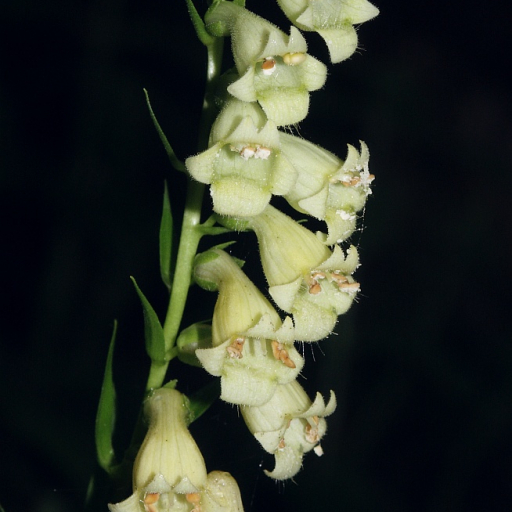
Plant Overview
Often called the Straw Foxglove, Digitalis lutea is the more refined, sophisticated cousin of the common garden foxglove. While most foxgloves demand center stage with loud, speckled colors, this woodland beauty offers a soft, creamy-yellow glow that brightens the darker corners of a garden. It is a hardy perennial that brings an air of "wild elegance" to any landscape.
🔍 How to Identify
- 🌼 The Flowers: Unlike the large, spotted bells of other species, these flowers are small, narrow, and a pale straw-yellow. They are typically unspotted inside and hang gracefully from one side of the slender stem.
- 🍃 The Foliage: The leaves are dark green, hairless (glabrous), and lance-shaped. They form a neat basal rosette that stays low to the ground before the flowering spike shoots upward.
- 📏 The Stature: It is much slimmer and shorter than the common Purple Foxglove, usually reaching about 2 to 3 feet in height, making it less likely to flop over in the wind.
🏡 In Your Garden
- 🌲 Woodland Preference: This plant is a "specialist" for dappled shade. Because it originated in the cool forests of Europe, it thrives in soil that is rich in leaf mold and organic matter. It hates "wet feet" in the winter, so well-draining soil is a must.
- 🐝 Bumblebee Favorite: The narrow shape of the bells is perfectly evolved for long-tongued bees. It is a fantastic choice for a pollinator garden, providing a reliable nectar source in the late spring and early summer.
- 🌱 Long-Lived Nature: While many foxgloves are biennial (living only two years), Digitalis lutea is a true perennial. It will stay in your garden for years, slowly forming a larger clump without aggressively taking over.
⚠️ Safety & Toxicity
- 🚫 Extremely Toxic: Every part of this plant—from the roots to the seeds—is highly poisonous if ingested. It contains cardiac glycosides that can cause severe heart distress.
- 🐾 Vulnerable Groups: Keep this plant away from curious pets, livestock, and small children. Even the water in a vase containing these cut flowers can become toxic enough to be dangerous if swallowed.
- 🧤 Handling: It is best to wear gloves when pruning or handling the plant, as some individuals may experience skin irritation from the foliage.
✨ Fun Fact
The genus name Digitalis refers to the Latin word for "finger," because the flowers are the perfect shape to be used as "Fairies' Thimbles." In folklore, it was said that foxes wore the bells on their paws to silence their movements while hunting in the woods!

Detailed Care Instructions
To successfully grow Digitalis lutea (also known as Yellow Foxglove), follow these steps:
- Choose a location: Select a spot with well-draining soil that receives partial shade to full sun. The soil should be fertile and slightly acidic (pH 5.0-7.0).
- Soil preparation: Prepare the soil by loosening it and removing any weeds. Consider adding organic matter, such as compost, to improve its fertility and drainage.
- Planting: Sow the seeds in late spring or early summer, as they require a period of cold stratification to germinate. Either sow the seeds directly in the ground or start them indoors 10-12 weeks before the last frost date. Plant the seeds at a depth of approximately 1/8 inch and space them about 12-18 inches apart.
- Watering: Keep the soil consistently moist but not waterlogged during the germination and seedling stages. Once established, Digitalis lutea is quite drought-tolerant and may only require watering during prolonged dry periods.
- Mulching: Apply a layer of organic mulch, such as straw or wood chips, around the base of the plants. This will help retain moisture, regulate soil temperature, and suppress weed growth.
- Fertilizing: Digitalis lutea generally doesn't require heavy feeding. However, you can apply a balanced, slow-release fertilizer in the spring to provide some nutrients.
- Support: Depending on the variety and height of the plants, some may benefit from staking or other forms of support to prevent them from bending or breaking in windy conditions.
- Pruning: Remove any dead or yellowed leaves to keep the plants tidy and avoid potential disease problems. After flowering, cut back the flower stalks to promote better plant health and encourage the growth of new foliage.
- Pests and diseases: Digitalis lutea is generally less susceptible to pests and diseases compared to its biennial relatives. However, keep an eye out for common garden pests like aphids or snails, and treat accordingly. Provide adequate airflow to prevent fungal diseases.
- Propagation: Digitalis lutea can be propagated by seed or division. Seeds can be collected from mature plants or purchased from reputable suppliers. To divide the plant, carefully lift and separate the clumps of the plant in early spring or late summer.
Remember to check your local gardening regulations, as Digitalis lutea may be considered invasive in some areas.

Place in a bright room that is sun drenched almost all day. Or directly in a south-facing window.

To water this plant, it is important to provide it with a consistent level of moisture. This can be achieved by watering it deeply once a week, allowing the water to soak in well before giving it more. The soil should be kept moist but not waterlogged, as this can lead to root rot. It's also important to make sure the plant is not sitting in standing water. During hot or dry weather, the plant may require more frequent watering. When watering, try to avoid getting water on the leaves as this can lead to fungal diseases. Finally, be sure to use room temperature water as extreme temperatures can shock the plant.
- Choose a balanced fertilizer with equal parts nitrogen, phosphorous, and potassium.
- Apply the fertilizer in the spring when the plant starts growing actively.
- Use a small amount of fertilizer and avoid over-fertilizing as it can harm the plant.
- Sprinkle the fertilizer around the base of the plant, ensuring it is distributed evenly.
- Water the plant thoroughly after fertilizing to help the nutrients sink in and reach the roots.
- Repeat this process once a month during the growing season to promote healthy growth and blooms.
- In the fall, stop fertilizing the plant as it enters a dormant phase.
Digitalis Lutea is a plant that prefers well-draining soil that is slightly acidic to neutral. The ideal soil mixture should be loamy and rich in organic matter to provide nutrients for healthy plant growth. Adding perlite or sand can increase soil drainage and prevent waterlogging, ensuring healthy root growth. It is important to avoid using heavy clay soils that may cause waterlogging and root rot. A pH range of 5.5 to 7.0 is ideal for Digitalis Lutea plant growth. Soil should be moist but not too wet, as the plant is sensitive to overwatering. A balanced NPK fertilizer can also be added to the soil to provide necessary nutrients for healthy plant growth.
To propagate this plant, you will need to obtain some seeds or take cuttings from a mature plant. If you are taking cuttings, choose a healthy stem that is at least 4-6 inches long and has several leaves.
If you are using seeds, sow them in a pot filled with a mixture of soil, sand, and peat moss. Keep the soil moist and place the pot in a warm and bright location.
For cuttings, remove the leaves from the lower half of the stem and dip the cut end in rooting hormone powder. Plant the cutting in a pot filled with a mixture of soil and sand and keep the soil moist. Place the pot in a warm and bright location and wait for the cutting to develop roots.
Once the roots have developed, you can transplant the seedling or cutting into a larger pot or directly into the garden. Water the plant regularly and provide it with partial shade if it is growing in hot and sunny conditions.








