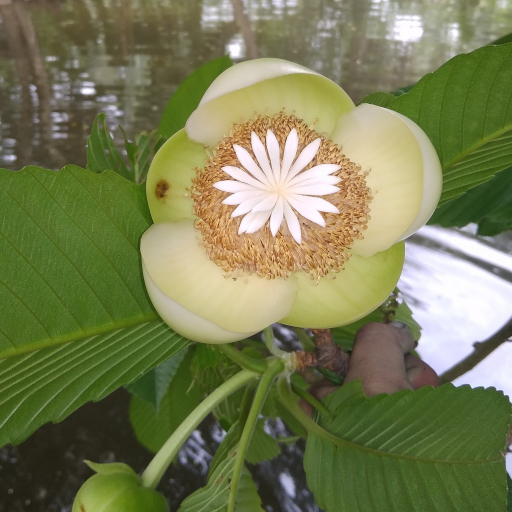
Plant Overview
Known widely as the Elephant Apple or Chulta, Dillenia indica is a stately evergreen tree that looks like it stepped straight out of a prehistoric jungle. Native to the tropical forests of Southeast Asia, it is beloved for its massive, fragrant flowers and its hard, "armored" fruit. In many cultures, particularly in India, the fruit is a staple ingredient for tangy pickles and savory curries.
🔍 How to Identify
- 🍃 Ribbed Foliage: The leaves are large, bright green, and have very prominent, parallel veins that create a "corduroy" or pleated texture. The edges are sharply serrated like a saw.
- 🌸 Ghostly Blooms: It produces magnificent white flowers that can reach 8 inches across. They have five thick petals surrounding a crown of yellow stamens, though they typically only last for a single day.
- 🍏 Armor-Plated Fruit: Unlike typical soft fruits, the Elephant Apple is actually a cluster of thickened, fleshy sepals that wrap tightly around the seeds to form a hard, greenish-yellow globe.
🏡 In Your Garden
- 💧 Thirst for Humidity: This tree is naturally found along riverbanks and in swampy lowlands. If you are growing one, it thrives in rich, moist soil and will struggle in arid environments without significant supplemental misting or irrigation.
- 🌳 Space Requirements: While it can be started in a large pot, the Elephant Apple is a medium-to-large tree. It needs a spacious spot where its spreading canopy can provide deep shade without crowding out other sun-loving plants.
- 🌡️ Warmth is Key: Being a true tropical, it has zero tolerance for frost. It prefers a "perpetual summer" and will drop its leaves or suffer dieback if temperatures dip too low.
⚠️ Safety & Toxicity
- ✅ Safe & Edible: The fruit is non-toxic to humans and is frequently used in Asian cuisine. However, it is extremely sour and fibrous; it is rarely eaten raw and is best enjoyed cooked or preserved.
- 🐾 Pet Friendly: There are no known toxic effects for cats or dogs, though the large, hard fruits could pose a minor "falling hazard" if a pet is lounging directly beneath the tree during harvest season!
✨ Fun Fact
The tree gets its name because wild elephants are obsessed with the fruit! Because the outer shell is so tough, elephants are one of the few animals strong enough to crunch them open, making them the primary seed dispersers for the species in the wild.

Detailed Care Instructions
To grow Dillenia Indica, also known as Elephant Apple, follow these steps:
- Climate and soil conditions: Dillenia Indica prefers a warm tropical climate with temperatures between 20-30°C (68-86°F). It grows well in full sun or partial shade. The soil should be well-draining, rich in organic matter, and slightly acidic with a pH level around 5.5-6.5.
- Seeds: Obtain Dillenia Indica seeds from a reputable source. Fresh seeds have higher chances of germination. Soak the seeds overnight in water to boost their germination rate.
- Seed preparation: Before planting, scarify the seeds to break the hard seed coat. This process can be done by lightly filing or nicking the seed coat with a small knife. Be careful not to damage the inner seed.
- Planting: Fill pots or seed trays with well-draining potting mix. Plant the scarified seeds about 1 cm deep in each pot or tray. Water thoroughly after planting.
- Germination: Place the pots or trays in a warm location with indirect sunlight. Keep the soil consistently moist but not soggy. Germination can take anywhere from 2-8 weeks, so be patient.
- Transplanting: Once the seedlings have developed a few sets of true leaves, they can be transplanted into larger pots or directly into the ground. Choose a location with adequate sunlight and enough space for the growing plant.
- Watering: Keep the soil consistently moist, especially during the growing season. However, avoid overwatering as it can cause root rot. Allow the topsoil to dry out slightly between waterings.
- Fertilizer: Regularly feed the plant with a balanced slow-release fertilizer or organic fertilizers during the growing season. Follow the instructions on the fertilizer packaging for application rates.
- Pruning: Prune the plant to remove any dead, damaged, or diseased branches. This will encourage healthy growth and maintain a desirable shape.
- Pest control: Monitor the plant for pests like aphids, mealybugs, or caterpillars. If infestations occur, use organic or chemical insecticides as needed.
- Harvesting: Dillenia Indica usually fruits after 4-5 years. Harvest the mature fruits when they turn yellowish-green and become soft to touch. The fruit is edible and often used in culinary preparations.
Remember, growing Dillenia Indica requires patience and proper care. Monitor the plant regularly, provide adequate water and sunlight, and protect it from extreme weather conditions to ensure healthy growth.

Place in a bright room that is sun drenched almost all day. Or directly in a south-facing window.

To water this plant, make sure soil in the pot is evenly moist. Check the soil every few days by sticking your finger into it about an inch deep. If the soil feels dry, it's time to water. When watering, use a watering can or hose with a gentle stream to avoid disturbing the plant's roots or soil. Water the plant until you see water dripping from the drainage holes at the bottom of the pot. Avoid over-watering, as this can cause root rot. Depending on the temperature and humidity in your space, you may need to water your plant more or less frequently.
To fertilize this plant, use a balanced fertilizer with an NPK ratio of 8-8-8 or 10-10-10. Apply the fertilizer once in early spring before new growth appears and again in mid-summer. Use a granular fertilizer and apply it evenly around the base of the plant. Water the plant thoroughly after fertilizing. Avoid overfertilizing as it can cause damage to the plant.
Dillenia Indica plant prefers well-drained soil with acidic to slightly alkaline pH range. It should contain a mix of organic matter, sand, and clay in equal amounts. The soil should have good water retention capacity, but it should not be waterlogged. The plant thrives in loamy and sandy soil, but it is adaptable to a wide range of soil types, including clayey soils. The soil should be rich in nutrients and minerals, including nitrogen, phosphorus, potassium, and calcium. The plant can tolerate soil salinity to some extent, but it grows best in non-saline soils. The soil should be free from weeds, pests, and diseases to prevent any damage to the plant. Regular soil testing and amendment are recommended to maintain optimal soil conditions for the plant.
To propagate this plant, take a cutting from a healthy mature stem in early spring or summer, choosing a stem that is at least 6 inches long. Remove the bottom leaves from the stem, leaving a few leaves at the top. Dip the cut end of the stem in rooting hormone and plant it in a container filled with well-draining soil mix. Keep the soil moist and place the container in a bright but indirect light. After a few weeks, new growth will appear, indicating that the cutting has rooted successfully. Once the roots have developed, the young plant can be transplanted into a larger pot or directly into the ground.








