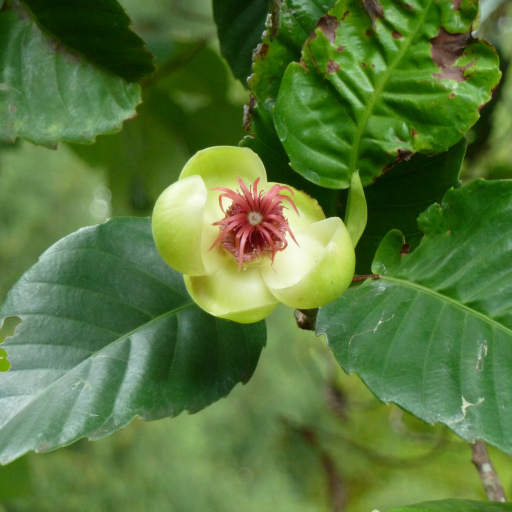
Plant Overview
Often called the Katmon or the Philippine Elephant Apple, this stunning evergreen tree is a crown jewel of the Philippine archipelago. It is famous for its "fried-egg" flowers—large, snowy white petals surrounding a dramatic crown of purple stamens. Beyond its beauty, it is a staple in local kitchens, where its sour, refreshing fruit is used to flavor traditional broths and sauces.
🔍 How to Identify
- 🍃 Saw-Toothed Leaves: The leaves are thick, leathery, and dark green, featuring very prominent parallel veins and distinctive "toothed" or serrated edges.
- 🌸 Architectural Flowers: It produces large, showy white flowers (up to 6 inches wide) with a striking center of red and purple filaments that resemble a burst of color.
- 🍏 Spherical Fruit: The fruit is round and green, encased in fleshy, overlapping "sepals" that look like scales. Inside, the pulp is arranged in a beautiful, natural spiral.
🏡 In Your Garden
- 🌱 Root Stability: The Katmon develops a sturdy, deep root system. This makes it an excellent choice for preventing soil erosion, but it also means it resents being moved once it reaches a certain height.
- 💧 Tropical Humidity: Being a rainforest native, it thrives in high humidity and consistent moisture. While it can tolerate some drought once mature, young trees need a regular "monsoon-like" watering schedule to prevent leaf browning.
⚠️ Safety & Toxicity
- ✅ Safe & Edible: The Katmon is non-toxic to humans. In fact, the fruit is a rich source of Vitamin C and is widely used for juices and jams.
- 🐾 Pet Note: While not poisonous to cats or dogs, the fruit is extremely acidic. If a curious pet eats a fallen fruit, they might experience a temporary upset stomach or drooling due to the sourness.
✨ Fun Fact
The Katmon fruit is so iconic in its native land that it was featured on the Philippine 25-centavo coin! It is often called a "living fossil" because the Dillenia genus belongs to one of the oldest lineages of flowering plants.

Detailed Care Instructions
To grow Dillenia Philippinensis plants, follow these steps:
- Choose the right location: Select a spot that receives partial shade to full sun. This plant thrives in tropical to subtropical climates, so ensure the temperature doesn't drop below 50°F (10°C).
- Prepare the soil: The soil should be well-draining, rich in organic matter, and slightly acidic to neutral (pH 5.5-7). If the soil is heavy clay, amend it by adding organic compost or sand to improve drainage.
- Planting: Dig a hole that is slightly larger than the root ball of the plant. Place the plant in the hole, ensuring that the top of the root ball is level with or slightly above the soil surface. Backfill the hole with soil and gently pat it down to remove any air pockets.
- Watering: Water the plant thoroughly after planting to settle the soil and ensure the roots make good contact with it. For the first few weeks, keep the soil consistently moist but not waterlogged. Once established, water deeply but infrequently, allowing the top inch of soil to dry out between waterings.
- Mulching: Apply a layer of organic mulch around the base of the plant to help retain soil moisture, suppress weed growth, and improve soil fertility. Ensure the mulch is kept a few inches away from the stem to prevent rot.
- Fertilizing: Feed the plant with a balanced, slow-release fertilizer in spring and early summer. Follow the instructions on the fertilizer package for dosage and application method. Avoid over-fertilizing, as it can lead to excessive foliage growth at the expense of flowering.
- Pruning: Prune Dillenia Philippinensis to maintain its shape and size. Deadhead spent flowers and trim back any damaged or overcrowded branches. Pruning can be done after the plant has finished blooming.
- Pests and diseases: Monitor the plant regularly for any signs of pests like aphids, mealybugs, or scale insects. Treat infestations promptly using organic or chemical insecticides. Also, watch out for common diseases such as powdery mildew or leaf spots. Provide good air circulation and avoid overhead watering to minimize disease risks.
- Propagation: Dillenia Philippinensis can be propagated from seeds or semi-hardwood cuttings. Collect ripe seeds from mature fruits and sow them directly in well-prepared soil. For cuttings, take a 6-8 inch piece of semi-hardwood stem, dip it in rooting hormone, and plant it in a well-draining potting mix. Keep the soil moist and place the pot in a warm, partially shaded area until roots develop.
By following these steps, you can successfully grow Dillenia Philippinensis plants. Remember to provide adequate care and monitor their growth for any issues that may arise.

Place in a bright room that is sun drenched almost all day. Or directly in a south-facing window.

Dillenia Philippinensis is a tropical plant that requires consistent watering to thrive. To water this plant, it is important to ensure that the soil is consistently moist, but not waterlogged. Watering too much can lead to root rot and other fungal infections.
The best way to water Dillenia Philippinensis is to water deeply once or twice a week, depending on the weather conditions and the size of the plant. When watering, pay attention to the soil and water the plant slowly to ensure that the water is absorbed evenly throughout the soil.
It is also important to avoid getting water on the leaves of this plant, as the excess moisture can lead to fungal growth. Instead, water the soil directly at the base of the plant.
During periods of hot weather or drought, it may be necessary to water more frequently to prevent the plant from becoming stressed. However, it is always important to avoid overwatering and to allow the soil to dry out slightly between watering.
Overall, proper watering is essential for the health of Dillenia Philippinensis, and with the right care and attention, this tropical plant can thrive in a variety of settings.
To fertilize this plant, use a balanced fertilizer with equal amounts of nitrogen, phosphorus, and potassium. Apply the fertilizer once a month during the growing season, which is from spring to autumn. Make sure to water the plant well before and after fertilizing to avoid burning the roots. Avoid over-fertilizing the plant as it can result in excessive foliage growth but reduced flower production.
The most suitable soil for Dillenia Philippinensis plant is a mixture of loamy and slightly sandy soil. The ideal pH level of the soil should be slightly acidic to neutral. The soil should have good drainage capabilities to avoid waterlogging which can cause root rot. Adding compost or organic nutrients such as decayed leaves or animal manure can improve soil fertility and promote healthy growth of the plant. It is also recommended to avoid using clay soil or soil that is too heavy as it can retain too much moisture and prevent root development. It is important to ensure that the soil is well-draining while also retaining enough moisture for the plant to grow.
Dillenia Philippinensis can be propagated via two methods: seeds and cuttings.
For seed propagation, fresh seeds harvested from mature fruits are best. The seeds should be soaked in water for 24 hours to soften the hard seed coat. Then, the seeds can be planted in a seedling tray or small pots filled with a well-draining potting mix. It's important to keep the soil moist and in a warm, humid environment until the seedlings emerge. Once the seedlings are large enough, they can be transplanted into larger pots or directly into the ground.
For cutting propagation, semi-hardwood cuttings from healthy, disease-free plants can be taken in early spring. Cuttings should be around 6-8 inches in length and should have at least two to three leaves attached to them. Remove the lower leaves and dip the cuttings in a rooting hormone, then plant in a well-draining potting mix. Keep the soil moist and in a warm, humid environment until roots develop, typically within 6-8 weeks. Once the cuttings have rooted, they can be transplanted into larger pots or directly into the ground.








