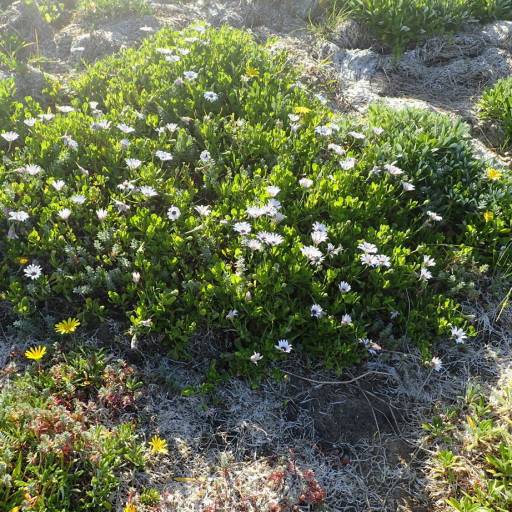
Plant Overview
Often called the Trailing African Daisy or Cape Daisy, this sun-loving beauty acts like a living carpet of stars. Native to the rugged coastlines of South Africa, it has evolved to "chase the light," opening its petals wide at dawn and tucking them away at dusk. It is a top choice for gardeners who want a resilient, fast-growing groundcover that can tumble gracefully over stone walls.
🔍 How to Identify
- 🌸 Radiant Blooms: Features large, daisy-like flowers with brilliant white petals and a deep purple or blue central disc that often has a metallic shimmer.
- 🍃 Succulent Foliage: The leaves are bright green, lance-shaped, and slightly fleshy to the touch, often with wavy or "toothed" edges.
- 🏃 Creeping Growth: Unlike upright daisies, this variety sends out long, trailing stems that root into the ground as they spread, creating a dense, weed-smothering mat.
🏡 In Your Garden
- 🌊 Coastal Warrior: Because its ancestors lived on seaside cliffs, this plant is incredibly salt-tolerant and wind-resistant. It thrives in "difficult" sandy soils where other flowers might wither.
- ☀️ The Sun Factor: Its need for bright light isn't just about growth—the flowers are phototropic, meaning they physically react to light. If planted in the shade, the blooms will stay closed and the plant will become "leggy" as it stretches toward the sun.
- ✂️ Self-Renewal: It is a vigorous grower. If it starts to look messy or "woody" in the center, a hard prune in early autumn will encourage a fresh, lush explosion of green in the spring.
⚠️ Safety & Toxicity
- 🛡️ Low Risk: Dimorphotheca fruticosa is generally considered non-toxic to humans and is not known for causing skin irritation.
- 🐾 Pet Note: While not listed as a high-hazard plant by the ASPCA, ingestion of any garden plant can cause mild gastrointestinal upset in cats or dogs. It is best to keep curious nibblers away to avoid a tummy ache.
✨ Fun Fact
The name Dimorphotheca comes from the Greek words for "two-shaped fruit." The plant is a master of survival, producing two different types of seeds from the same flower: one that is lightweight for wind travel, and another that drops straight to the ground to keep the home colony growing.

Detailed Care Instructions
To grow Dimorphotheca Fruticosa, also known as the African daisy, you can follow these steps:
- Choose a location: African daisies prefer full sun to partial shade. Make sure the area has well-draining soil.
- Prepare the soil: The soil should be loose, fertile, and well-drained. If your soil is heavy clay, add organic matter like compost to improve drainage.
- Sow seeds or plant seedlings: You can either start your Dimorphotheca Fruticosa from seeds or purchase seedlings from a nursery. Sow the seeds directly in the garden or transplant the seedlings into the prepared soil.
- Watering: Give the plant regular water to establish itself, keeping the soil moist but not waterlogged. Once established, water moderately and allow the top inch of soil to dry out between waterings.
- Fertilization: African daisies don't require much fertilization. You can apply a general-purpose fertilizer once or twice during the growing season, following the instructions on the package.
- Pruning: Deadhead the spent flowers to encourage continuous blooming and prevent the plant from self-seeding excessively. You can also trim back any leggy or overgrown stems to maintain a bushier shape.
- Disease and pest control: Dimorphotheca Fruticosa is generally resistant to pests and diseases. However, if you notice any issues, you can treat them accordingly with organic or chemical solutions.
- Mulching: Applying a layer of mulch around the plant can help retain moisture, suppress weeds, and regulate soil temperature.
- Overwintering: In colder climates, African daisies may not survive winter. Consider them as annuals or dig up and bring indoors if possible. Alternatively, you can take cuttings from the plant before the first frost and grow them indoors during winter.
- Propagation: Dimorphotheca Fruticosa can be propagated through seeds or stem cuttings. Collect seeds from mature flowers or take cuttings from healthy stems. Plant the seeds or cuttings in well-draining soil, keep them evenly moist, and provide them with bright light.
Remember to research your specific climate and growing conditions to provide the best care for your Dimorphotheca Fruticosa.

Place in a bright room that is sun drenched almost all day. Or directly in a south-facing window.

Dimorphotheca fruticosa, commonly known as the African daisy or cape marigold, is a perennial plant native to South Africa. It belongs to the family Asteraceae and is known for its vibrant, daisy-like flowers. To ensure the health and vitality of Dimorphotheca fruticosa, proper watering is crucial. Here are some guidelines to follow:
1. Know the watering requirements: Dimorphotheca fruticosa prefers moderate watering. It is essential to strike a balance between keeping the soil moist and avoiding waterlogging. Overwatering can lead to root rot, while underwatering can cause the plant to wither and die.
2. Observe the soil moisture: Before watering, check the moisture level of the soil by inserting your finger about an inch deep into the soil. If it feels dry, it is time to water the plant. If the soil feels moist, it is better to wait until it dries out slightly before watering again.
3. Watering frequency: African daisies typically require watering once or twice a week, depending on the prevailing weather conditions. In hot, dry weather, the plant may require more frequent watering, while in cooler temperatures, watering can be reduced.
4. Watering technique: To ensure water reaches the roots effectively, it is advisable to water at the soil level rather than from above. This helps prevent issues like leaf diseases and allows the roots to absorb moisture efficiently. Use a watering can or a drip irrigation system to water the plant at the base.
5. Deep watering: When watering, aim for deep penetration into the soil, allowing the water to reach the root system. Shallow watering can result in weak root development. Water the plant until you see moisture seeping out from the drainage holes at the bottom of the pot or until the soil feels adequately moistened.
6. Water quality: Dimorphotheca fruticosa prefers slightly acidic to neutral soil pH. If your tap water is heavily chlorinated or has high alkalinity, it is recommended to use filtered or distilled water.
7. Mulching: Applying a layer of organic mulch around the base of the Dimorphotheca fruticosa plant can help retain moisture in the soil and reduce evaporation, thus minimizing water loss. Mulching also helps regulate soil temperature and suppress weed growth.
Remember, these guidelines provide general information on watering Dimorphotheca fruticosa plants. Factors such as humidity, temperature, and specific soil conditions can influence the plant's watering needs. It is essential to closely monitor the plant's overall health and adjust the watering regimen accordingly.
To properly fertilize Dimorphotheca Fruticosa (refer to the plant as D.F.), follow these instructions:
- Timing: Begin fertilizing in early spring and continue throughout the growing season until late summer.
- Choose the fertilizer: Select a balanced, water-soluble fertilizer formulated for flowering plants. Look for one with equal or similar ratios of nitrogen (N), phosphorus (P), and potassium (K), such as a 10-10-10 or 20-20-20 blend.
- Dilute the fertilizer: Follow the instructions on the fertilizer package for the appropriate dilution ratio. Usually, it is around 1 tablespoon (15 ml) of fertilizer per gallon (3.8 liters) of water.
- Application method: Water the soil around the base of the D.F. plant thoroughly before applying the fertilizer. Pour the diluted fertilizer solution evenly onto the soil, avoiding contact with the foliage.
- Frequency: Fertilize D.F. every two to three weeks during the active growing season. Avoid over-fertilization, as it may lead to excessive foliage growth and reduced flowering.
- Watering after fertilization: After applying the fertilizer, water the plant again to help dissolve and distribute the nutrients into the soil.
- Rainy periods: During periods of heavy rainfall, adjust the fertilization schedule accordingly, as excessive rainfall can leach away nutrients. You may need to fertilize less frequently or increase the dilution of the fertilizer.
- Avoid fertilizing during dormancy: Once the growing season ends, stop fertilizing D.F. during dormancy periods such as winter. The plant requires a rest period to prepare for new growth.
Remember to always read and follow the instructions provided on the fertilizer packaging for your specific product, as different brands may have varying recommendations.
Dimorphotheca Fruticosa is a perennial flowering plant that requires well-draining soil for optimal growth. It thrives in a soil blend that is specific to its needs. The ideal soil mix for Dimorphotheca Fruticosa should have a pH level ranging from slightly acidic to neutral. Additionally, the soil should be loose, fertile, and rich in organic matter.
To provide the appropriate soil conditions for Dimorphotheca Fruticosa, it is recommended to create a mixture that consists of equal parts garden soil, compost, and coarse sand or perlite. This combination ensures that the soil retains adequate moisture without becoming waterlogged, allowing for proper root development and preventing the plant from rotting.
Garden soil provides a solid foundation for the plant and contributes essential minerals and nutrients. Compost improves soil structure, enhances water retention capacity, and supplies valuable organic matter to support healthy growth. The inclusion of coarse sand or perlite helps in improving drainage by preventing the soil from compacting and facilitating air circulation around the roots.
This soil mixture offers an ideal balance of fertility, drainage, and moisture retention, helping Dimorphotheca Fruticosa to establish and flourish. It ensures that the plant receives sufficient nutrients and water while preventing issues related to waterlogged soil or nutrient deficiencies.
Remember to provide adequate sunlight, water the plant regularly while avoiding overwatering, and ensure proper drainage to maintain the overall health and vitality of Dimorphotheca Fruticosa.
Dimorphotheca Fruticosa is a perennial plant native to South Africa. It belongs to the family Asteraceae and is commonly propagated through various methods such as seed propagation, division, and stem cuttings. Here is a detailed guide on how to propagate Dimorphotheca Fruticosa:
- Seed Propagation:
- Collect ripe seeds from the Dimorphotheca Fruticosa plant. Seeds are often enclosed in a dried-up, brown, and papery structure formed after flowering.
- Prepare a seed-starting tray or small pots with well-draining potting mix.
- Sow the seeds on the soil surface, lightly pressing them into the soil.
- Cover the seeds with a thin layer of soil (1/8 to 1/4 inch).
- Mist the soil surface with water using a spray bottle to moisten but avoid soaking.
- Place the tray or pots in a warm and bright location, preferably with indirect sunlight.
- Maintain consistent moisture in the soil by misting it regularly.
- Germination usually takes around 1-3 weeks. Once the seedlings develop true leaves, they can be transplanted into individual pots or a suitable garden bed.
- Collect ripe seeds from the Dimorphotheca Fruticosa plant. Seeds are often enclosed in a dried-up, brown, and papery structure formed after flowering.
- Division:
- Choose a mature Dimorphotheca Fruticosa plant that has developed a clump of stems.
- Dig around the plant, carefully unearthing the entire root system.
- Gently separate the clump into smaller sections, ensuring each section has a portion of the root system.
- Trim any damaged or overgrown roots.
- Replant the divided sections into separate pots or desired garden locations.
- Water thoroughly and keep the soil consistently moist until new growth is established.
- Choose a mature Dimorphotheca Fruticosa plant that has developed a clump of stems.
- Stem Cuttings:
- Select a healthy stem of the Dimorphotheca Fruticosa plant, preferably one that is woody at the base but still has some flexible growth at the top.
- Cut a portion of the stem, typically around 4-6 inches in length, using sterilized pruning shears or a sharp knife.
- Remove any leaves from the lower two-thirds of the cutting.
- Dip the cut end of the stem into rooting hormone (optional but can increase success rates).
- Prepare a pot with well-draining potting mix or a rooting medium suitable for cuttings.
- Insert the stem cutting into the prepared potting mix, burying around half of the stem.
- Water the cutting thoroughly and place it in a warm and bright location, preferably with indirect sunlight.
- Maintain consistent moisture in the soil by watering when the top inch of the soil feels dry.
- After a few weeks, new root growth should appear. Once the cutting has established a strong root system, it can be transplanted into a larger pot or garden bed.
Remember to provide adequate care, including regular watering, well-draining soil, and suitable sun exposure, to ensure successful growth and development of propagated Dimorphotheca Fruticosa plants.
- Select a healthy stem of the Dimorphotheca Fruticosa plant, preferably one that is woody at the base but still has some flexible growth at the top.
Common pests of the trailing african daisy include Spider mites, aphids. Make a habit of checking your trailing african daisy frequently for pests so that any infestations can be caught and managed early.








