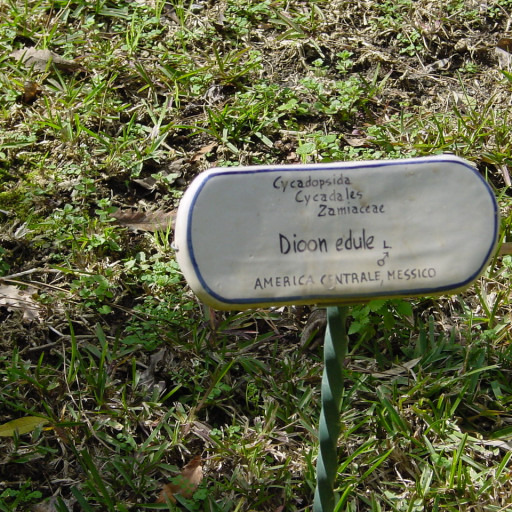
Plant Overview
Often called the "Palma de la Virgen," Dioon edule is a majestic survivor from the Mesozoic era, having shared the earth with dinosaurs for millions of years. This slow-growing Mexican native is a "living fossil" that adds a sense of ancient permanence to any landscape. While it mimics the look of a palm tree with its symmetrical, feathery fronds, it is actually a resilient cycad built to withstand harsh, rocky environments.
🔍 How to Identify
- 🌿 The Fronds: Features stiff, leathery, blue-green leaves that grow in a tight, upright rosette. Each leaflet is narrow and lacks a midrib, ending in a sharp (but usually not spiny) tip.
- 🪵 The Trunk: As it matures, it develops a stout, subterranean or low-growing woody trunk that resembles a textured pineapple or a small barrel.
- 🧶 The Cones: Instead of flowers, it produces large, fuzzy, wool-covered cones. The female cones are heavy and ovoid, while male cones are elongated and slender.
🏡 In Your Garden
- ⏳ Patience is Key: This plant grows incredibly slowly, often producing only one new "flush" of leaves per year. It is a long-term investment that can outlive its owner, sometimes reaching over 500 years of age.
- 🏜️ Drainage is Vital: Because it naturally grows on rocky cliffs, it cannot tolerate "wet feet." It thrives in gritty, well-draining soil and is exceptionally drought-tolerant once established, making it perfect for xeriscaping.
- ☀️ Sun Exposure: It loves bright light. In coastal areas, it can handle full sun, but in scorching inland climates, a bit of afternoon shade helps prevent the beautiful blue-green foliage from bleaching.
⚠️ Safety & Toxicity
- 🚫 Toxic Status: All parts of the plant, especially the seeds, are highly toxic if ingested.
- 🐾 Pet & Child Safety: Contains cycasin, which can cause severe liver failure in dogs and cats. Keep it out of reach of curious pets and children who might be tempted by the large, nut-like seeds.
✨ Fun Fact
Despite its specific epithet "edule" (which means "edible" in Latin), the plant is actually poisonous. Indigenous people in Mexico learned to process the starchy seeds through a complex fermenting and washing cycle to make a type of flour, but without this expert preparation, the seeds are potentially lethal!

Detailed Care Instructions
| Humidity | High |
| Lighting | Full Sun |
| Difficulty | Medium |
| Hibernation | Cold Period |
| Temperature | 18°C - 30°C |
| Hardiness Zones | Min 9A |
To grow a Dioon edule plant, you can follow these steps:
- Choose a suitable location: Dioon edule plants prefer lots of sunlight, so select a spot in your garden that receives full sun to partial shade. Also, ensure the soil is well-draining.
- Prepare the soil: Dioon edule plants thrive in slightly acidic to neutral soil. If your soil is too alkaline, you can amend it by adding organic matter like compost or peat moss to lower the pH. This will create a more favorable environment for the plant's growth.
- Planting: Dig a hole in the prepared soil that is deep enough to accommodate the root ball of the Dioon edule plant. Gently place the plant in the hole and backfill with soil, ensuring that it is firmly packed around the roots.
- Watering: Water the plant thoroughly after planting to help settle the soil around the roots. Once established, water the Dioon edule plant regularly, keeping the soil moist but not waterlogged. During hot, dry periods, you may need to water more frequently.
- Fertilizer: Dioon edule plants generally do not require much fertilization. However, you can provide a slow-release or balanced fertilizer once or twice a year to promote healthy growth. Follow the instructions on the fertilizer packaging for proper application.
- Pruning: Prune away any dead or damaged fronds on the Dioon edule plant to maintain its appearance and overall health. You can also remove any offsets or suckers that grow around the base of the main plant to prevent overcrowding.
- Mulching: Apply a layer of organic mulch around the base of the plant to help conserve moisture, suppress weed growth, and regulate soil temperature. Keep the mulch a few inches away from the stem to prevent rotting.
- Protection from frost: If you live in an area with frost or freezing temperatures, you may need to protect your Dioon edule plant during the winter months. Cover it with a frost cloth or bring it indoors to protect it from cold damage.
Remember, Dioon edule plants are slow-growing, so patience is key. With proper care and maintenance, your plant will gradually grow into a beautiful and resilient specimen.

Place in a bright room that is sun drenched almost all day. Or directly in a south-facing window.

To water this plant, you should first check if the top layer of the soil is dry to the touch. If it is, you can proceed with watering. Slowly pour water into the soil around the base of the plant, being careful not to get water on the leaves. Allow the water to soak into the soil completely before stopping. It is important not to overwater this plant, as too much water can cause root rot. It is recommended to let the soil dry out slightly between waterings.
To fertilize this plant, use a slow-release granular fertilizer with a balanced N-P-K ratio in the spring before new growth appears. Apply the fertilizer around the base of the plant, avoiding direct contact with the stems or foliage. Water the plant after fertilizing to help disperse the nutrients. Avoid over-fertilizing, as it can lead to burn and damage to the roots.
For the Dioon Edule plant, it is recommended to use well-draining soil with good aeration. The soil should be slightly acidic to neutral and should have a pH level ranging from 6.0-7.5. The plant prefers sandy or loamy soils that are rich in organic matter. It is important to avoid heavy clay soils that can cause waterlogging and lead to root rot. Additionally, the soil should not be too dry or too moist, as the plant requires a balance of moisture for healthy growth. It is recommended to fertilize the plant with a slow-release fertilizer during the growing season.
Dioon Edule plant can be propagated through several methods, including seed propagation and vegetative propagation. Seed propagation is the most common method used to propagate Dioon Edule and is relatively simple.
To propagate Dioon Edule from seeds, first, it is necessary to harvest mature seeds from a mature plant. The seeds should then be washed and cleaned to remove any debris. The seeds can then be soaked in water for a few days or scarified with a sharp knife or file to break down the protective seed coat. This allows the seeds to absorb water more easily.
Once the seeds have been prepared, they can be planted in a well-draining potting mix and kept moist until they germinate. Dioon Edule seeds typically take several weeks or even months to germinate, so be patient.
Vegetative propagation can also be used to propagate Dioon Edule. This method is faster than seed propagation but requires more expertise. It involves removing a section of the parent plant and rooting it to create a new plant.
To propagate Dioon Edule vegetatively, select a healthy and mature plant. Using a sharp, sterile knife, make a clean cut to remove a section of the parent plant. It is important to make sure the section you take includes both stems and roots.
Once the section has been removed, it should be allowed to dry for a few days to allow the wound to heal. Then, the cutting can be planted in a well-draining potting mix and kept moist until new roots form.
It is important to note that Dioon Edule is a slow-growing plant, and it can take several years for new plants grown from seed or cuttings to reach maturity. However, with patience and care, it is possible to propagate and grow this beautiful plant.
Common pests of the edible-seed cycas include Scale insect, mealybugs, spider mites. Make a habit of checking your edible-seed cycas frequently for pests so that any infestations can be caught and managed early.








