Plant Overview
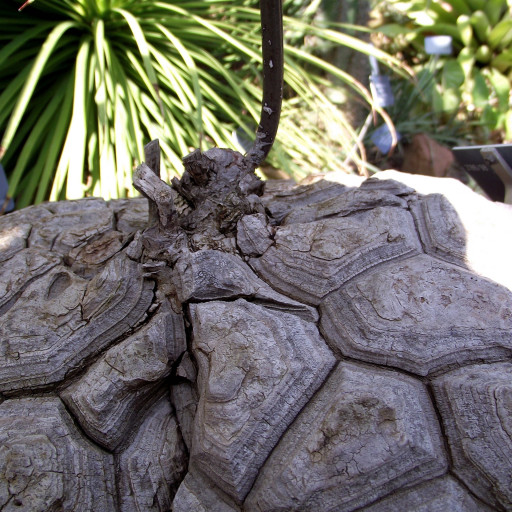
Often called the Mexican Elephant’s Foot or "Tortoise Plant," Dioscorea mexicana is a botanical masterpiece that looks more like a weathered stone or a piece of ancient wood than a living organism. Native to the lush landscapes of Mexico and Central America, this plant is a favorite among "caudiciform" collectors who appreciate its prehistoric aesthetic and its fascinating history as a pioneer in modern medicine.
🔍 How to Identify
- 🐢 The Caudex: The most striking feature is a large, woody, above-ground tuber that develops deep, geometric fissures. It resembles a tortoise shell or a cracked loaf of dark bread.
- 🍃 The Foliage: Delicate, heart-shaped (cordate) leaves grow from long, thin, twining vines that can reach several feet in height during the growing season.
- 🌼 The Flowers: It produces small, inconspicuous greenish-yellow flowers. These are usually dioecious, meaning individual plants are either male or female.
🏡 In Your Garden
- 🏺 Room to Breathe: Because the caudex grows wider over time, it prefers a wide, shallow pot rather than a deep one. This mimics its natural environment where it sits atop rocky or well-draining soil.
- 💤 The Sleep Cycle: This plant is famous for its dramatic dormancy. When the vines turn yellow and die back, the plant isn't dying—it's resting. Stop watering almost entirely during this phase to prevent the "foot" from rotting.
- 🌤️ Shadow Dwellers: In nature, the woody base often sits in the shade of other plants while the vines climb upward to reach the sunlight. In a home setting, keep the base protected from scorching afternoon sun to prevent "sunburn" on the corky bark.
⚠️ Safety & Toxicity
- 🚫 Toxic Status: Generally considered toxic to both humans and pets if ingested.
- 🤢 The Risk: The plant contains saponins and compounds that can cause severe gastrointestinal distress, vomiting, and lethargy in cats and dogs.
- 🧤 Skin Sensitivity: While not usually a primary irritant, the sap from broken vines can cause mild skin irritation for those with sensitive skin.
✨ Fun Fact
In the 1940s and 50s, Dioscorea mexicana was the primary source of Diosgenin, a compound used to create the very first birth control pills. For a time, "Yam hunters" scoured the Mexican jungles for these heavy, woody tubers to fuel the global pharmaceutical revolution!

Detailed Care Instructions
To grow Dioscorea Mexicana, also known as Mexican Yam or Mexican Wild Yam, follow these steps:
- Select a suitable location: Dioscorea Mexicana thrives in a sunny spot with well-draining soil. It requires a minimum of six hours of direct sunlight each day.
- Prepare the soil: Loosen the soil to a depth of about 12 inches and remove any weeds or rocks. Add organic matter like compost or well-rotted manure to improve soil fertility and drainage.
- Propagation: Dioscorea Mexicana can be propagated from seeds or tubers. Seeds can be sown directly into the prepared soil after the last frost date in your area. Tubers can be planted in early spring or late fall, burying them about 3-4 inches below the soil surface.
- Watering: Water the plant regularly, ensuring that the soil stays moist but not waterlogged. Dioscorea Mexicana prefers a slightly humid environment.
- Support: As the plant grows, it will require support to climb. Provide a trellis, fence, or other support structure for the vine-like stems to climb.
- Mulching: Apply a layer of organic mulch, such as straw or wood chips, around the base of the plant to conserve moisture, suppress weed growth, and regulate soil temperature.
- Fertilization: Feed the plant with a balanced, slow-release fertilizer in early spring. Follow the instructions on the fertilizer packaging for proper dosage.
- Pruning: Prune any dead or diseased parts of the plant as needed. Regular pruning also helps control the growth and shape of the plant.
- Harvesting: Dioscorea Mexicana is typically harvested in fall when the leafy vines start to die back. Dig out the tubers carefully to avoid damaging them.
- Storage: After harvesting, store the tubers in a cool, dry place for a few weeks to allow the skin to toughen before consumption or for replanting.
Remember, Dioscorea Mexicana may take a few years to produce tubers large enough for consumption, so patience is key when growing this plant.

Place in a window with dappled sun or a spot in the middle of a room. Or directly in a window facing west or east.

To water this plant, first make sure the soil is dry down to about an inch deep. Then, pour water slowly at the base of the plant, taking care not to splash any onto the leaves or other parts of the plant. Allow the soil to absorb the water completely, and then discard any excess water that has drained from the bottom of the pot or container. Repeat this process whenever the soil appears dry again, usually once every one to two weeks depending on the temperature and humidity of the surrounding environment. Avoid over-watering, as this can lead to root rot and other problems.
To fertilize the plant, apply a balanced liquid fertilizer once every two weeks during the growing season. Do not over-fertilize, as this can damage the roots. Additionally, incorporate organic matter such as compost or well-aged manure into the soil prior to planting to promote healthy growth and development.
The suitable soil for Dioscorea Mexicana should be well-draining, loose and fertile with a slightly acidic pH range of 6.0 - 6.8. The soil mix should include a combination of organic matter such as compost, peat moss, and coconut coir blended with loam or sandy loam. Additionally, perlite and vermiculite can be added to improve drainage and aeration. It is recommended to avoid using heavy clay soils as they can retain too much water and lead to root rot.
To propagate this plant, you can begin by selecting a healthy specimen and ensuring that the soil in which it is currently growing is well-draining. Next, identify where the plant's nodes are located and make small incisions or cuts just above these nodes. These nodes will then be used to grow new roots and shoots.
Once the incisions have been made, remove the plant from its current pot or location and carefully separate the newly-cut sections from the main stems. These cuttings should be allowed to dry out for a day or so before being planted in a sterilized potting mix.
For best results, ensure that the soil mix is kept moist but not waterlogged, and place the pot in an area with bright but indirect sunlight. Within a few weeks, the cuttings should start to produce roots and new stems.
As the plant grows, take care to fertilize it regularly and ensure that it is not exposed to temperatures below 50°F (10°C). With proper care, the propagated plant should be able to produce new tubers in its second or third year of growth.
Common pests of the mexican yam include Mealybugs, spider mites, aphids. Make a habit of checking your mexican yam frequently for pests so that any infestations can be caught and managed early.








