Plant Overview
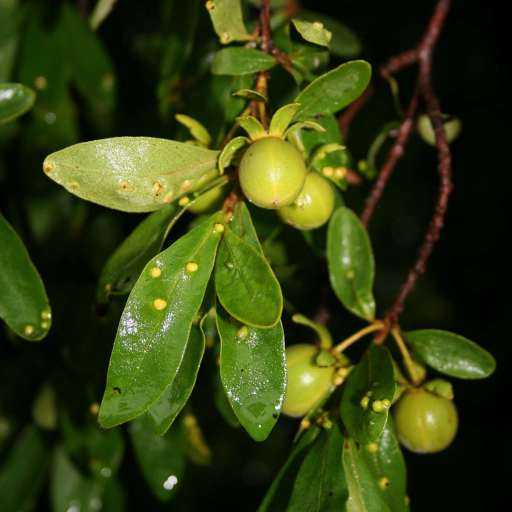
Known as the "Bluebush" or "Monkey Plum," Diospyros lycioides is a hardy survivor from the sun-drenched landscapes of Southern Africa. Its name reflects its beautiful blue-tinted foliage, which provides a shimmering, cool aesthetic to dry garden designs. A close relative of the common Persimmon, this plant is a cornerstone of wildlife support, offering sweet snacks to both birds and humans in its native range.
🔍 How to Identify
- 🍃 Foliage: Look for small, leathery leaves with a distinct blue-gray or glaucous tint. They are often slightly hairy when young and grow in a dense, bushy habit.
- 🌼 Flowers: During late spring, the plant produces small, fragrant, bell-shaped flowers that are creamy-white and hang gracefully from the branches.
- 🍒 Fruit: The most telling feature is the egg-shaped berry, which transitions from green to a vibrant yellow-orange, eventually turning a deep, fleshy red when fully ripe.
🏡 In Your Garden
- 🐦 Wildlife Haven: This plant acts as a "living grocery store." The fragrant flowers are a magnet for bees and butterflies, while the ripening fruits will bring a variety of birds to your garden, eager for a sugary meal.
- 🏜️ Tough as Nails: Because it has evolved to handle rocky slopes and scrublands, it is exceptionally drought-tolerant. It prefers well-draining soil and can handle harsh sun, making it an excellent "set-and-forget" shrub for low-maintenance landscapes.
⚠️ Safety & Toxicity
- ✅ Safe for Humans: The ripe fruit is edible and often used to make traditional jams, jellies, or fermented drinks.
- 🐾 Pet Consideration: While the fruit is non-toxic, the large seeds inside can pose a choking hazard or cause digestive blockages in smaller dogs if consumed in large quantities.
✨ Fun Fact
- 🪥 Nature’s Toothbrush: In many rural African communities, the roots and twigs of the Bluebush are used as traditional "chew sticks." When frayed at the ends, they act as a natural toothbrush, and the plant even contains antimicrobial compounds that help keep gums healthy!

Detailed Care Instructions

Place in a bright room that is sun drenched almost all day. Or directly in a south-facing window.

Some plants require more regular watering than others, which should be done every few days. It's critical to maintain the soil moist all of the time. The water requirements of the same plant placed in pots with varying sizes will differ. Because the water in the smaller pot evaporates faster than the water in the larger pot, it will require more watering. Regardless of pot size, the surface should constantly be maintained moist.







